 Capital de Tokens
July 16, 2026
Grok Build: a crisis of trust over your code
Grok Build, privacy, and source code: the controversy exposing the real risk of using AI assistants to program.
Grok Build, privacy, and source code: the controversy exposing the real risk of using AI assistants to program.
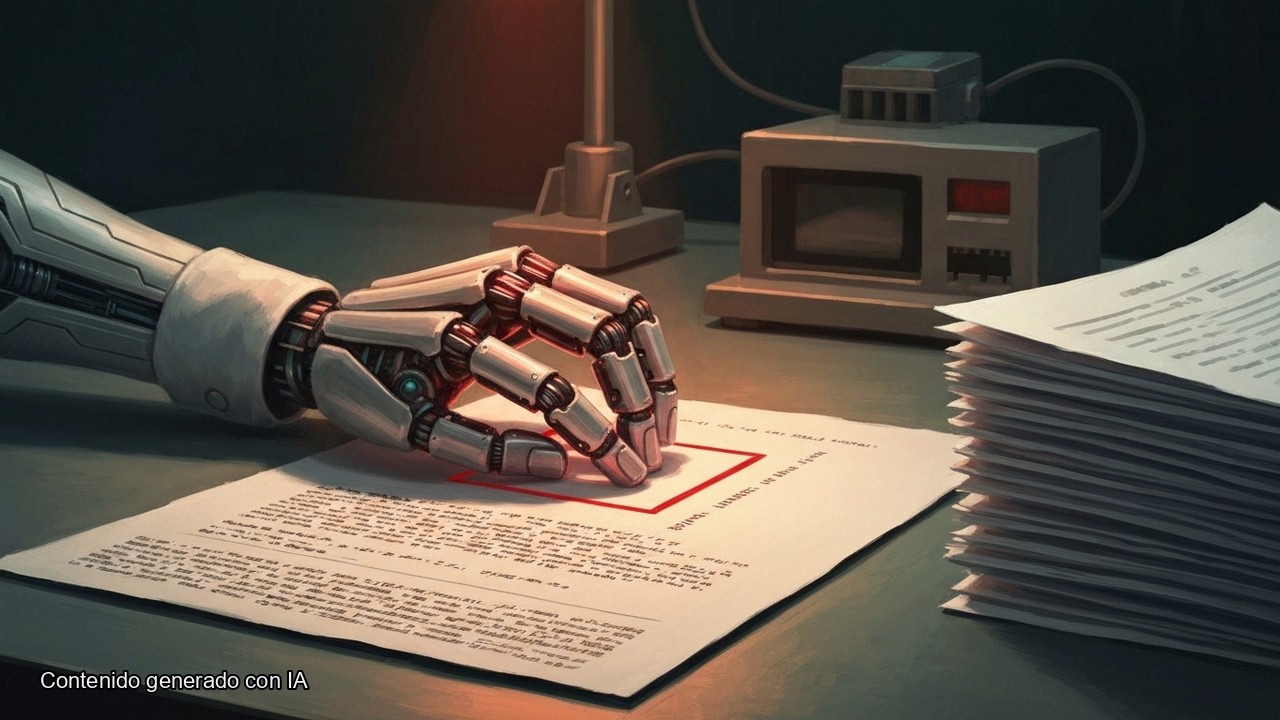
NVIDIA introduced ASPIRE, a system that allows robots to identify exactly which step they failed at and rewrite their own control code without human intervention. In benchmarks, it went from 4% to 31% on long-horizon zero-shot tasks, and from 20% to 92% on two-arm object transfer. A leap that chang

Hassabis insists that the rules must apply equally to open-source and closed models, but that requirement is inherently asymmetric. Why do you consider it asymmetric if the rule is the same for everyone? Because a corporation with billions of dollars can pay hundreds of auditors and lawyers to certify each version of its proprietary model before releasing it as a paid interface. Meanwhile, a group of independent researchers or a small startup that publishes an open model does not have the resources to go through such a complex certification process. Exactly, and moreover, the nature of open source is that once published, the model weights are freely distributed across the internet. If you require every open model to undergo prior government review under threat of sanctions, you are effectively banning the release of powerful open models.

That is why Aravind Srinivas of Perplexity says that the model itself is no longer the product. If you only resell third-party tokens through a polished interface, your business has no future. The real advantage lies in orchestration. In other words, building an agent harness that decides when to use a local, inexpensive model and when

The comparison to USB-C, which is often used to explain MCP, is useful but misleading. USB-C simplifies physical connections. MCP simplifies operational connections. Through a physical port, you can charge a laptop; through an agent connector, you can look up contracts, open tickets, modify code, launch deployments, move mon
Hassabis proposes that this new independent body assess specific frontier risks, such as models' ability to carry out cyberattacks, deceive their operators, or facilitate the creation of harmful biological agents. The idea of independent scientists conducting stress tests before launch sounds reasonable, but the reality of self-regulated bodies is that they often suffer from regulatory capture. Do you mean that the major technology companies would end up indirectly controlling the very referee that is supposed to oversee them? Precisely, since dominant corporations like Google, Microsoft, and Meta are the only ones with the budget and personnel to influence the definition of safety metrics and the technical committees of this body.

OpenAI launched ChatGPT Work and changed the rules: it's not a chatbot that gives you answers; it's an agent that delivers finished work. Give it an objective, and it comes back with the completed report, spreadsheet, or app.

Apple sued OpenAI, accusing it of stealing the secrets used to build the iPhone. At the center: Tang Tan, who spent 24 years designing the iPhone before joining OpenAI's hardware project alongside Jony Ive.

Is it possible to regulate artificial intelligence without creating a tech monopoly? We analyze Google DeepMind's controversial proposal to slow down AI.

Promoting the idea that Artificial General Intelligence is just around the corner helps generate panic that justifies exceptional control measures, while also driving up companies' stock-market valuations. In other words, the existential-danger narrative also works as an excellent marketing camp

The more uncomfortable takeaway is this: many companies are trying to fit autonomous agents into permission architectures designed for humans and static applications. And it doesn't fit. An employee has an identity, a contract, a place in the hierarchy, training, and disciplinary accountability. An application has a defined purpose,
There is another point that seems decisive to me: governance cannot depend on the prompt. This should be obvious, but it still isn't. For far too long, the idea has been sold that it's enough to write instructions like “don't do anything without permission,” “don't delete data,” and “follow the company's policy.” That works