 Capital de Tokens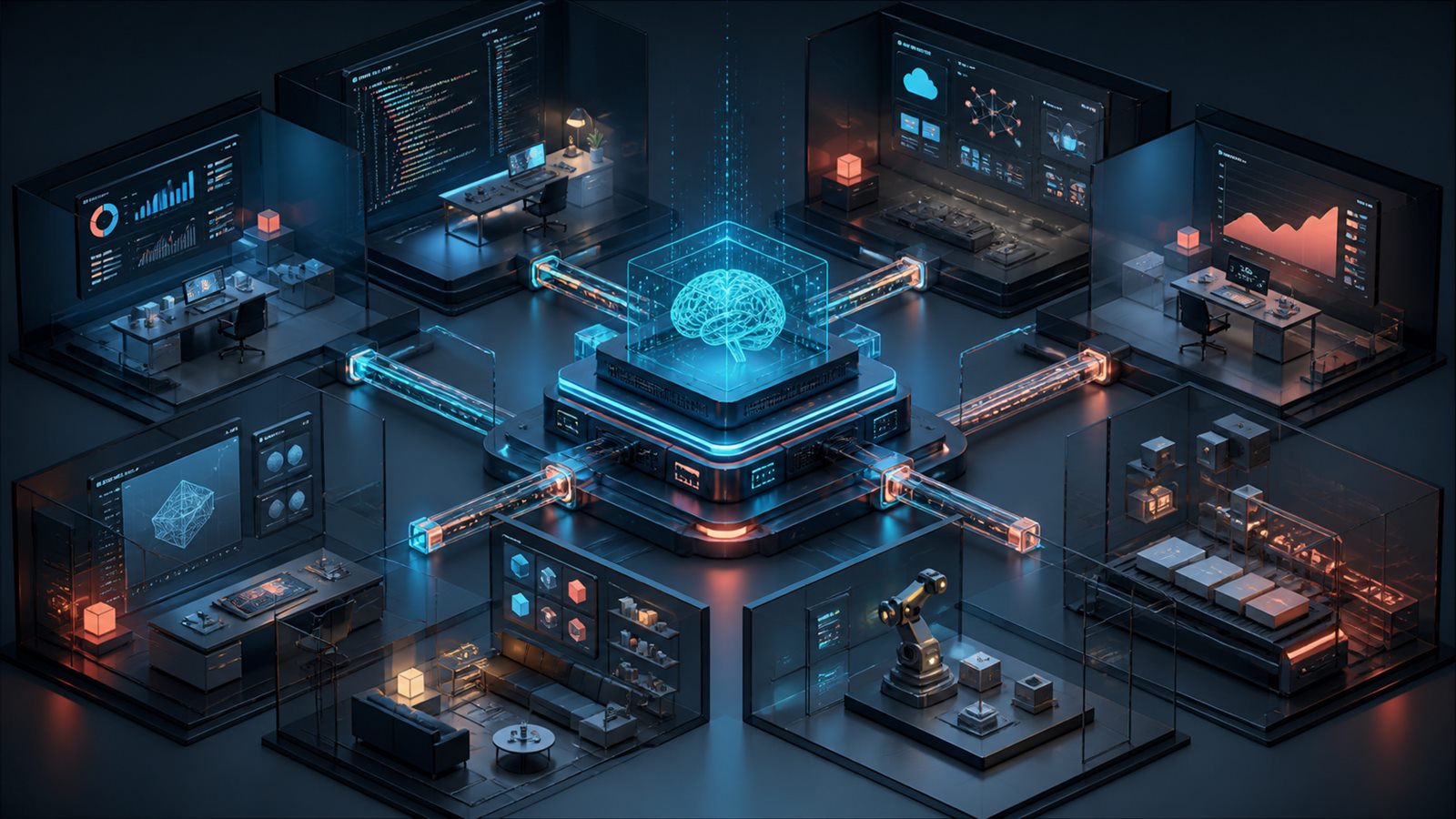
When we think about Codex, it is easy to imagine a terminal, an IDE extension, or an application where an agent writes and modifies code.
But OpenAI is pushing Codex in a much more ambitious direction: turning it into a reusable platform for building agents inside other products.
That is the central message of “Codex as a platform: build on the open agent harness”, published by OpenAI on August 19, 2026.
The important idea is not to build another chat with a model behind it.
The idea is to reuse the infrastructure that lets an agent understand a task, preserve context, use tools, request human approval, survive errors, and keep working across multiple turns.
OpenAI calls that layer the Codex harness.
And if this approach takes hold, it could become a fundamental component of the next generation of agentic software.
An agent is much more than a prompt
During the first years of generative AI, many applications could be described with an extremely simple architecture:
user
→ prompt
→ model
→ response
The problem is that a real agent needs much more.
To complete complex tasks it must be able to:
- understand the objective;
- preserve state across turns;
- gather additional context;
- call tools;
- execute code or commands;
- observe the result of those actions;
- recover from failures;
- show progress;
- respect security boundaries;
- request approval before sensitive operations;
- keep working until it produces a useful result.
All of that happens around the model.
That execution system is what is usually called an agent harness.
We can visualize it like this:
Application
   ↓
Agent harness
   ├── context
   ├── state
   ├── tool calling
   ├── execution
   ├── sandbox
   ├── approvals
   ├── streaming
   └── error recovery
          ↓
        Model
The model contributes reasoning and generation.
The harness turns those capabilities into an operational process.
Codex wants to reuse exactly that layer
Codex already has to solve all those problems in order to function as a coding agent.
The application, CLI, and IDE extension use the same underlying system to maintain conversations, inspect files, execute tools, and enforce security policies.
OpenAI is now exposing that infrastructure so other developers can use it.
The consequence is important:
if you are building a product with agents, you do not necessarily need to build the agent runtime from scratch.
You can use Codex as the agentic engine and focus on the part specific to your product.
For example:
Your product
│
├── specialized interface
├── business rules
├── permissions
├── domain context
├── data
│
└── Codex
     ├── agent loop
     ├── state
     ├── tools
     ├── sandbox
     ├── approvals
     └── execution
That change looks small, but it removes a substantial amount of infrastructure that every team would otherwise have to implement and maintain itself.
The harness can even change model performance
One of the most interesting details in OpenAI’s article is that agent quality does not depend only on the model being used.
The way the harness preserves and manages context can also change the outcome significantly.
OpenAI mentions an evaluation on ARC-AGI-3 in which preserving reasoning across steps and using context compaction raised GPT-5.6 Sol performance from 13.3% to 38.3%.
At the same time, output tokens were reduced by roughly six times.
This reinforces a fundamental idea in agent design:
the model and harness should be evaluated as a system.
Changing how state is preserved, context is summarized, or tools are chained can produce improvements comparable to —or even larger than— switching models.
Three levels for integrating Codex
OpenAI presents three main ways to use Codex as a platform.
1. codex exec
This is the simplest option.
It is useful for running an agent inside:
- scripts;
- CI pipelines;
- automations;
- one-off jobs;
- bounded tasks without a complex interactive interface.
The architecture can be as simple as:
CI / script
   ↓
codex exec
   ↓
structured result
It is appropriate when you want to delegate a task without making Codex a persistent part of the user experience.
2. Codex SDK
When an application needs to start, resume, or stream Codex tasks from code, the SDK provides a more direct programmatic interface.
The flow starts to look like this:
Application
   ↓
Codex SDK
   ↓
Codex runtime
This lets agents be integrated into backend services, internal tools, or automations where the application controls the main flow.
3. Codex app-server
This is where the most interesting possibility appears.
Codex app-server is intended for situations where the agent is part of the product itself.
The application can keep conversations open, receive events, interrupt work, expose tools, and respond to approval requests.
The UI remains yours.
The product also remains the owner of its data, business rules, and permissions.
Codex handles the agentic loop.
A typical architecture would look like:
Product interface
        ↓
Context + rules + permissions
        ↓
Codex app-server
        ↓
Agent loop
        ↓
Tools / MCP / filesystem / APIs
This makes it possible to build an agentic experience without forcing the user to leave the application where they already work.
The agent no longer has to live inside a chat
This may be the most important product implication of the entire announcement.
For years, chat has been the dominant interface for generative AI.
But many professional tasks do not naturally happen inside an empty conversation window.
A security analyst works with alerts, incidents, and affected services.
A support team works with accounts, tickets, logs, and internal documentation.
A logistics operator works with shipments, maps, routes, and exceptions.
An engineering team works with issues, pull requests, CI, and repositories.
In those environments, chat can be useful, but it should not necessarily be the entire application.
OpenAI proposes that the agent live inside the interface where the work already exists.
For example:
Operations dashboard
│
├── orders
├── alerts
├── metrics
├── actions
│
└── Codex agent
The user does not need to explain from scratch what they are looking at.
The application itself can provide that context automatically.
Relay: an example of this architecture
OpenAI built an example called Relay to demonstrate the pattern.
Relay simulates a logistics operations dashboard.
The user selects a problematic shipment and can trigger an action such as comparing recovery options.
The application provides the shipment context to the agent.
Codex queries data using MCP tools, analyzes alternatives, and explains the available options.
If the action involves modifying a booking, the system requests human approval before executing it.
The flow would be approximately:
User selects shipment
        ↓
Application provides context
        ↓
Codex investigates
        ↓
MCP queries current data
        ↓
Codex proposes action
        ↓
Human approval
        ↓
MCP modifies record
        ↓
Dashboard updates
Here Codex does not replace the product.
It enhances it.
MCP and Codex serve different functions
It is also important to distinguish two pieces that often appear together: MCP and the agent harness.
MCP lets you connect tools, systems, and external data.
It can expose operations such as:
get_customer()
create_ticket()
read_database()
update_shipment()
search_documents()
But MCP does not decide by itself which tool should be used or how to solve a complex task.
The harness provides that reasoning and execution loop.
We can think of the relationship like this:
Codex
  ↓
reasons and decides
  ↓
MCP
  ↓
exposes tools and data
They are not competing technologies.
They are complementary layers.
The application remains in control
Another important point in OpenAI’s design is that integrating Codex does not mean handing all control to the agent.
The host application can decide:
- what information the agent sees;
- which tools are available;
- where it can execute;
- what files it can read or modify;
- which actions require approval;
- how the work is observed;
- where results are stored;
- which system retains the final source of truth.
That makes it possible to separate responsibilities clearly.
Application
├── identity
├── permissions
├── business rules
├── source of truth
└── UX

Codex
├── reasoning
├── planning
├── agent loop
├── execution
└── tool interaction
That boundary is especially important in enterprise systems.
Open source at the right layer
The Codex harness is open source.
That makes it possible to inspect the layer between the application and the model, understand its behavior, and adapt the integration.
OpenAI publishes components such as:
- Codex CLI;
- Codex app-server;
- Codex SDK.
That does not mean all OpenAI infrastructure or model access is open source.
The open layer is primarily the harness and integration surface.
But even that separation has significant value because it enables products to be built on visible, extensible agentic infrastructure.
This can change multi-agent system architecture
The idea becomes even more interesting when we think about systems with several agents.
Suppose we have an engineering flow in which different agents have separate responsibilities:
Control plane
     │
     ├── Specifier
     ├── Architect
     ├── Developer
     ├── Reviewer
     └── QA
Traditionally, building something like this means implementing a large number of pieces:
- lifecycle for each agent;
- conversation state;
- error handling;
- tool calling;
- streaming;
- isolation;
- approvals;
- context compaction;
- persistence;
- recovery of interrupted work.
With a reusable harness, the control plane can focus on coordinating roles, dependencies, and policies while each instance uses a runtime already prepared to operate as an agent.
A conceptual architecture could be:
Control plane
      │
      ├── Codex: Specifier
      ├── Codex: Developer
      ├── Codex: Reviewer
      └── Codex: QA
             │
             ↓
          MCP / tools
             │
             ↓
       GitHub / CI / APIs
GitHub, a database, or another system can preserve the durable process state.
Codex provides the operational loop for each agent.
This separation turns building a swarm from merely a problem of “how to connect multiple prompts” into a much more interesting problem of orchestration, ownership, and state control.
From copilots to infrastructure
During the first stage of programming assistants, AI was used primarily to complete code.
Then came agents capable of modifying entire repositories.
Now we are entering another phase:
autocomplete
     ↓
copilot
     ↓
coding agent
     ↓
agent runtime
     ↓
agent platform
Codex as a platform fits precisely into those last two levels.
The product is no longer only the coding agent visible to the user.
The product can also be the infrastructure on which third parties build other agents.
Do not build another chat if the work needs another interface
Probably the most useful sentence we can extract from this product direction is this:
the best agentic product is not always a chat window.
It can be a dashboard where an agent investigates an anomaly.
It can be an IDE where it reviews code.
It can be a support console where it prepares responses.
It can be an operations system where it compares alternatives before executing an action.
It can be a control plane coordinating several specialized agents.
Chat will remain important because natural language is an extraordinarily flexible interface.
But it will not necessarily remain the primary container for every AI experience.
The real opportunity
OpenAI’s announcement is not simply about offering another API.
What it is trying to standardize is a layer that every team building agents ends up needing in one form or another:
the runtime that turns a model into a digital worker capable of acting inside a real system.
If that layer becomes reusable, developers can spend less time rebuilding agent loops and more time designing:
- better interfaces;
- better tools;
- better policies;
- better context;
- better approval systems;
- better mechanisms for coordinating agents.
That will probably be one of the most important architectural shifts of the agentic software era.
The next leap will not only be having smarter models.
It will be the ability to embed reliable agents inside any product without having to reinvent from scratch all the machinery that keeps them working.
And Codex wants to become exactly that machinery.
Primary source: OpenAI Developers, “Codex as a platform: build on the open agent harness”, August 19, 2026.