 Capital de Tokens
They are not human brains: how these living computers work
 Watch on YouTube
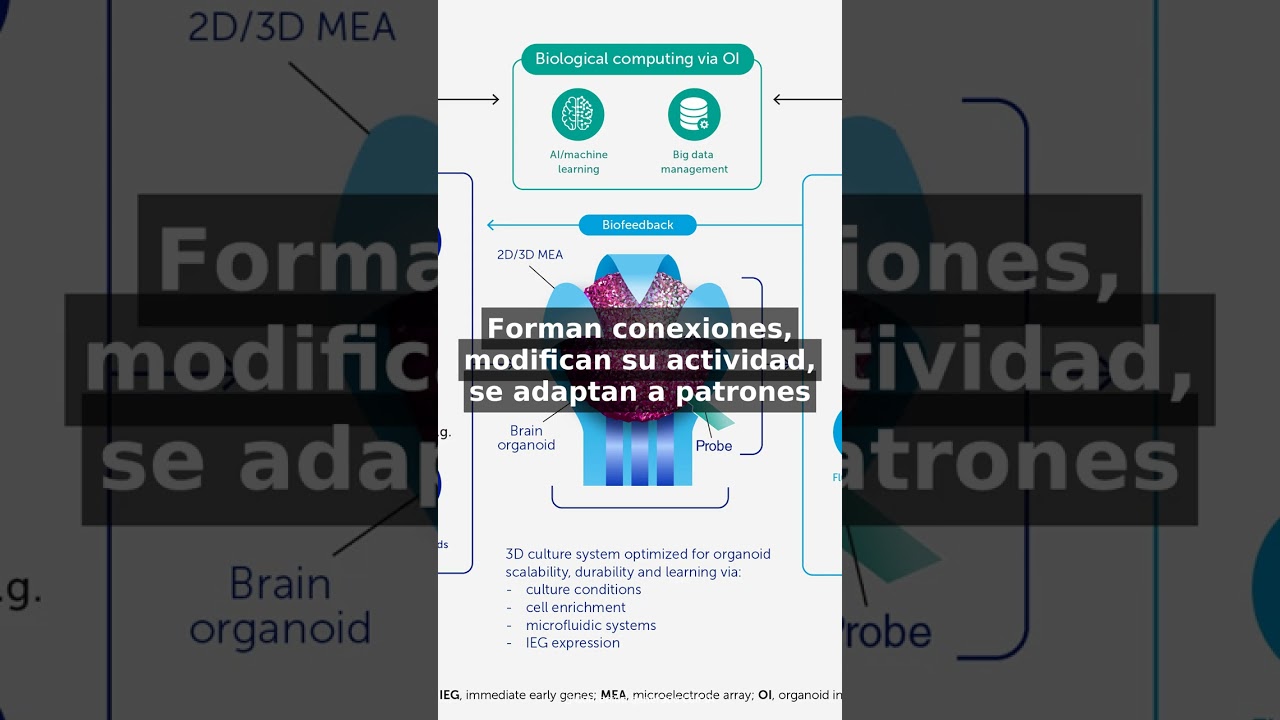
First things first: these computers do not contain human brains; they contain organoids and neuron cultures that perform very limited tasks. The term living computer can take us too far. On platforms such as Neuroplatform, from the Swiss company FinalSpark, researchers can interact remotely with organoids
First things first: these computers do not contain human brains; they contain organoids and neuron cultures that perform very limited tasks. The term living computer can take us too far. On platforms such as Neuroplatform, from the Swiss company FinalSpark, researchers can interact remotely with brain organoids: small, three-dimensional clusters of cells derived from human stem cells. They are stimulated with electrical signals, their activity is measured, and researchers study how that neural network changes over time. This is remarkable because neurons do not work like transistors. They do not simply receive a zero or a one and return another. They form connections, change their activity, adapt to patterns of stimulation, and produce complex signals. That plasticity is precisely what interests researchers. But it is worth drawing a very clear boundary. An organoid is not a miniature brain. It does not have the size, architecture, bodily development, senses, or enormous diversity of connected regions that a human brain has.
Full episode: https://youtu.be/x1QsgfYPRPg
🤖 AI-generated content: the script, voices, and images in this episode were produced using artificial intelligence tools.
#Shorts