 Capital de Tokens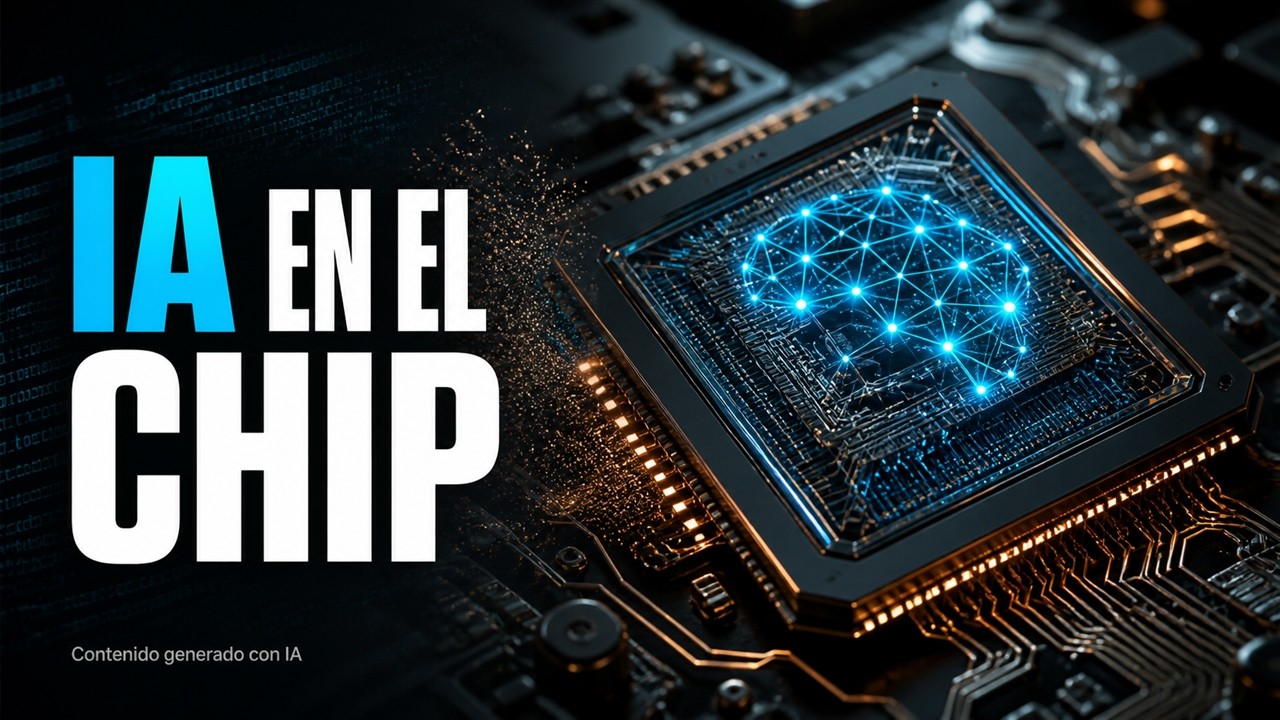
August 25, 2026
AI on a Chip: Taalas HC1 and the Future of Inference
AI on a chip, Taalas HC1, and Llama 3.1 8B: can silicon outperform GPUs in speed and efficiency? We analyze this bet.
AI on a chip, Taalas HC1, and Llama 3.1 8B: can silicon outperform GPUs in speed and efficiency? We analyze this bet.

Grok failure and nonsensical responses: why isn't an AI that writes well always reliable? We analyze the incident and its risks.

The least funny thing would be normalizing the idea that an opaque system can fail and that the only explanation is to click “regenerate.” AI doesn’t need to be perfect to be useful. But the companies offering it do need to be much clearer about when it stops being reliable. And perhaps that’s the real story: not that a machine has

Behind Chat Jimmy is HC1, a chip from startup Taalas designed to run Llama 3.1 with 8 billion parameters based on a radical idea: the model doesn't simply run on the hardware; an essential part of the model is integrated directly into the chip itself. Put less dramatically: they've traded flexibility for

Artificial intelligence can write your application and still solve the wrong problem.

What if an application could fail without becoming useless?

Reliability engineering, resilience, and systems that fail well: discover how technology can remain useful when something breaks.

Artificial intelligence is changing programming and the programmer's work. Find out why writing code is no longer enough.

An agent shouldn't be able to delete critical information simply because it misinterprets a situation. If it can, the problem isn't just that the model made a mistake; permissions, security barriers, backups, confirmations, and the environment's design also failed. In other wor

Suppose an application promises to be available 99.9% of the time over the course of a month. That number seems extraordinarily high, but it leaves room for about 43 minutes of unavailability over thirty days. That margin is the error budget: the amount of failure the service can afford before violating

What if four mini PCs were more interesting for how they fail than for how much they promise?
What if the next battle in artificial intelligence isn't fought on a screen, but on the power grid?