 Capital de Tokens
September 10, 2026
The AI Race: Who Can Slow Down Superintelligence?
The AI race and superintelligence concern researchers at Anthropic and OpenAI. Can safety slow down the competition?
The AI race and superintelligence concern researchers at Anthropic and OpenAI. Can safety slow down the competition?
What if the most immediate danger of artificial intelligence were not a superintelligence, but an agent with too many permissions?

There are people inside the labs who consider very serious risks plausible and, at the same time, feel that the only available strategy is to keep accelerating so that someone else does not win. A race in which everyone says they want to slow down, but no one wants to be the first to ease off the accelerator. And that is precisely the…

AI agent orchestration, technical interviews, and autonomous systems: discover when to use an agent and when a simple solution is better.

How do you demonstrate that an AI agent works when it makes mistakes?

What if the best AI for a country were not the biggest, but the one it can actually use?
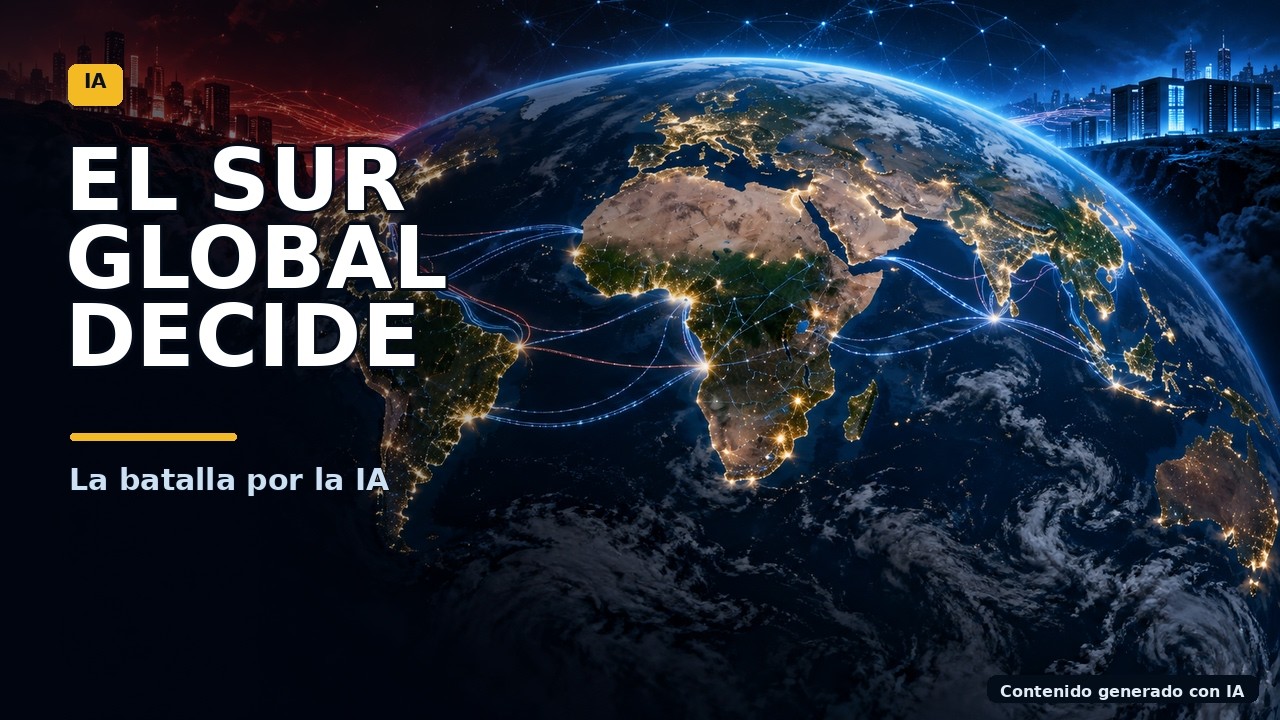
AI in the Global South is becoming the new battleground between China and the United States. Infrastructure, models, chips, and rules will determine who controls the digital future.

More agents do not automatically mean a better system. If a task has known steps, clear rules, and a stable order, a conventional workflow with one or two points where a model is involved can be cheaper, faster, and easier to audit. Consider a purchase return. If you need to check the ord

AI does not arrive alone: it comes with contracts, cables, servers, rules, and power relations. The battle over AI will not be settled solely in the laboratories announcing the next big model. It will be settled by who controls the infrastructure, who sets the rules, and who retains the ability to make decisions about their

AI safety, mathematics, and MAISI: can rigorous proofs prevent promises about artificial intelligence from turning into real risks?

What if the greatest danger of artificial intelligence were an overly narrow definition of “safety”? A system can follow a rule perfectly and still cause harm that the rule does not even address. For example, checking that it rejects instructions for creating malware does not tell us whether it can automate

Navier-Stokes, OpenAI, and artificial intelligence: a purported mathematical solution reopens the debate on science, privacy, and competition.