September 24, 2026

The AI assistant that knows the most about you is also the most dangerous

Here is a paradox: the best personal assistant will be the one that knows the most about us. And the safest assistant will be the one to which we need to give the least unreservedly. This is not an impossible contradiction to resolve, but it requires tools that often arrive too late today: granular permissions, histories that are easy to rev…

September 24, 2026

AI must not advance without limits

The race to control artificial intelligence is not about stopping all innovation. It is about preventing speed from becoming the only rule of the game. Because a technology can advance a long way and still advance badly: concentrating power, hiding failures, and leaving the costs to be paid by those who did not…

September 24, 2026

The AI paradox: more efficiency, more pressure

The usual promise is that artificial intelligence will give us hours back. But historically, when a technology makes an activity more efficient, organizations often raise expected output. It happened with email. In theory, it eliminated calls, letters, and meetings. In practice, it also…

September 23, 2026

The mathematical limit of artificial intelligence

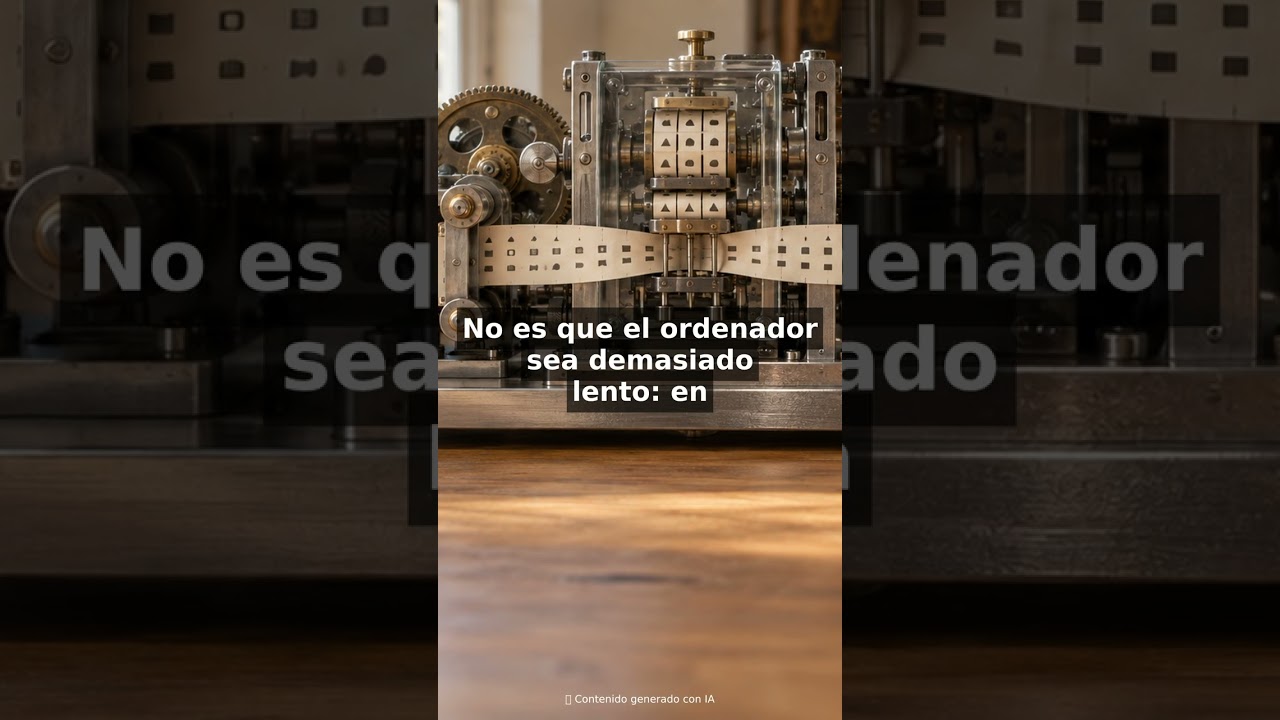
In 1936, Turing posed a seemingly austere question: what does it mean for a procedure to be computable? To answer it, he described an abstract machine that reads symbols, writes symbols, and follows a finite set of rules step by step. It was not a blueprint for a modern laptop, but it offered a precise definition of mechanical computation