July 12, 2026

Apple isn't afraid of theft: it's afraid they'll build a better iPhone

Apple knows that if OpenAI launches a competitive device in two years, the conversation about "what is the best AI hardware" won't revolve around the iPhone. It will revolve around that screenless device you carry in your pocket—one that's AI-native from day one, not an iPhone with a chatbot bolted on.
July 12, 2026

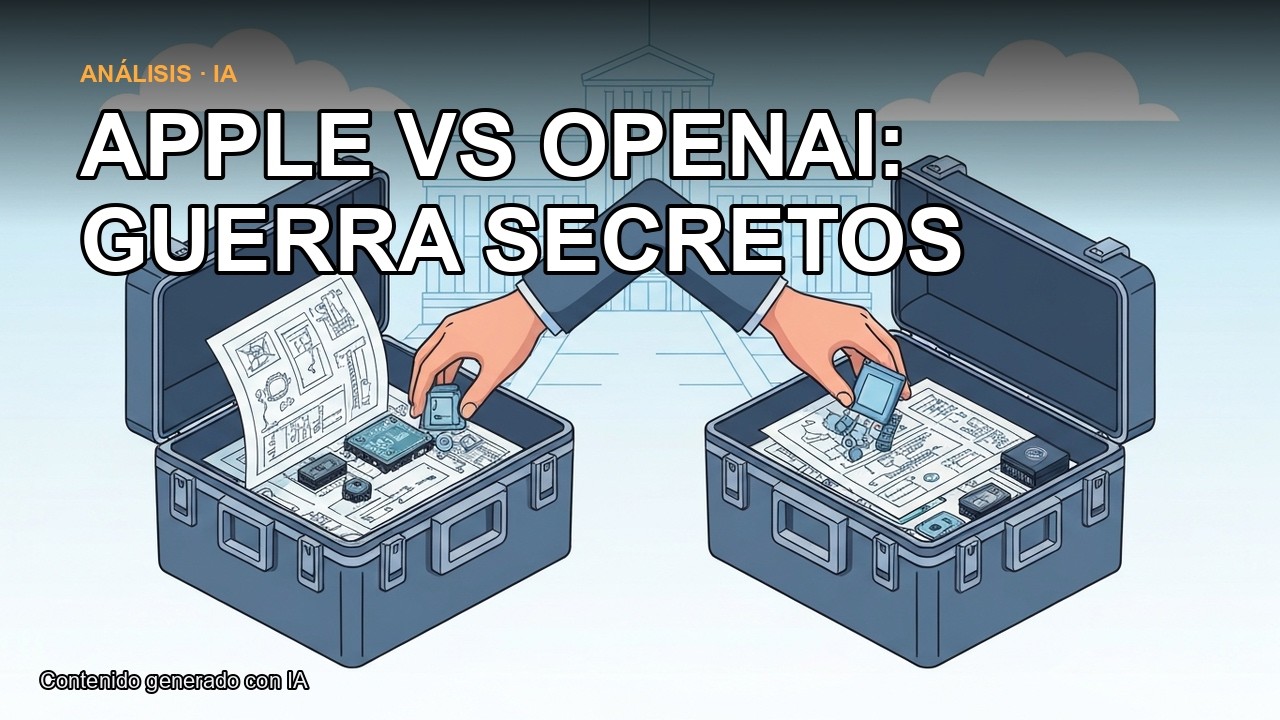
Apple said OpenAI is 'rotten to the core' in its lawsuit

This is one for the books: it says OpenAI's hardware business rests on "the weakest of foundations, rotten to the core because of its unlawful reliance on ill-gotten trade secrets." Literally. That's in the legal filing. Which should already make us suspect that this isn't just an ordinary legal case.

July 11, 2026

Why Torvalds's minimalism is NOT a lesson about tools

Because that simplicity works for Torvalds because he has spent thirty years accumulating context. He can read pseudocode in an email and know whether it will work because he has nearly the entire mental model of the kernel in his head. It isn't the tool that does the work; it's the experience behind it. Completely

July 11, 2026

Torvalds's job is to say 'no'... and it works

He literally said: "Most of the code I write is in my emails". When someone sends him a patch that has a problem, he responds with pseudocode. He doesn't test it. He doesn't compile it. He writes it in the body of an email. That's either very confident or very efficient. Probably both. And his fun

July 11, 2026

The Most Revealing Part: Meta Assumed This Was Acceptable

To wrap up, I think the most revealing part of this story isn’t what Meta did. It’s what Meta assumed it could do. It assumed that launching a tool like this with opt-out was an acceptable starting position. That the burden of protection falls on the person who could become a victim, not on the person who creates the tool or uses it to generate the content. And that assumption isn’t new. It’s the same logic that led to decades of problems with privacy, content moderation, and misinformation on these platforms. The difference now is that the potential harm is more immediate, more personal, and harder to undo. An AI-generated image of someone in a compromising context can circulate for years. There’s no undo button for that.

July 11, 2026

Your face on the internet without knowing it: this is how Muse Image worked

The idea was simple: you write a prompt, tag a public Instagram account with an @, and the system generates an image using that person's face or appearance. Wait. Any public account? Without that person knowing someone is using them? No notification. No prior permission. Without receiving an alert that someone has just generated an image with your face placed in whatever context they wanted. The only protection was that the system automatically excluded private accounts and anyone under eighteen. If you were an adult with a public account, you were included by default. In other words, the model was opt-out, not opt-in. You had to actively opt out if you didn't want to participate.