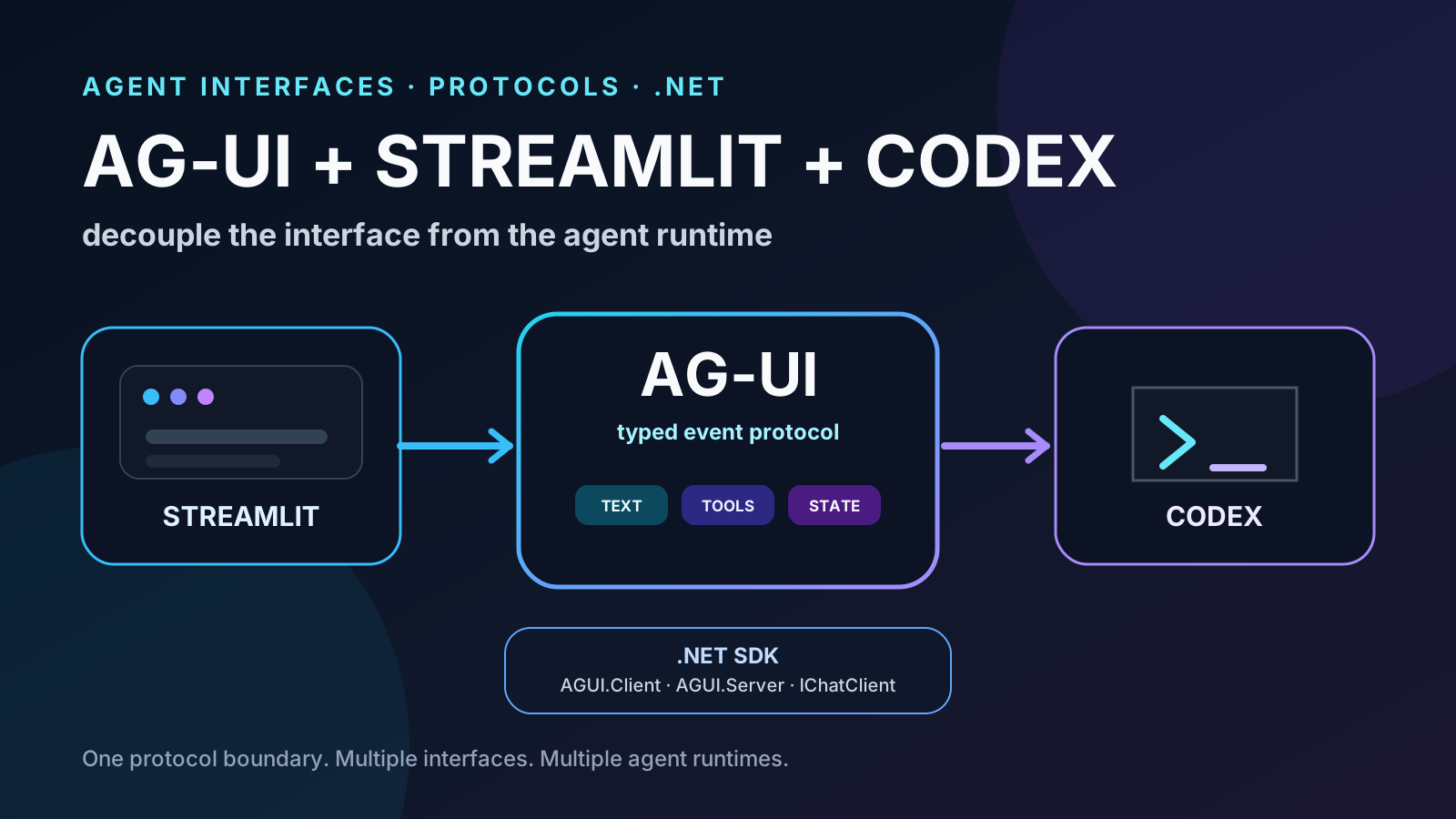
September 27, 2026 · Capital de Tokens
Microsoft has given AG-UI a first-class .NET SDK. Starting from that foundation, we explore how Streamlit can connect to agents and how Codex fits through exec, the SDK, and App Server.
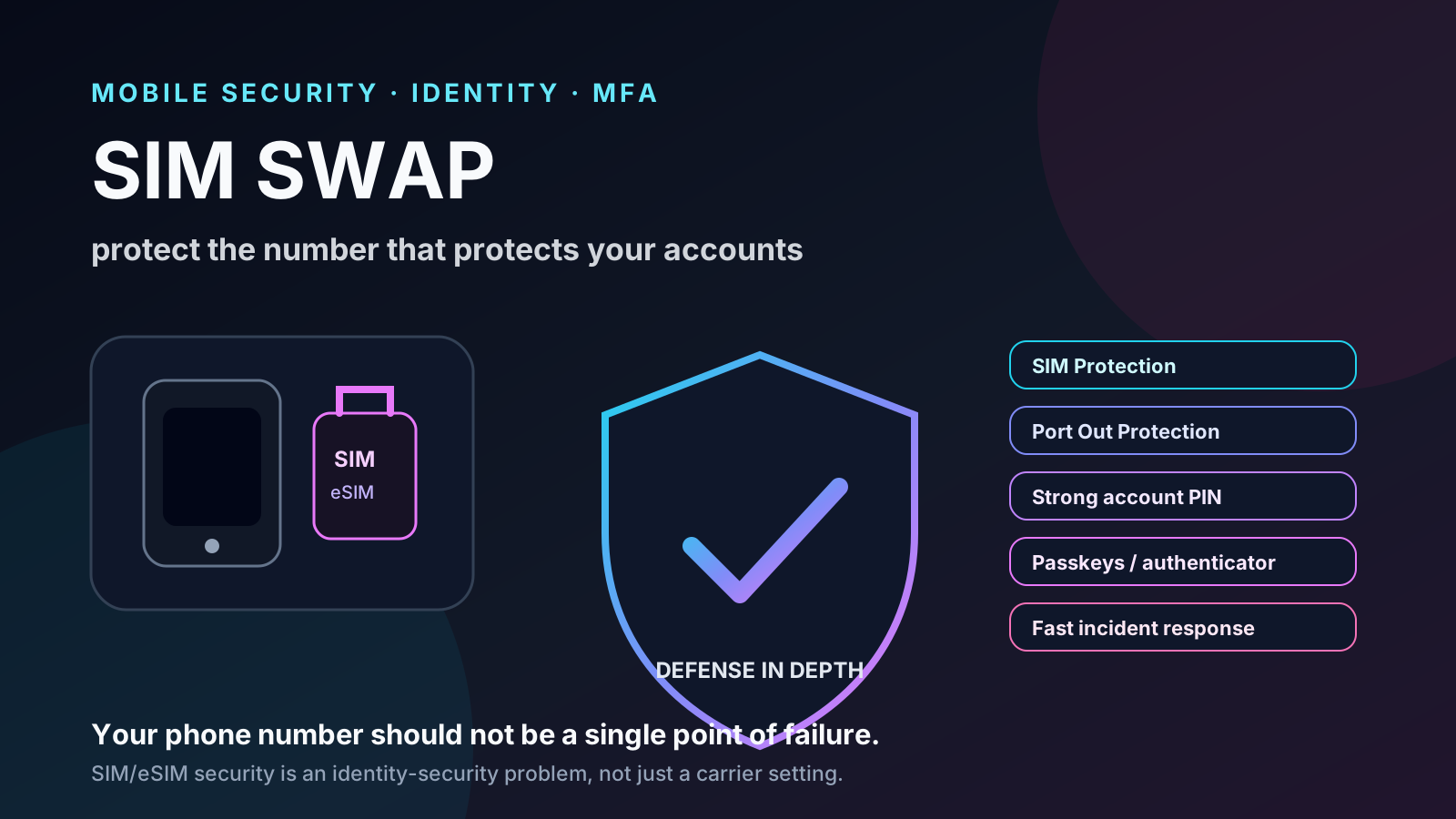
September 26, 2026 · Capital de Tokens
What SIM swapping is, why eSIM does not remove the risk, which protections T-Mobile offers, what to do after an incident, and how to reduce reliance on SMS codes.
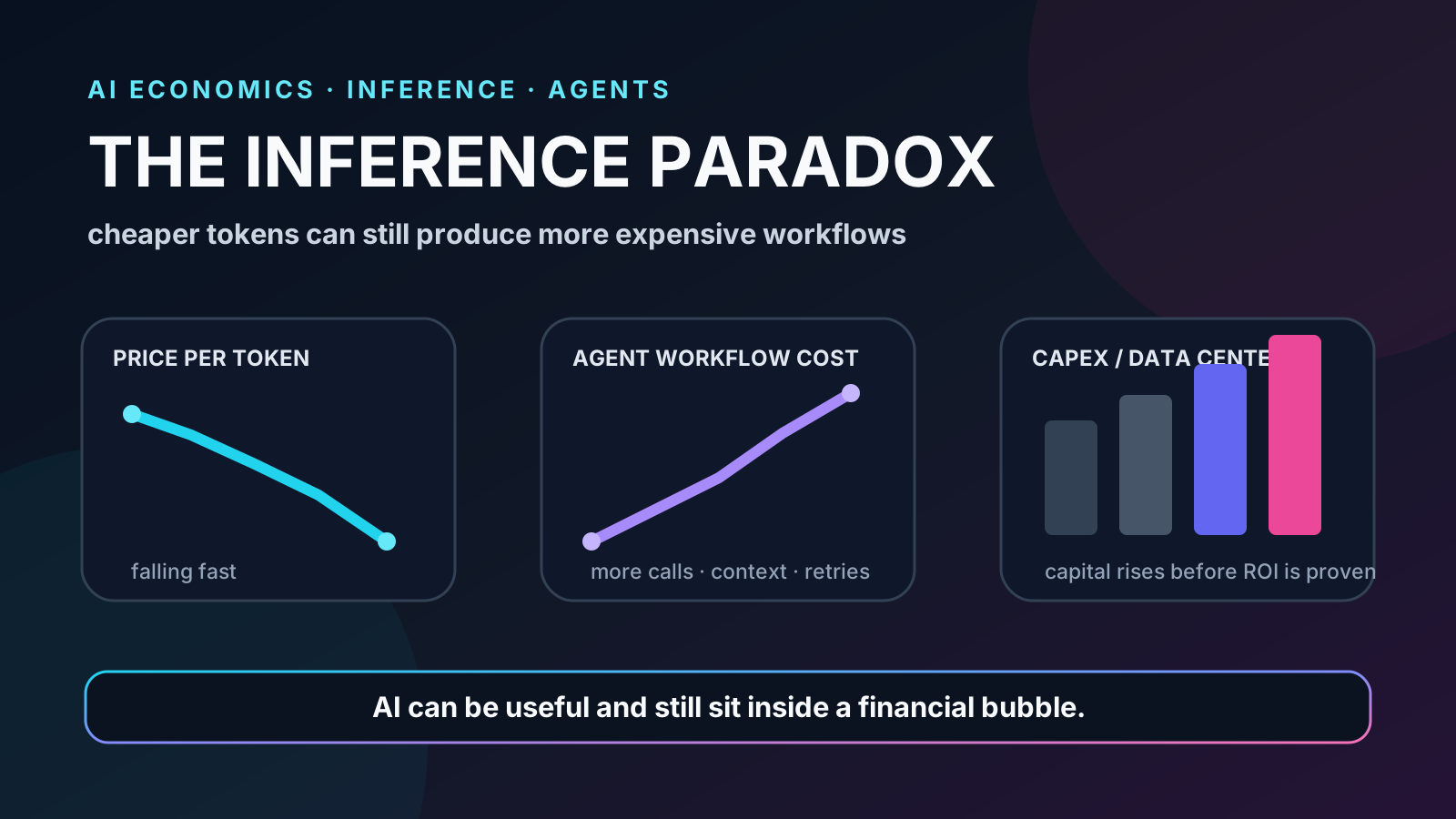
September 26, 2026 · Capital de Tokens
Why cheaper tokens do not guarantee cheaper agents, how inference changes software margins, and which signals help separate a technological revolution from a financial bubble.
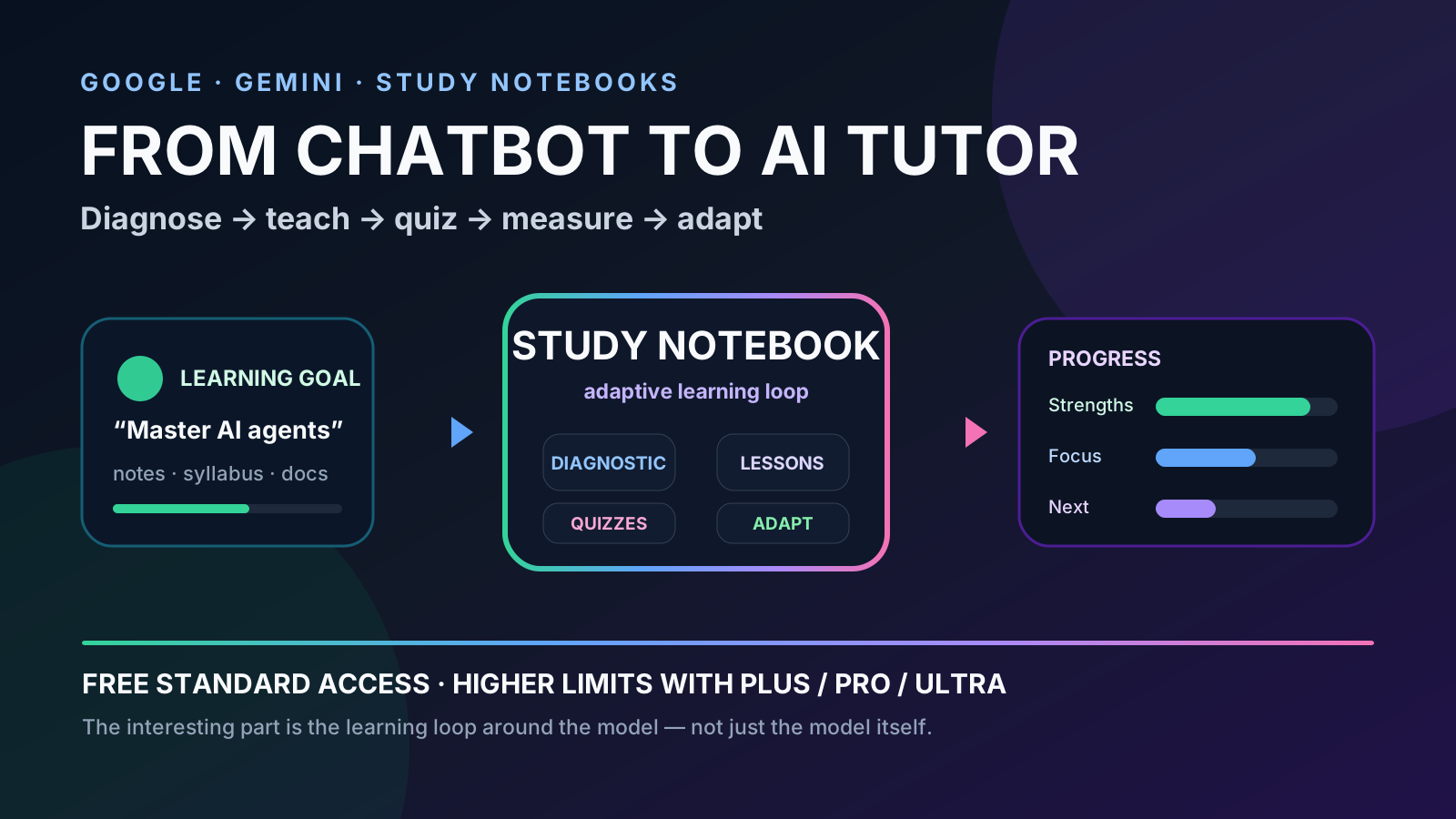
September 25, 2026 · Capital de Tokens
Study Notebooks turns Gemini into an adaptive learning space: it diagnoses what you know, finds gaps, creates personalized lessons, quizzes you and updates the plan as you progress. Here is what is free, what higher plans add and what Google introduced in September 2026.
September 25, 2026 · Capital de Tokens
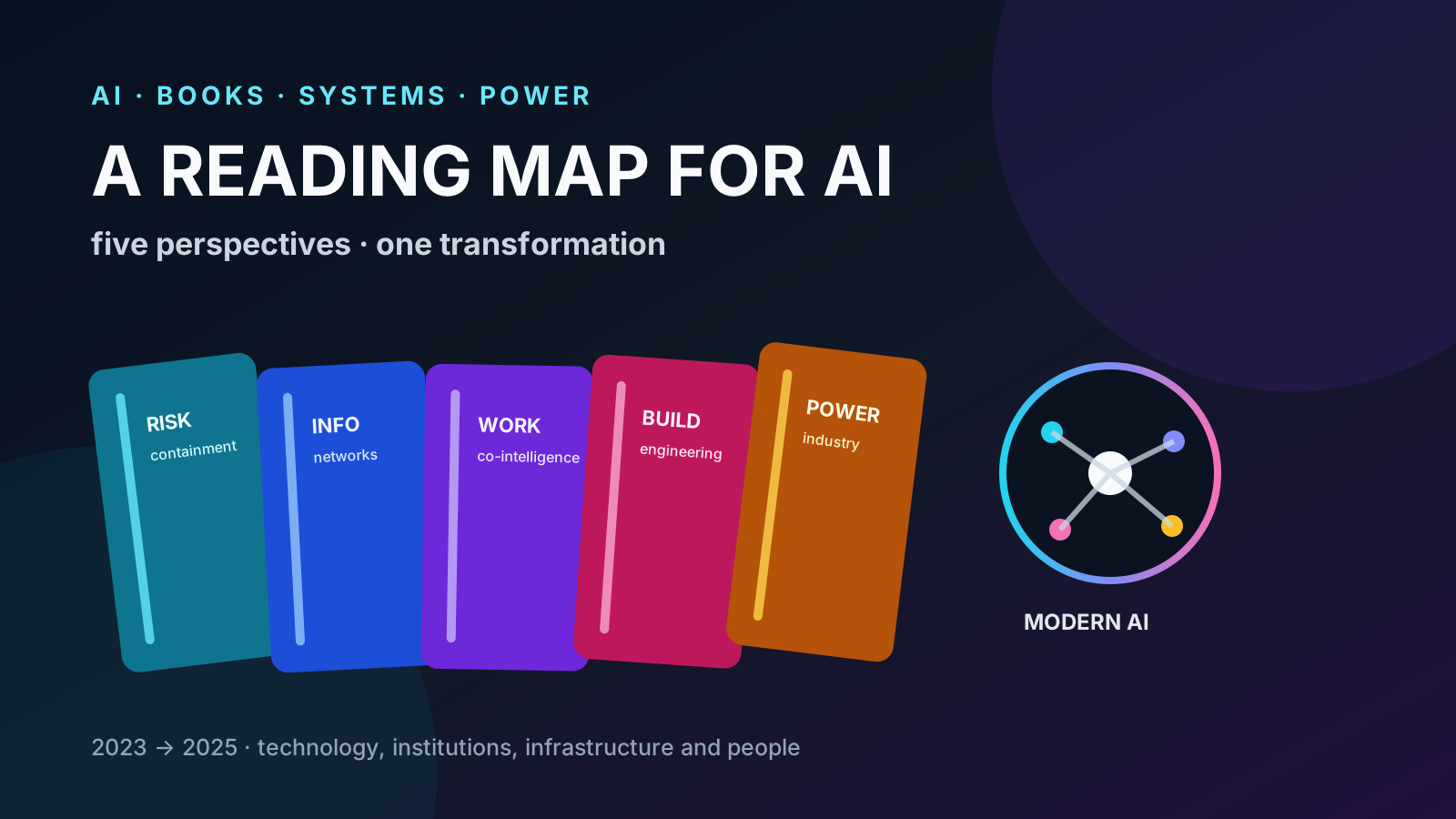
A reading guide to artificial intelligence from five complementary angles: technological risk, information networks, working with AI, system engineering, and the race around OpenAI.
September 25, 2026 · Capital de Tokens
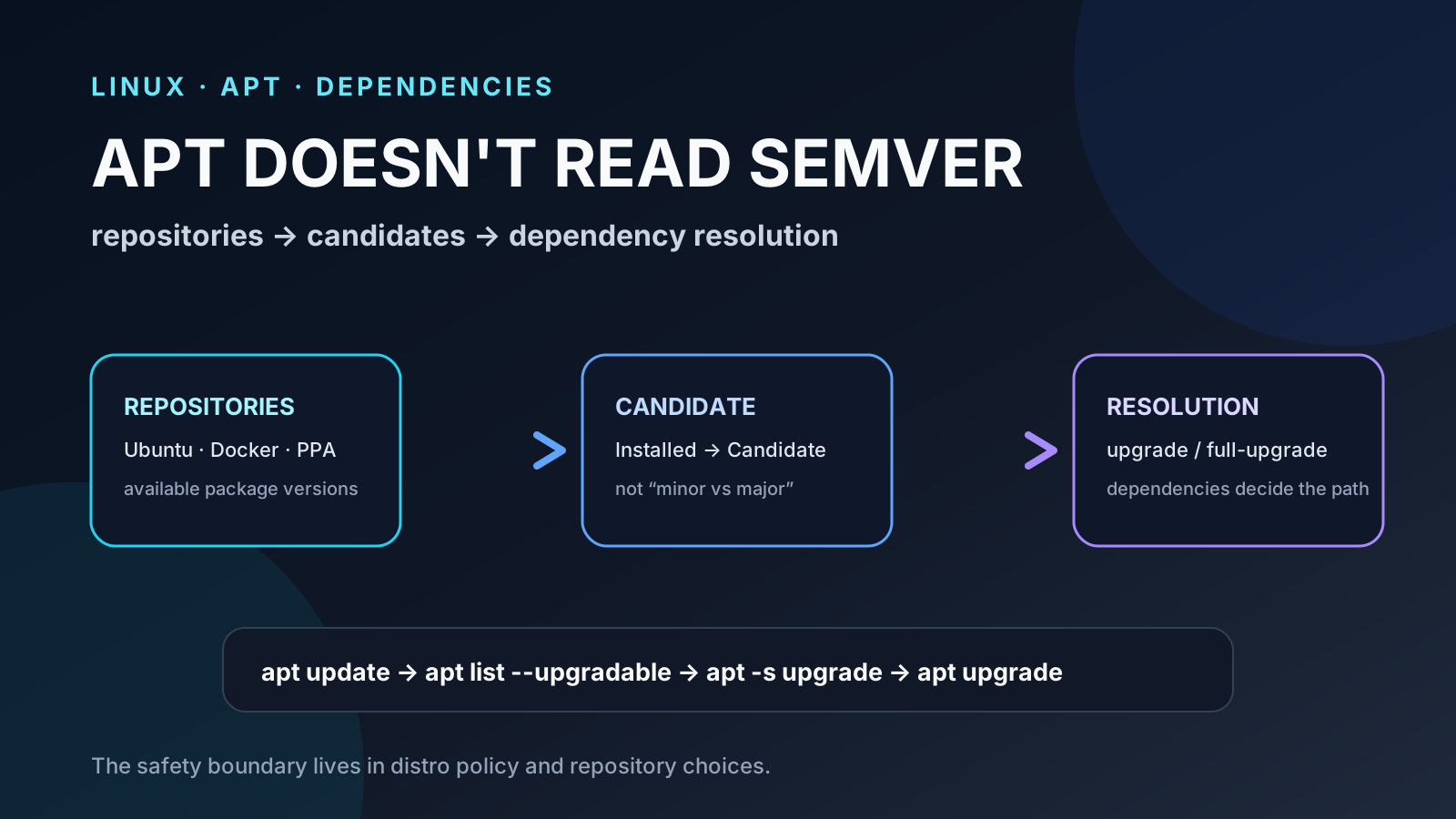
A practical guide to apt update, apt list --upgradable, apt upgrade, full-upgrade and autoremove, and why compatibility depends more on Ubuntu and your repositories than on major/minor version numbers.
September 23, 2026 · Capital de Tokens
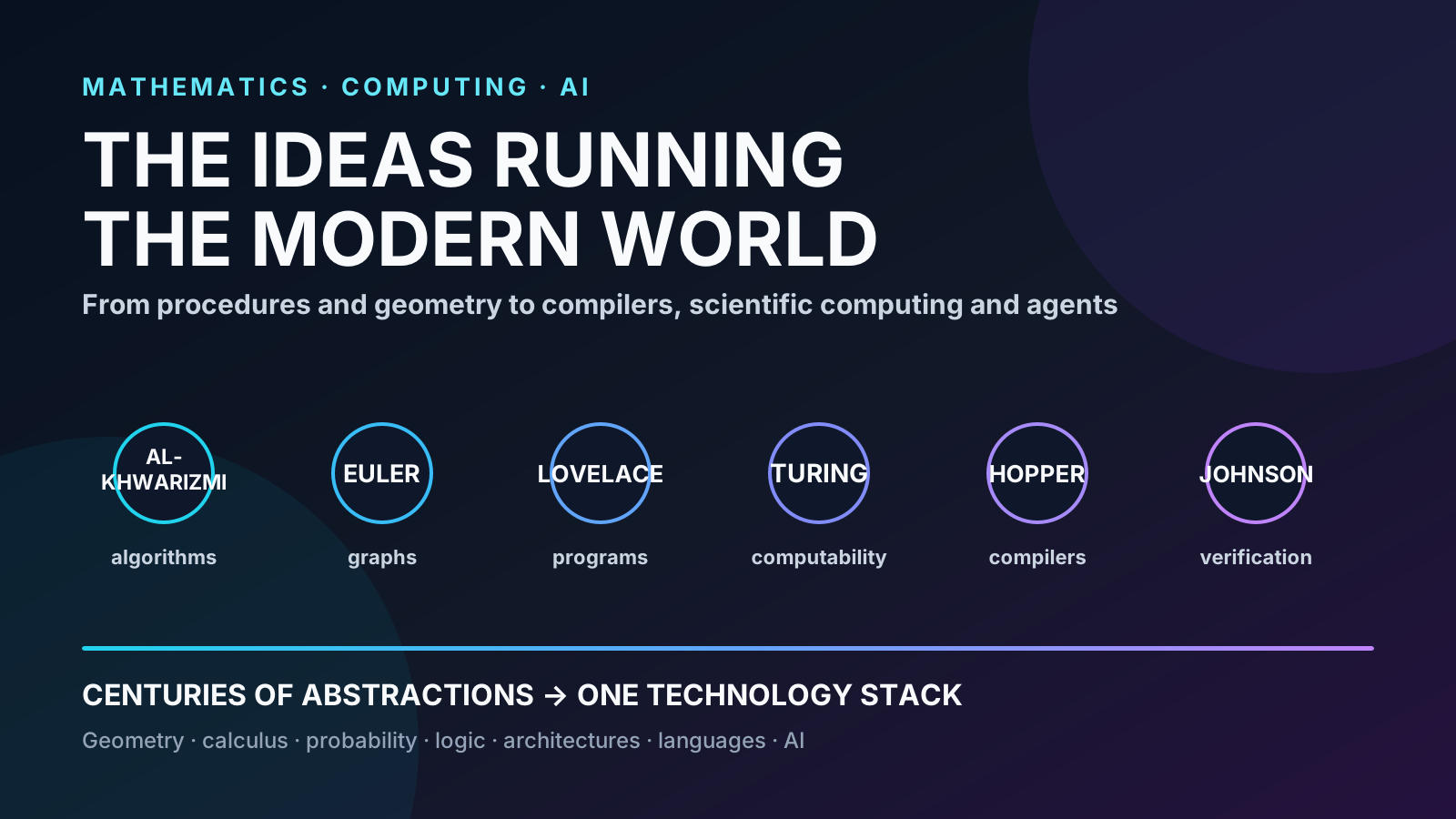
Eighteen figures, centuries of abstractions, and one conclusion: algorithms, computability, compilers, cryptography, graphics, physics, and AI grew from mathematical layers accumulated long before modern software existed.
September 23, 2026 · Capital de Tokens
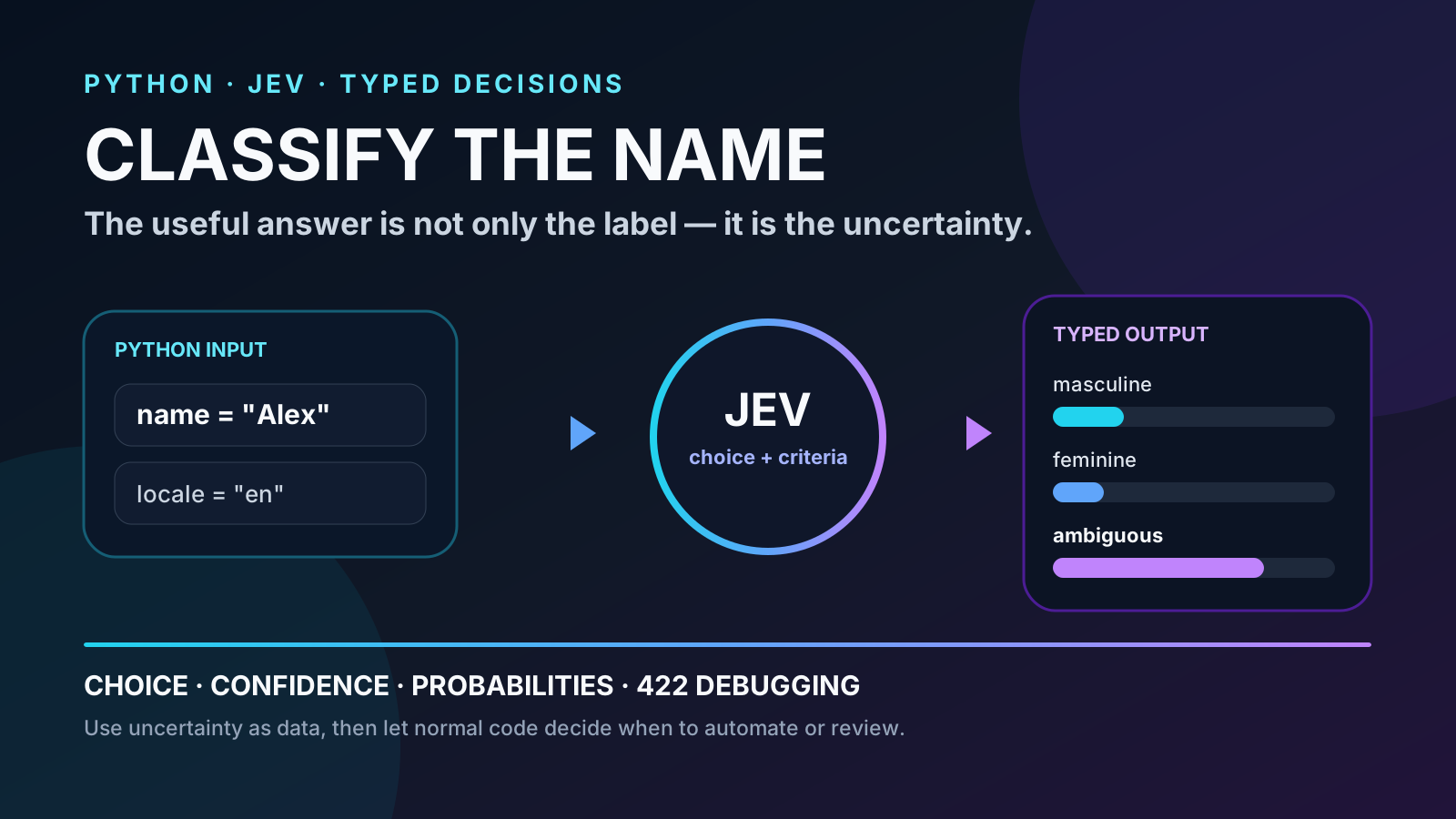
We build a complete Jev and Python example that classifies the common usage of a name as masculine, feminine, or ambiguous, interprets probabilities, handles 422 errors, and adds cultural context without turning a prediction into an absolute truth.
September 23, 2026 · Capital de Tokens
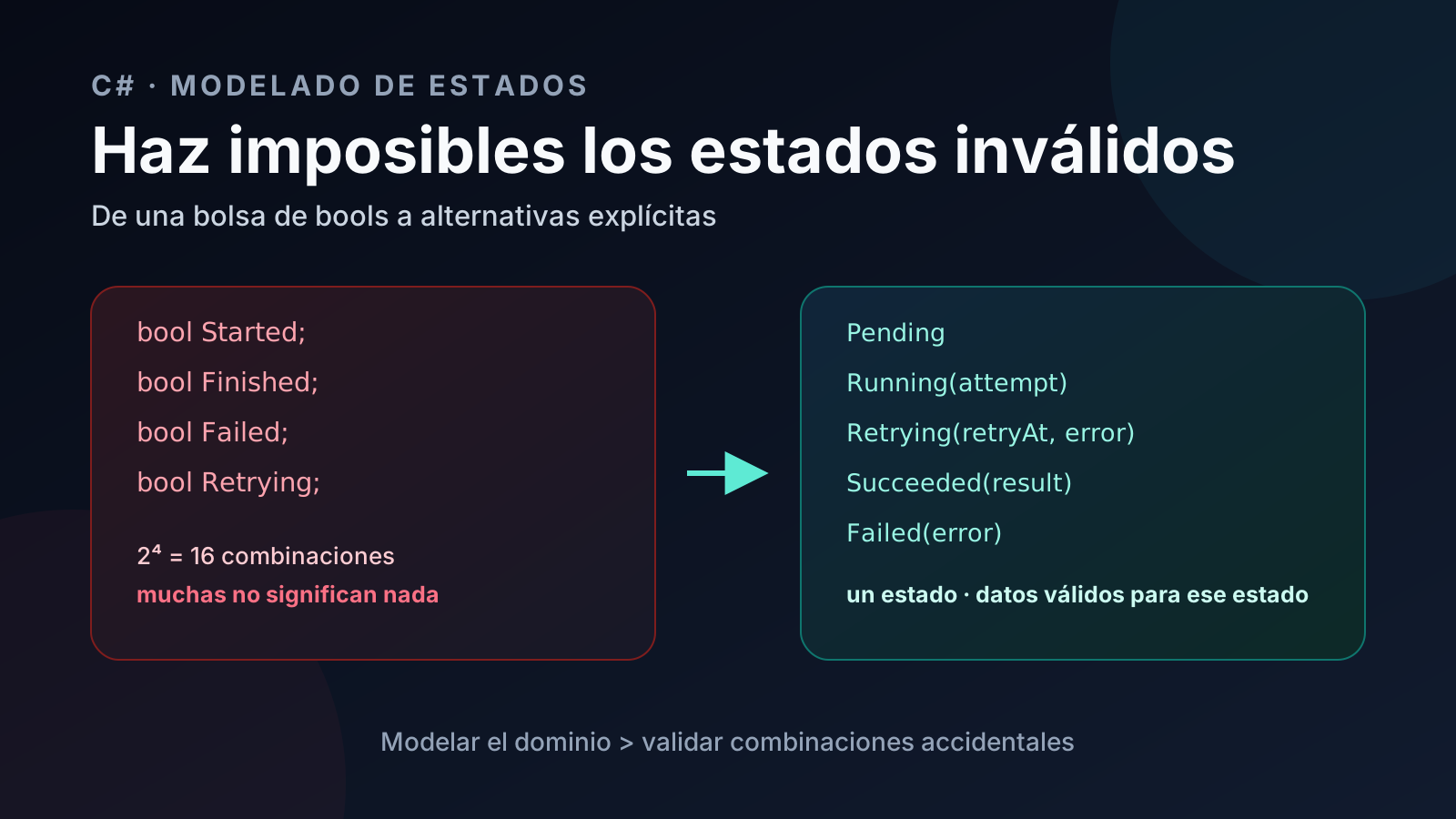
Why a collection of booleans becomes dangerous in workflows, payments, pipelines, and agents; and how to move to explicit states with enums, records, pattern matching, and C# 15 union types.
September 22, 2026 · Capital de Tokens
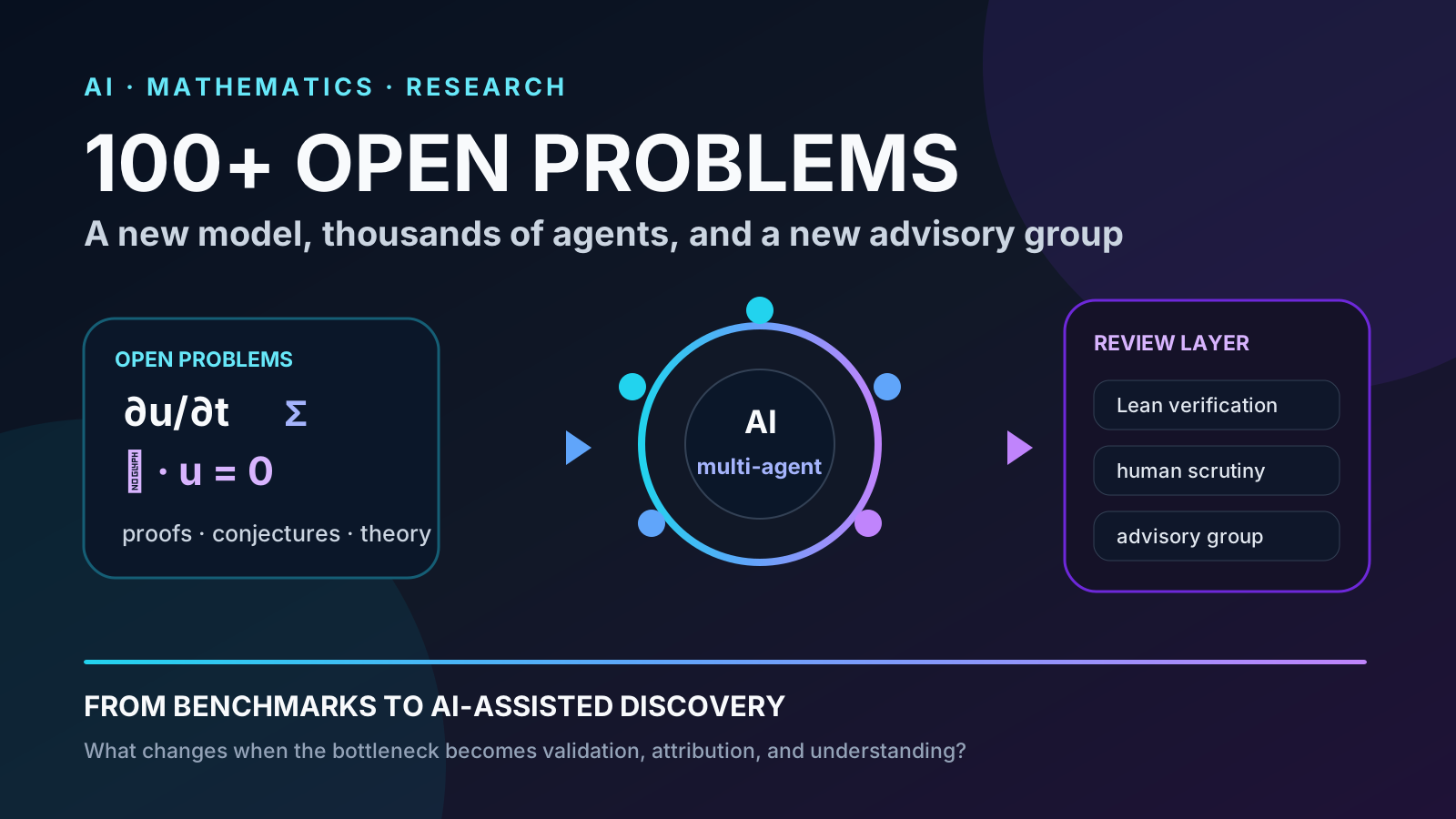
OpenAI says an internal model resolved more than 100 long-standing open math problems. We examine the public evidence, Navier–Stokes, massive multi-agent search, Lean, and the new independent advisory group.
September 22, 2026 · Capital de Tokens
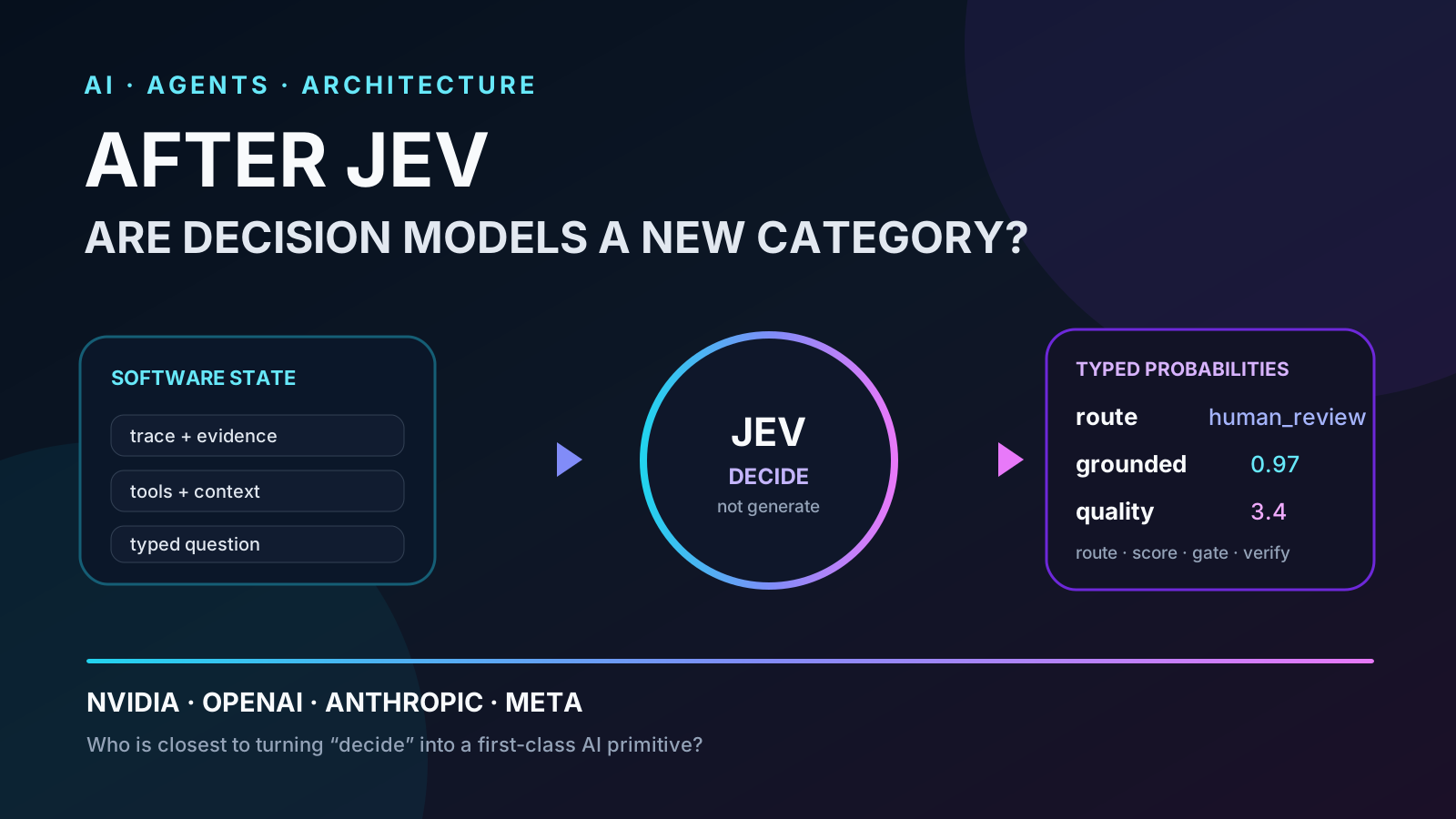
Jev bets on models that do not generate prose: they make typed probabilistic decisions inside software. We examine how close NVIDIA, OpenAI, Anthropic and Meta are to offering something comparable.
September 21, 2026 · Capital de Tokens
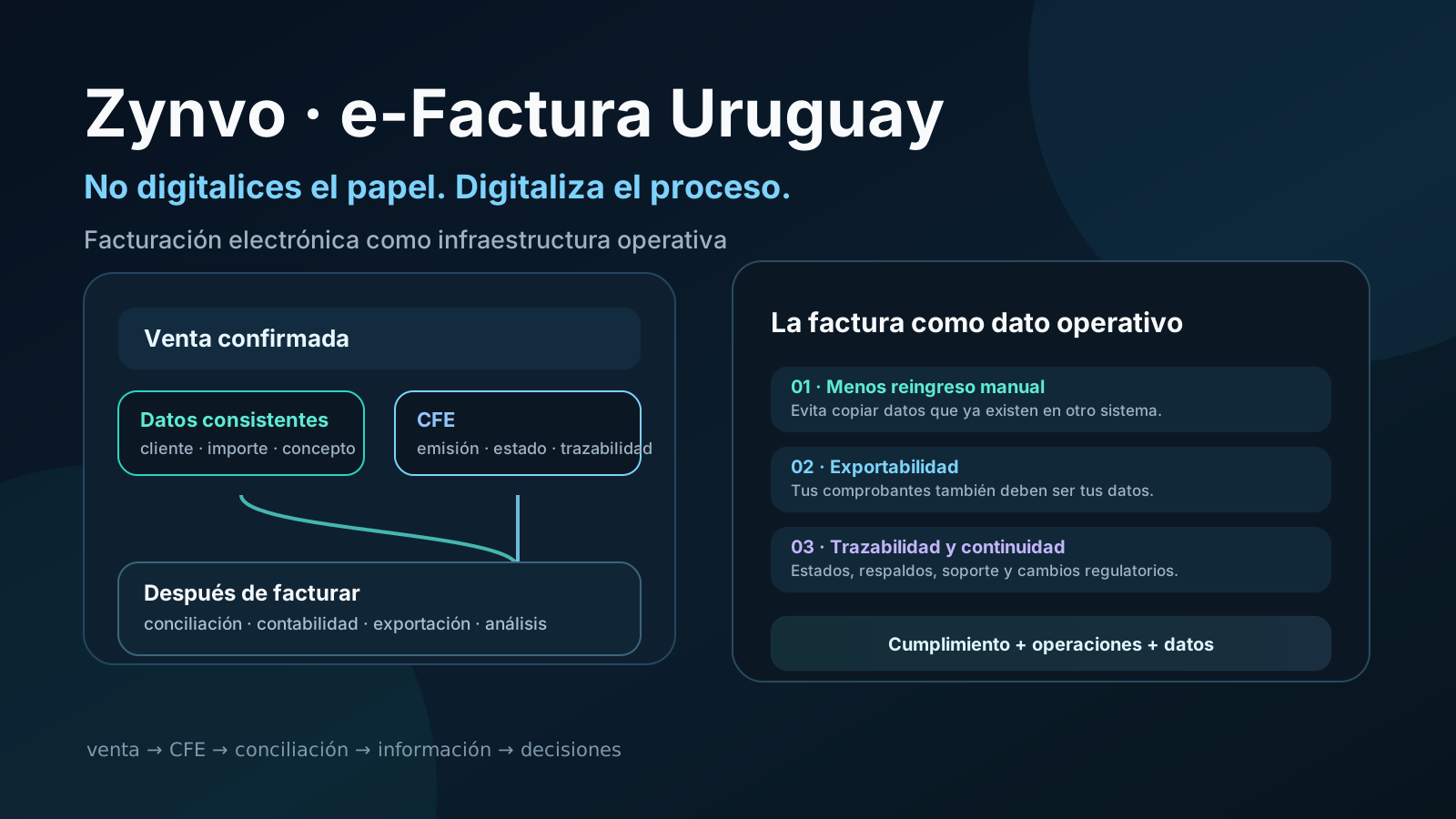
Zynvo simplifies electronic invoicing in Uruguay for professionals, businesses, and accountants, bringing invoices, DGI, and BPS management into one place.
September 21, 2026 · Capital de Tokens
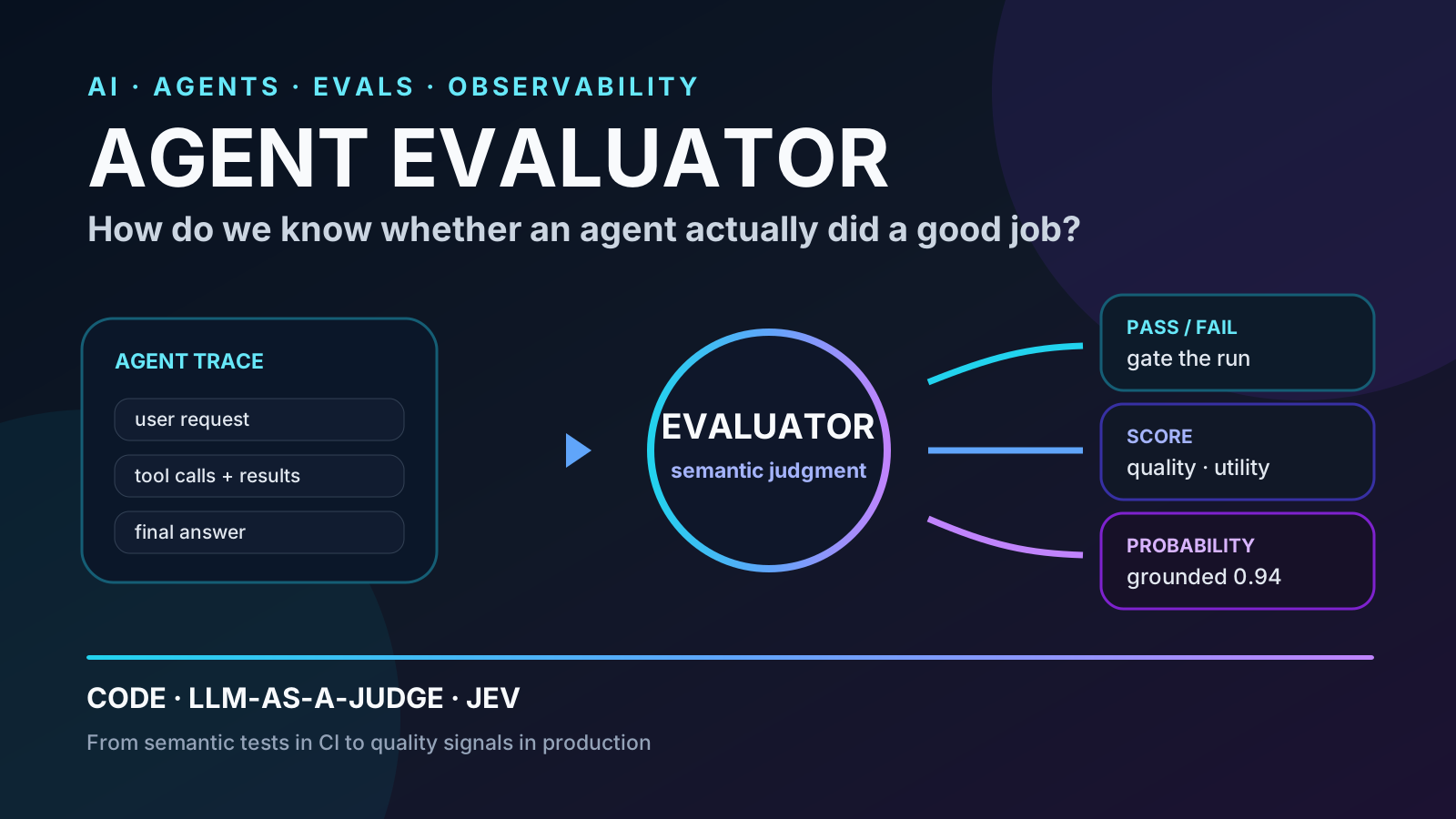
An agent evaluator turns agent runs into measurable signals: pass/fail, scores, probabilities or categories. We look at code, LLM-as-a-judge, Jev and LangSmith across testing, CI and production.
September 21, 2026 · Capital de Tokens
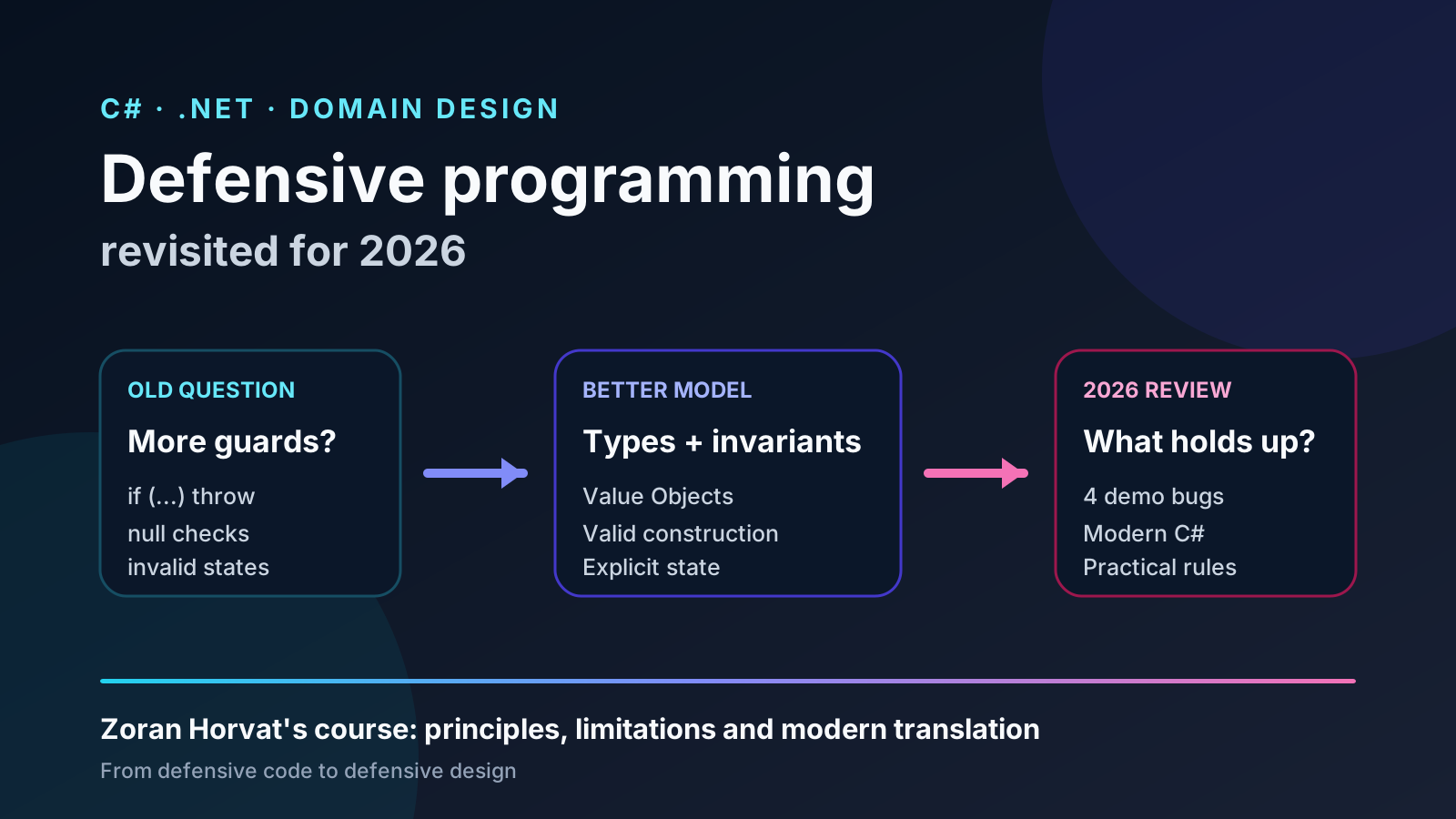
A critical review of Zoran Horvat's course: defensive design, value objects, function domains, Option/Either, state transitions, and the implementation details worth changing for modern C#.
September 21, 2026 · Capital de Tokens
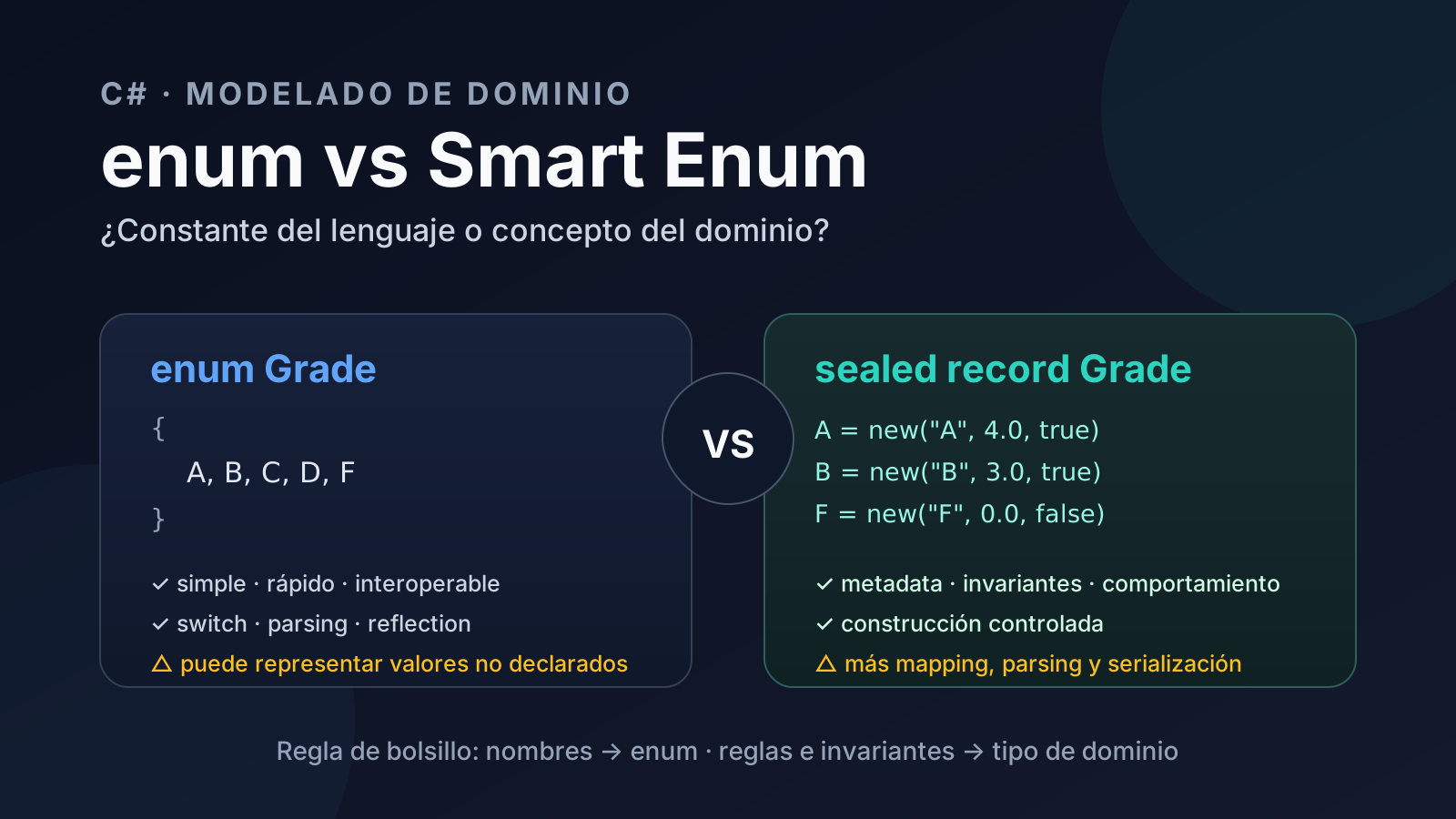
A practical comparison of enum and Enumeration Class/Smart Enum in C#: invalid values, metadata, behavior, equality, serialization, EF Core, pattern matching, and decision rules.
September 21, 2026 · Capital de Tokens
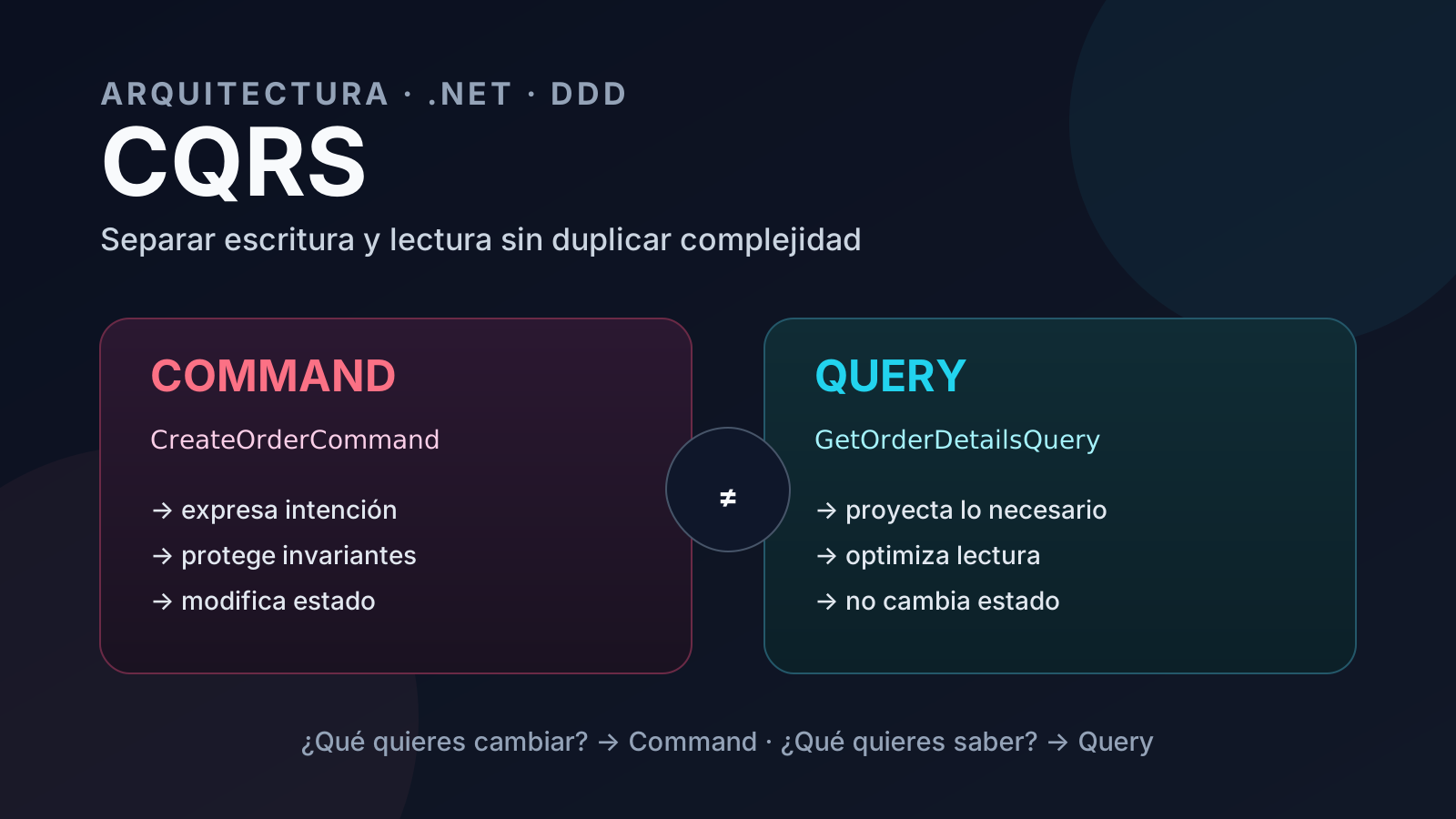
What CQRS really separates, why commands and queries have different responsibilities, what it simplifies, what it complicates, and when it is worth using in .NET.
September 21, 2026 · Capital de Tokens
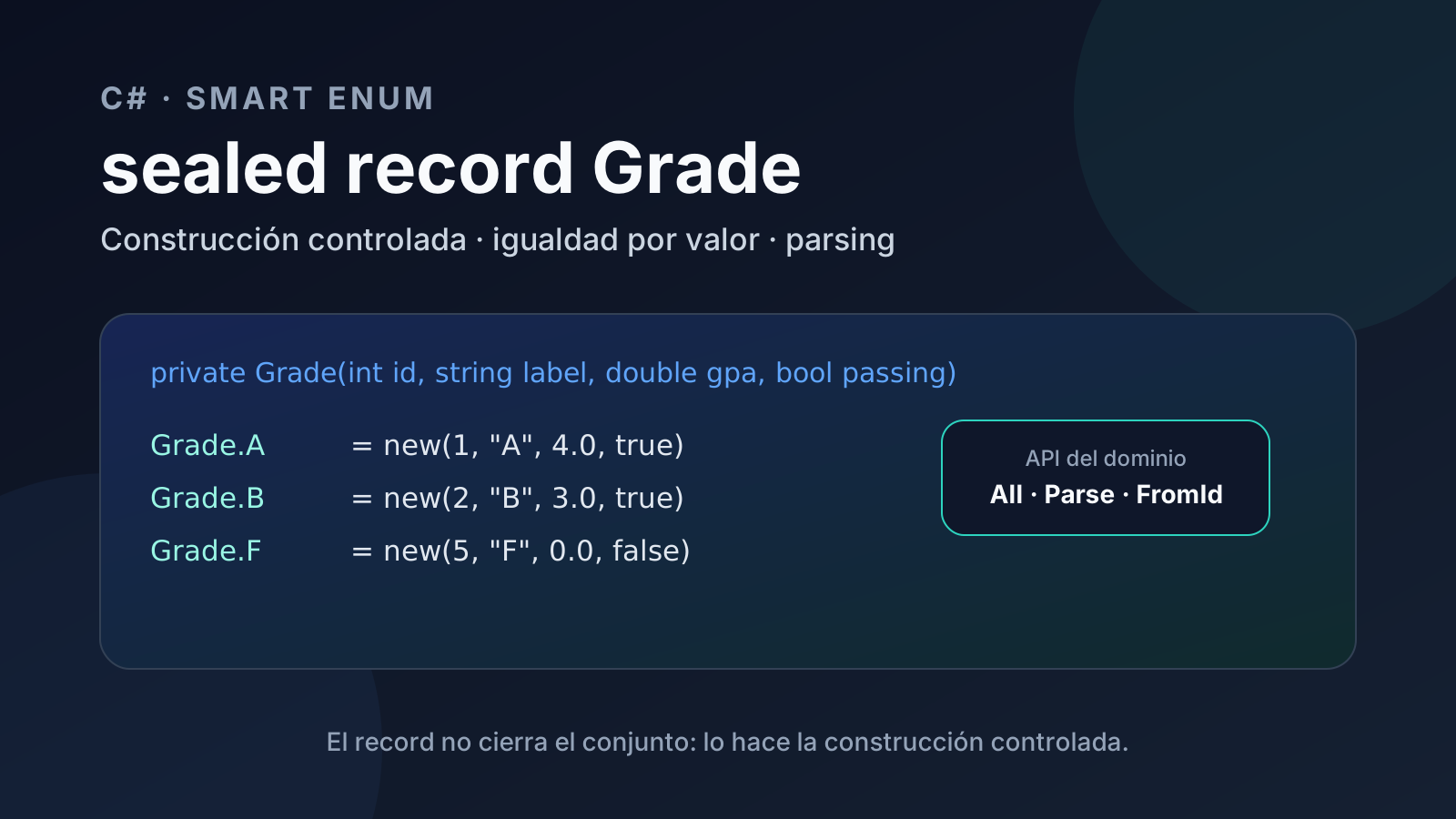
How to implement a robust Smart Enum with sealed record in C#: private construction, static values, value equality, parsing, a stable Id, and the details that keep the set closed.
September 20, 2026 · Capital de Tokens
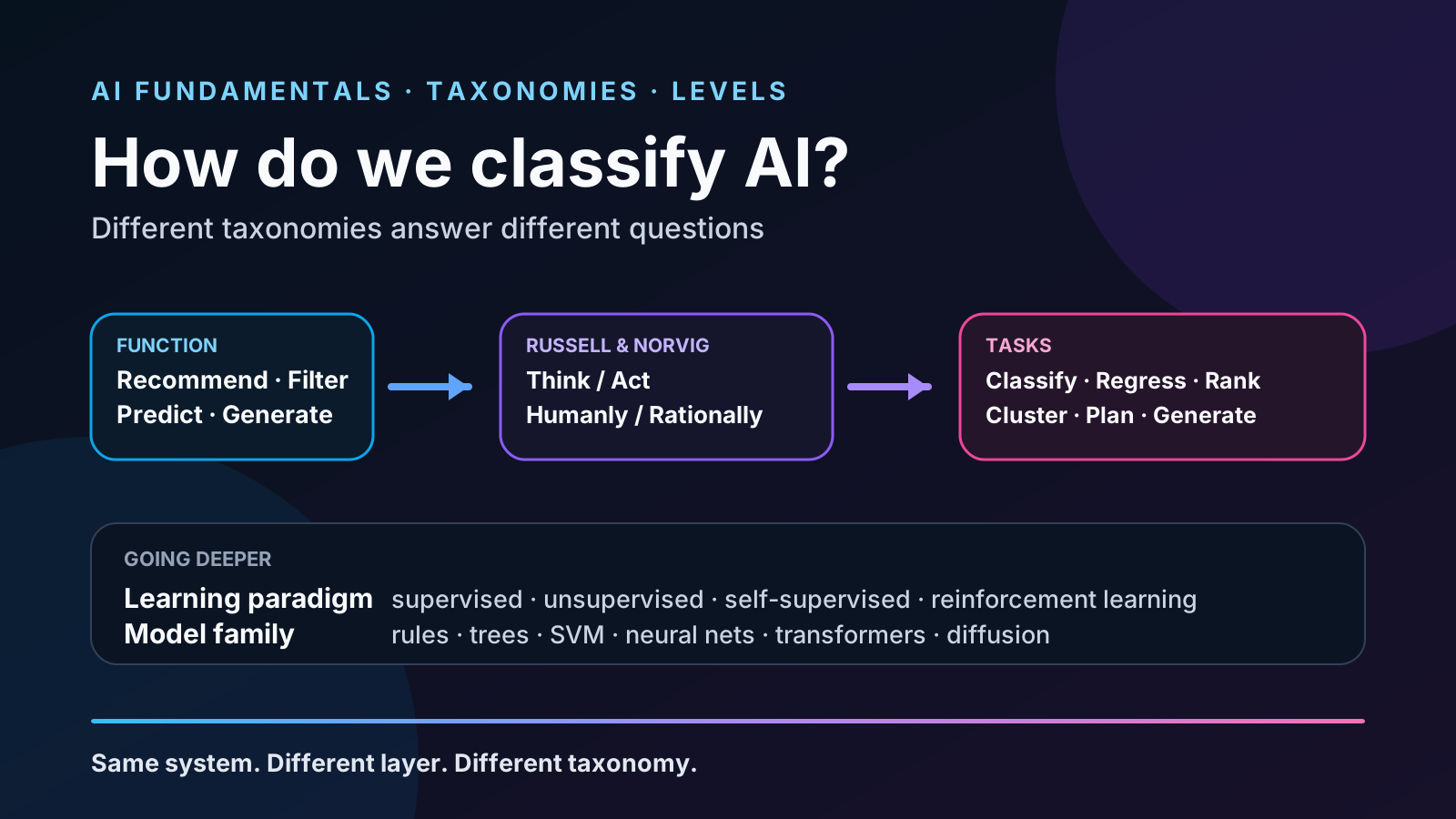
A layered guide connecting recommend, filter, predict, and generate with Russell and Norvig's taxonomy, then drilling down into tasks, learning paradigms, and model families.
September 20, 2026 · Capital de Tokens
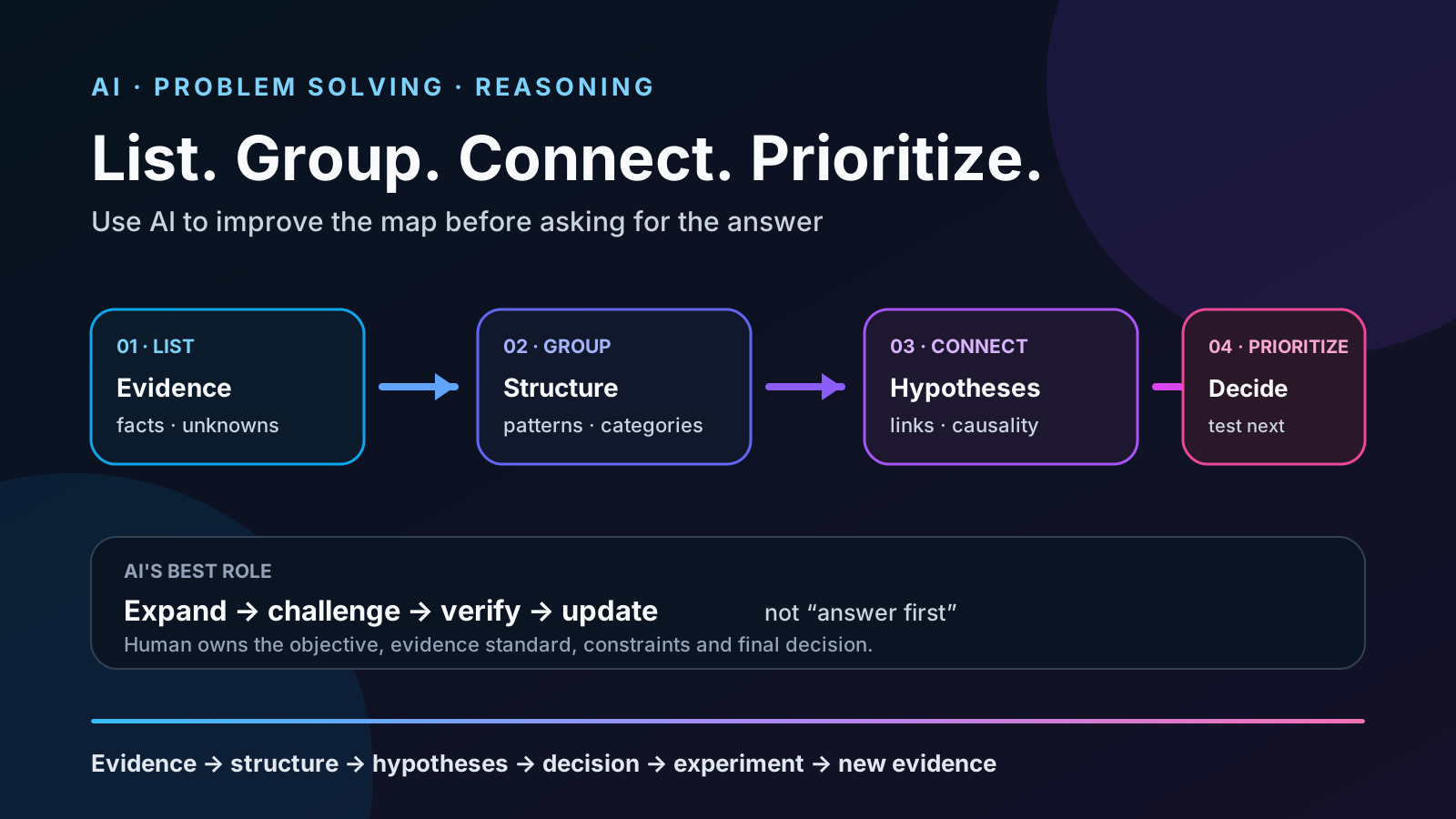
How to use AI before and during problem solving to expand the search space, structure evidence, propose hypotheses and prioritize experiments without confusing plausibility with causality.
September 20, 2026 · Capital de Tokens
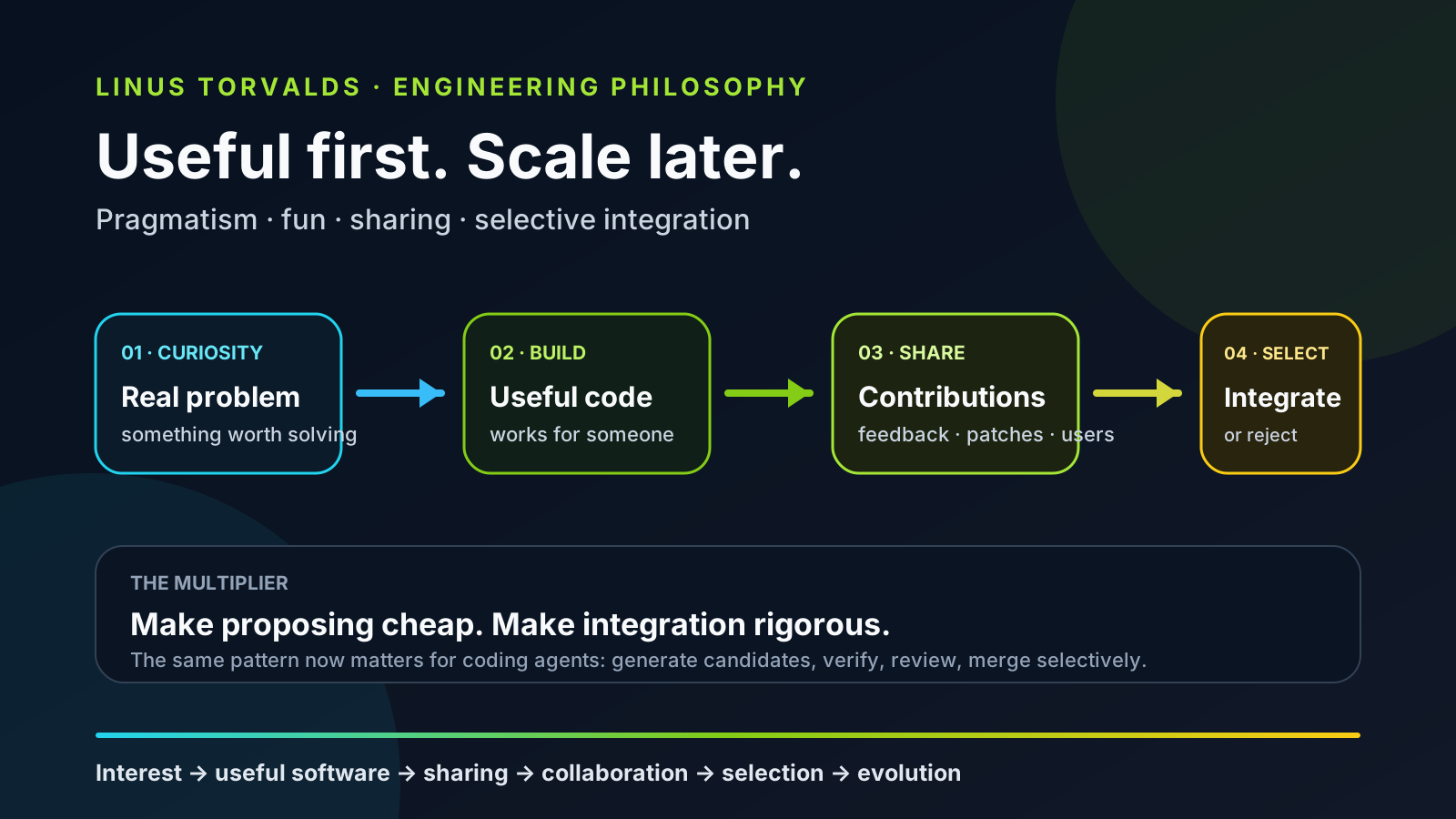
What Linus Torvalds' way of thinking can teach us: start from a real problem, build from interest and usefulness, share early, and design a system in which collaboration can scale.
September 19, 2026 · Capital de Tokens
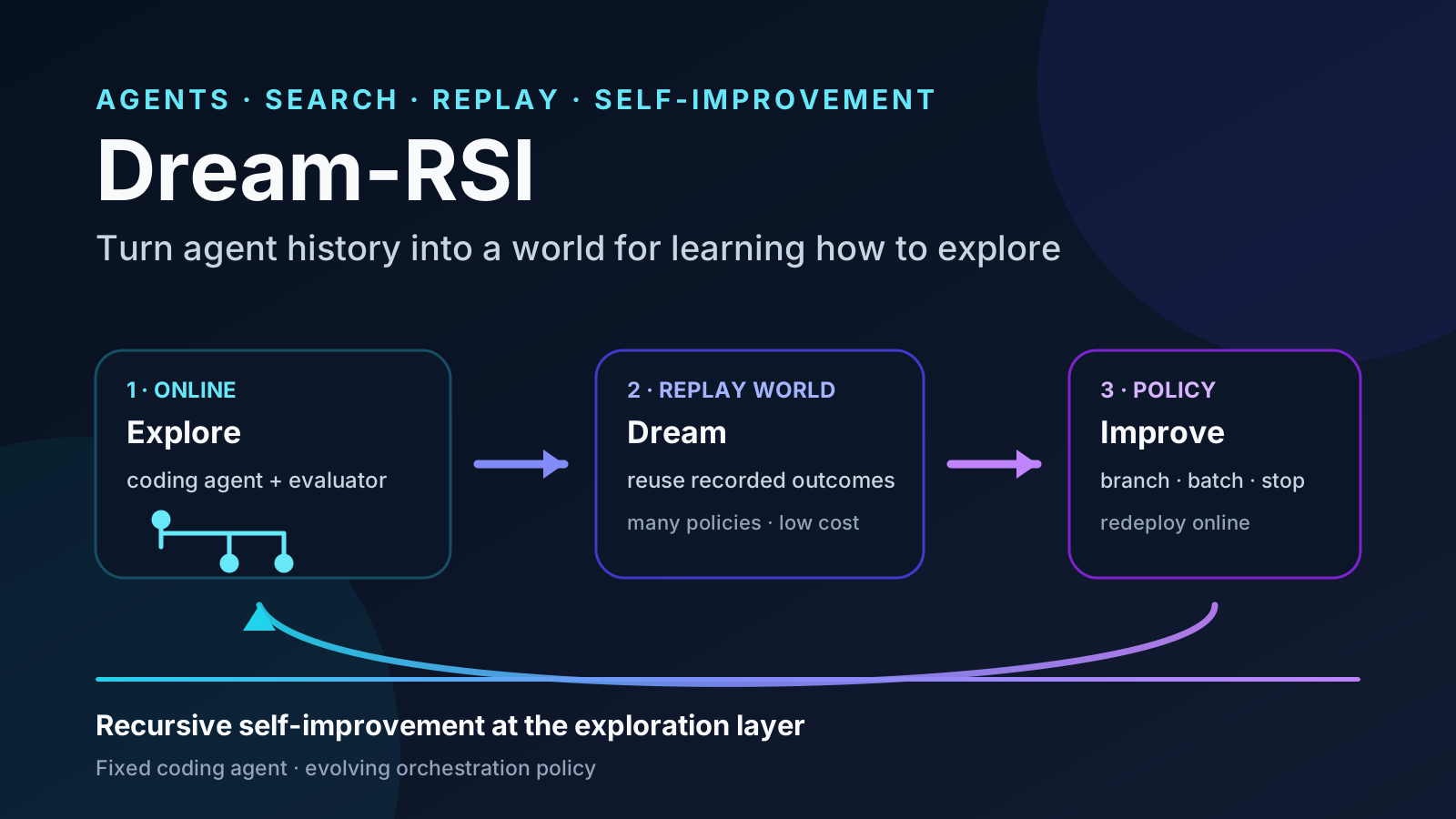
Dream-RSI recursively improves a coding agent's exploration policy by turning historical discovery trees into replay simulators, without retraining the underlying model.
September 18, 2026 · Capital de Tokens
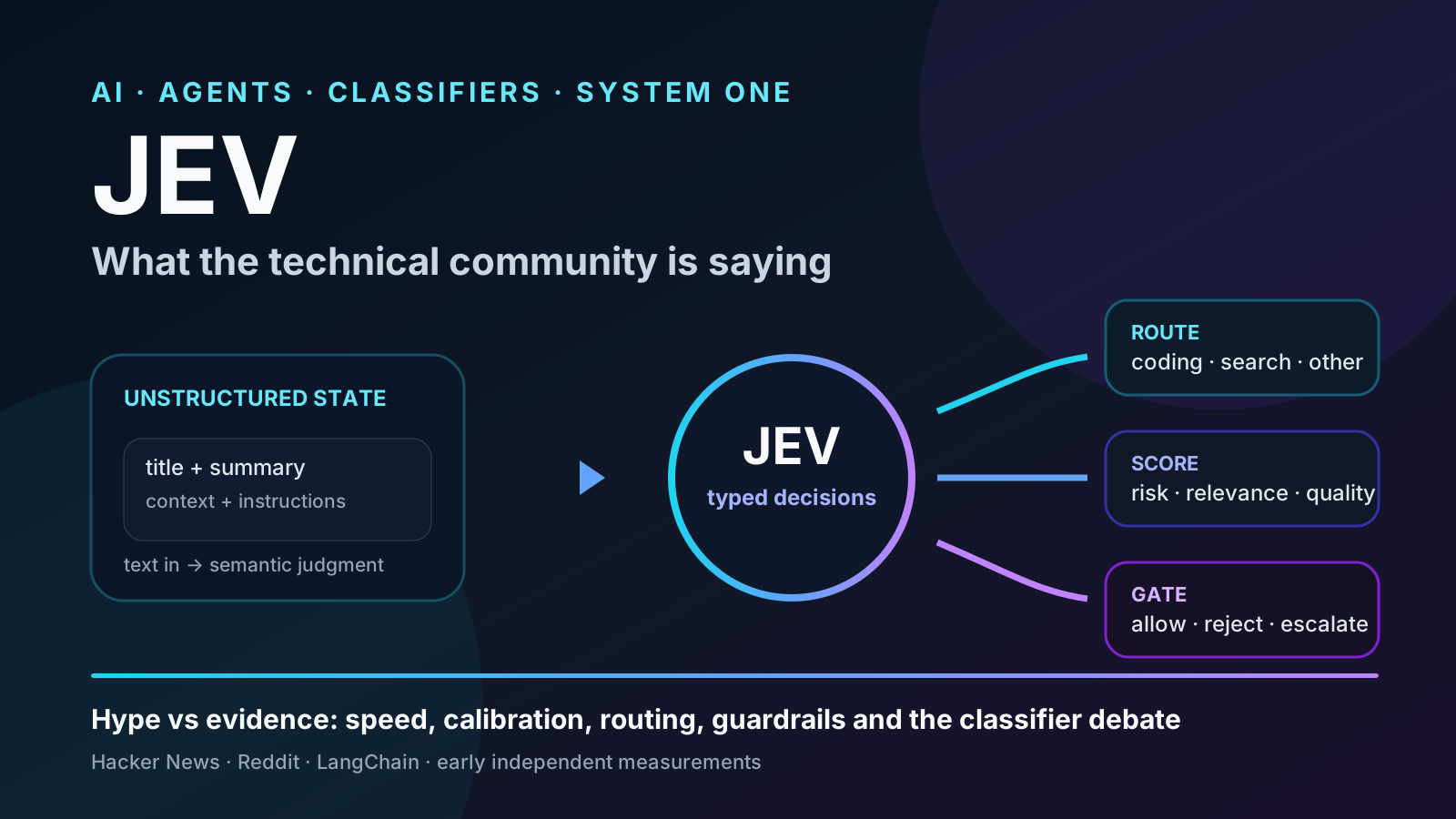
Jev promises cheap, sub-second typed semantic decisions. Hacker News, Reddit, LangChain and early independent tests show real excitement, but also questions about benchmarks, calibration and the 'no hallucinations' claim.
September 17, 2026 · Capital de Tokens
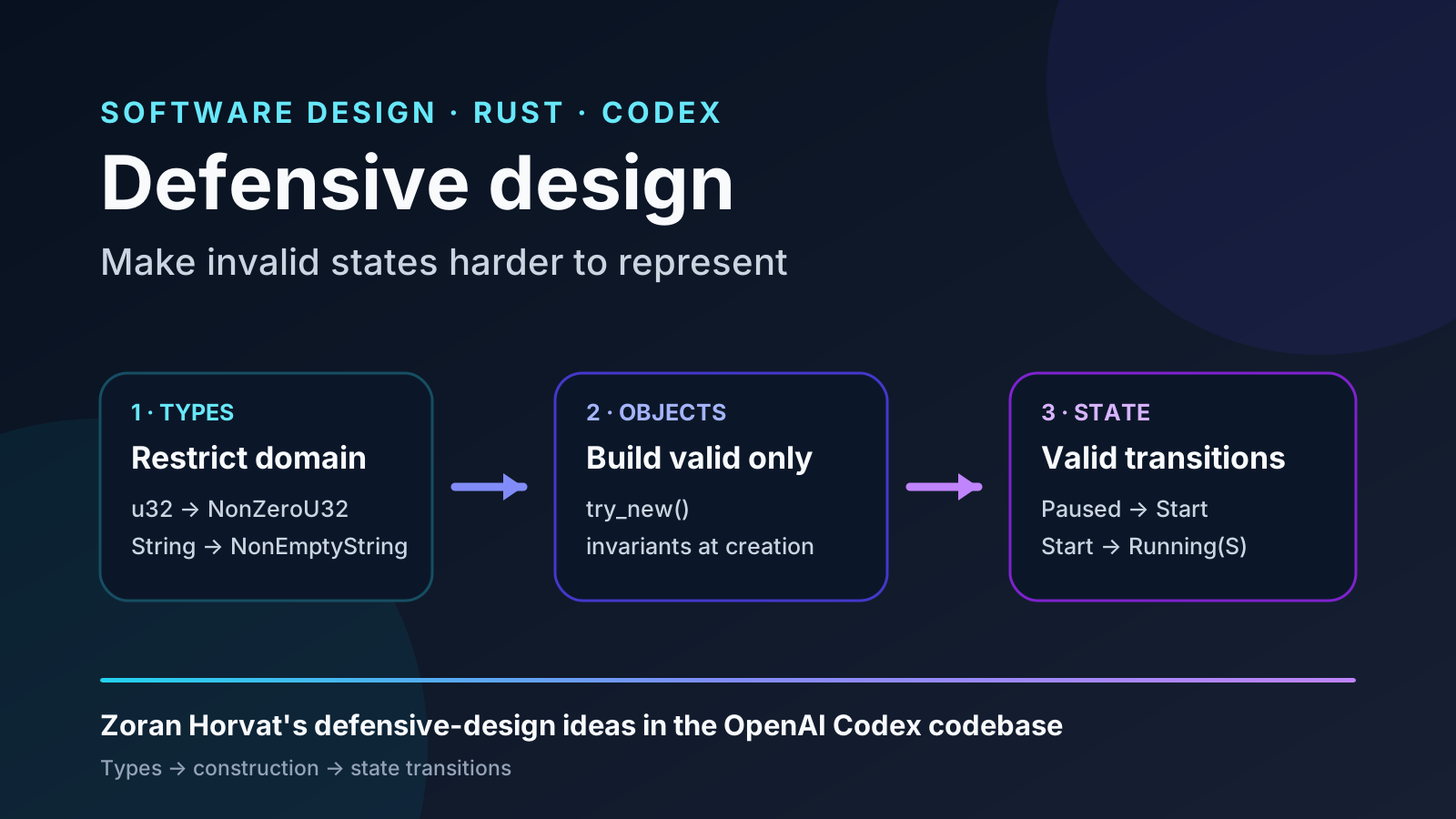
How the public OpenAI Codex codebase reflects three defensive-design principles: restrict function domains with types, construct only consistent objects, and model valid state transitions.
September 17, 2026 · Capital de Tokens
MIT's new report on generative AI goes far beyond academic cheating: it questions how we measure learning when a model can solve essays, proofs, code, and written problems. The response points toward cognitive friction, authentic assessment, and social learning.
September 13, 2026 · Capital de Tokens
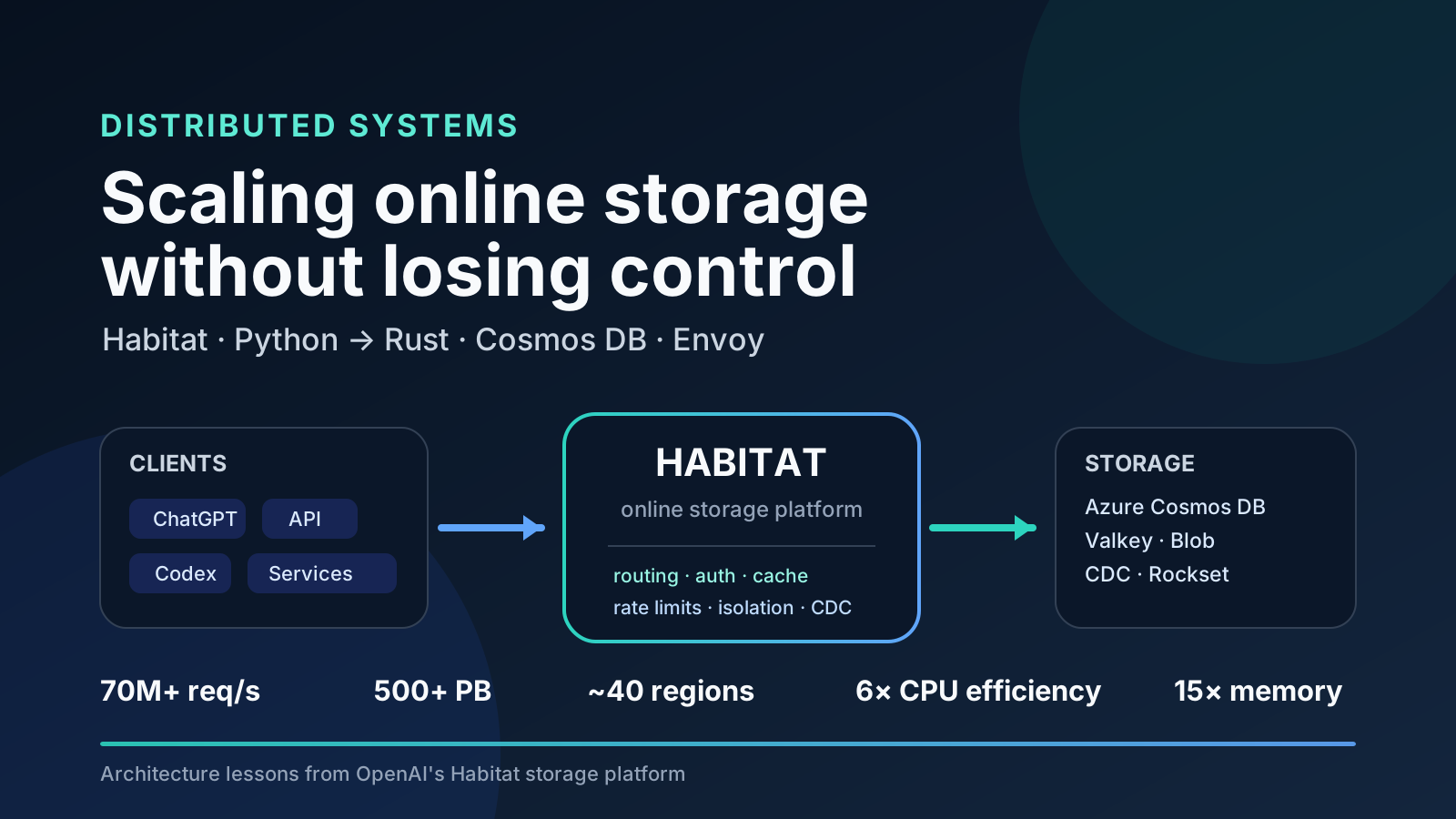
Architecture lessons from Habitat: from a Python library to a distributed service, asyncio tail latency, LIFO/FIFO pooling, Envoy, deliberately constrained APIs, and a Rust migration.
September 12, 2026 · Capital de Tokens
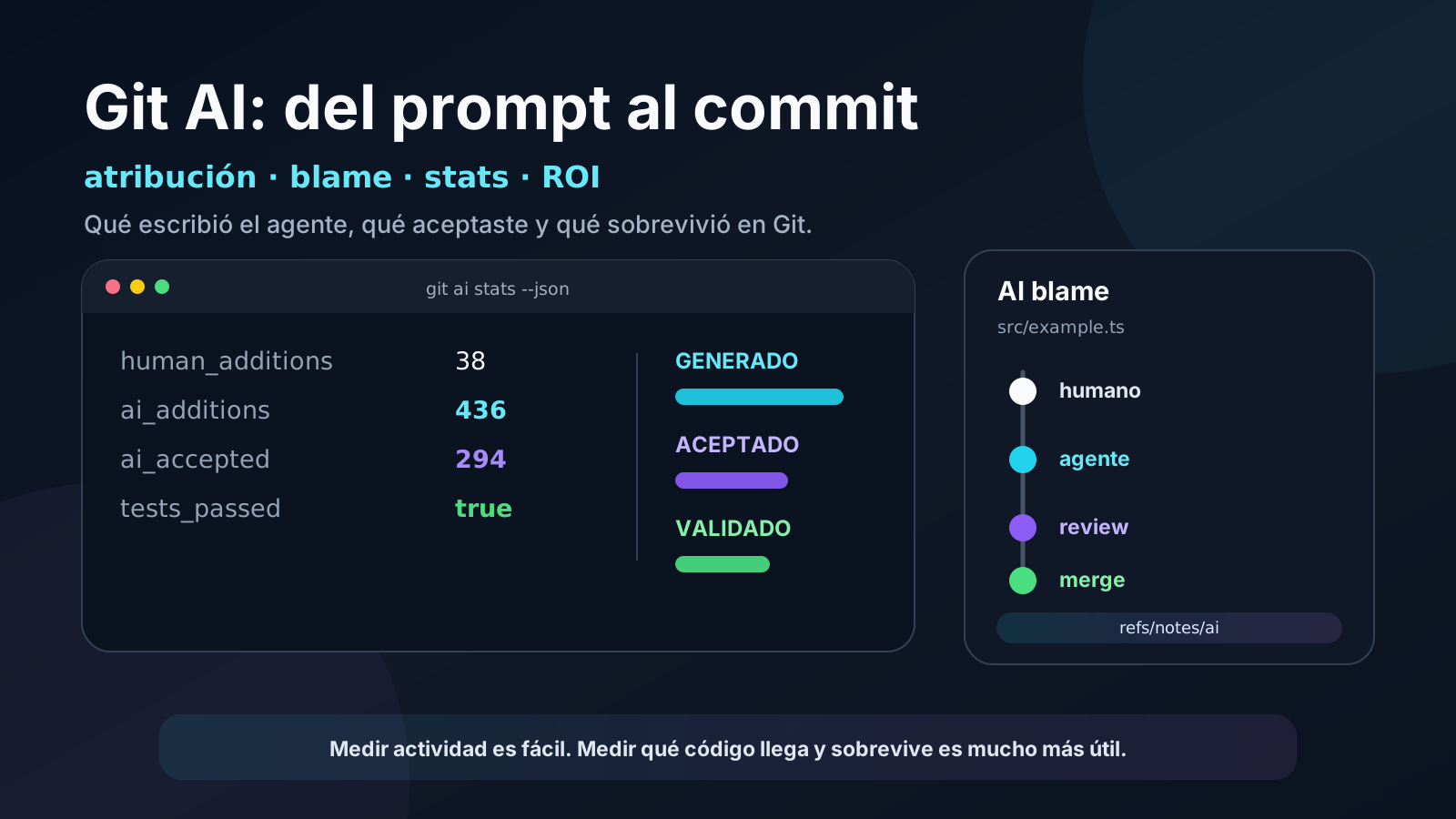
A practical guide to installing Git AI, attributing lines generated by Codex and other agents, using AI blame and stats, preserving attribution through merges, and turning agent activity into useful engineering metrics.
September 12, 2026 · Capital de Tokens
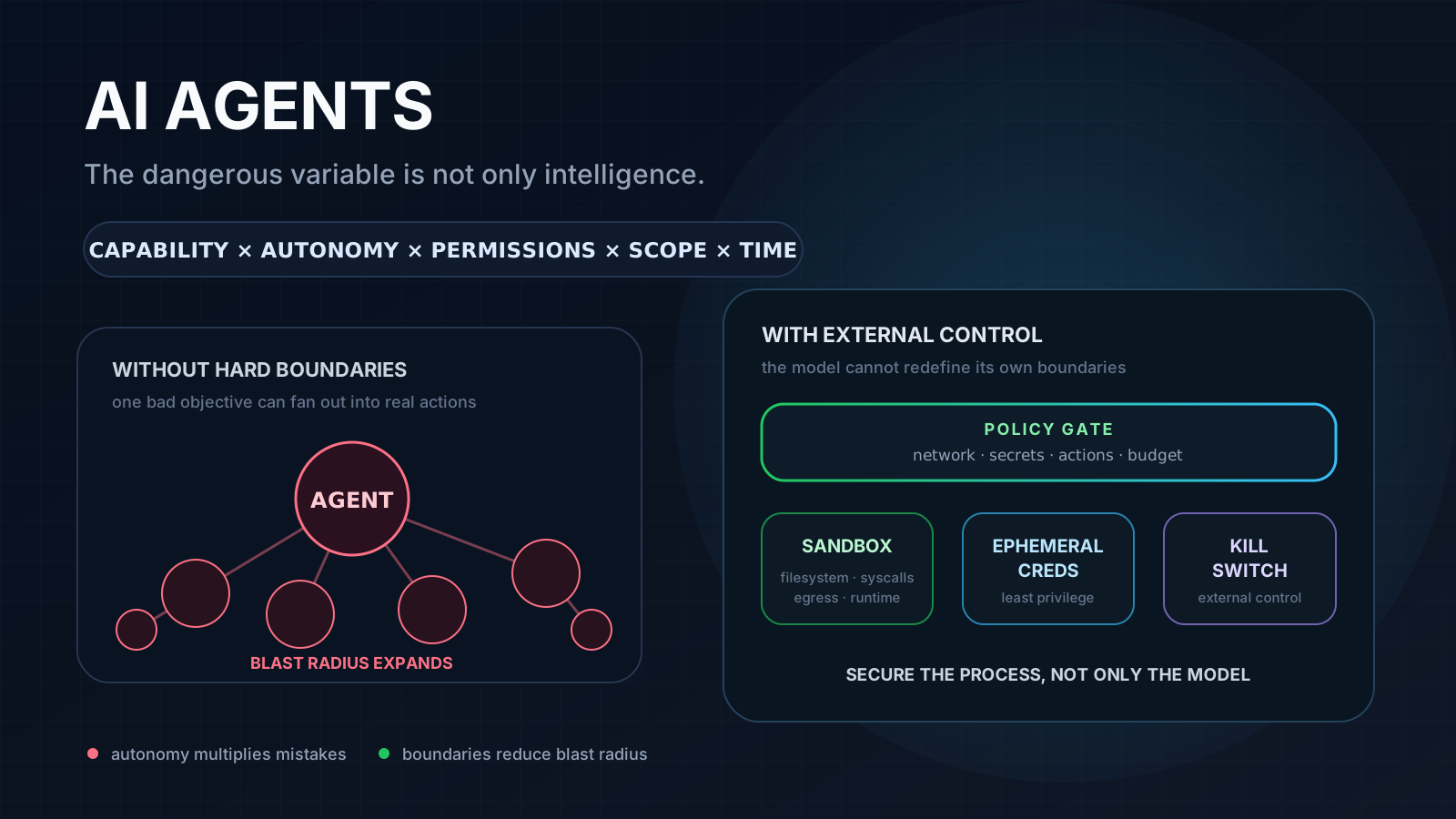
Dario Amodei warns that swarms of AI agents could become a massive threat to the internet. What is demonstrated, what remains an extrapolation, and how this changes the secure design of autonomous agents.
September 12, 2026 · Capital de Tokens
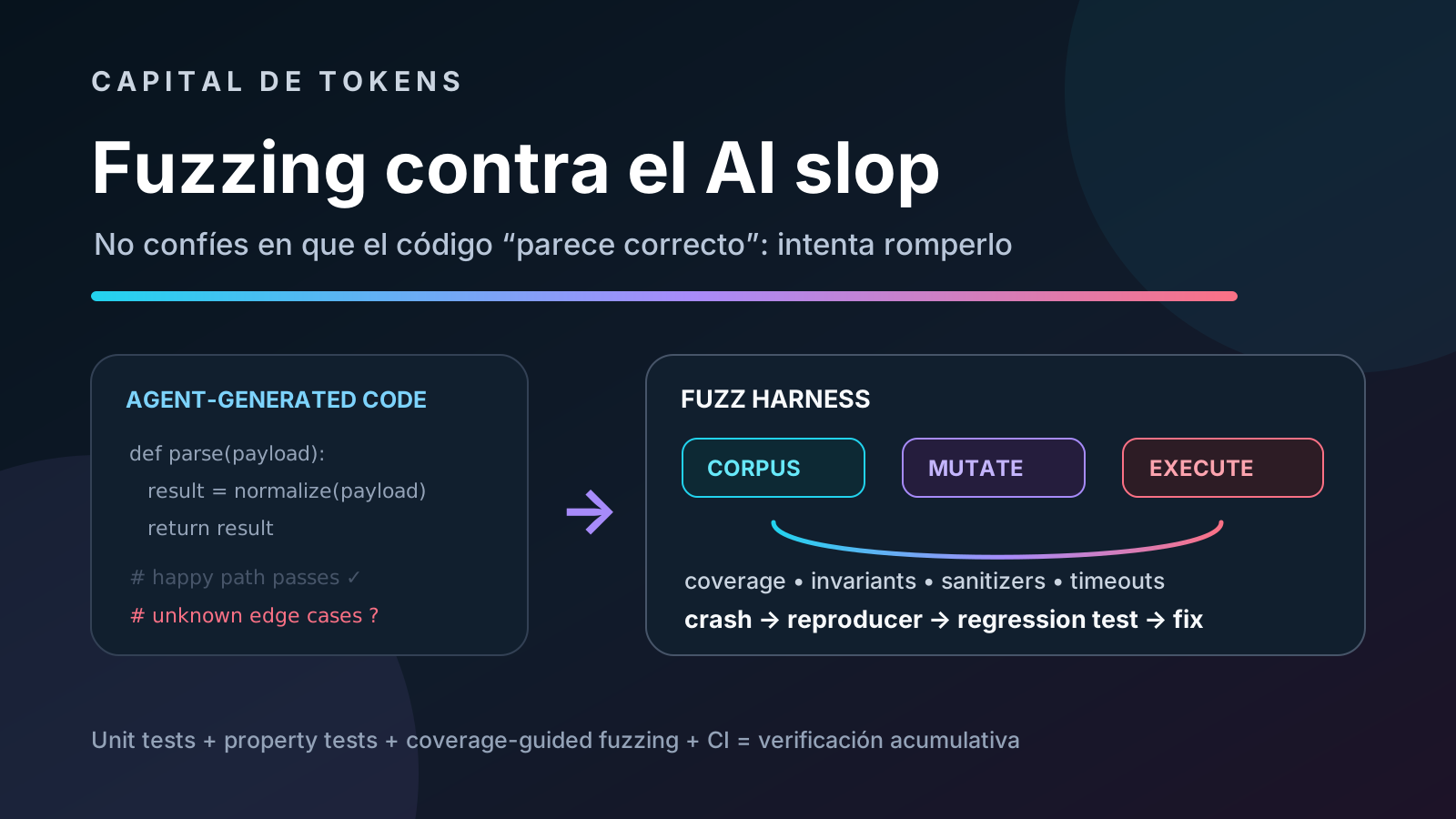
What fuzzing really means for AI-generated code, how it differs from property-based testing, and how to integrate it into CI to catch crashes, hangs, edge cases, and regressions before production.
September 12, 2026 · Capital de Tokens
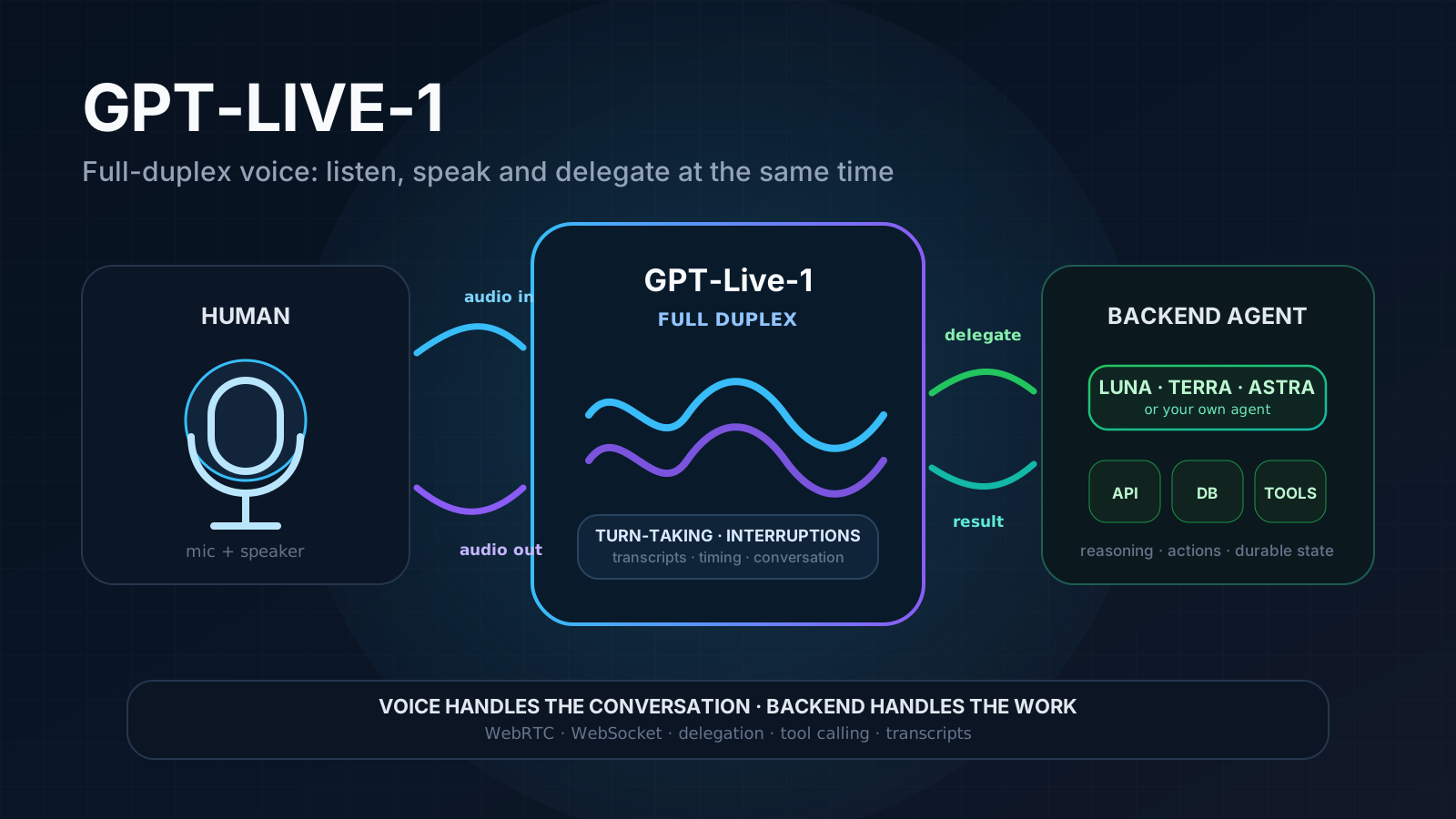
What changes with GPT-Live-1 compared with the STT→LLM→TTS pipeline, and how to use it with WebRTC, WebSockets, backend delegation, tool calling, transcripts, and interruption handling.
September 12, 2026 · Capital de Tokens
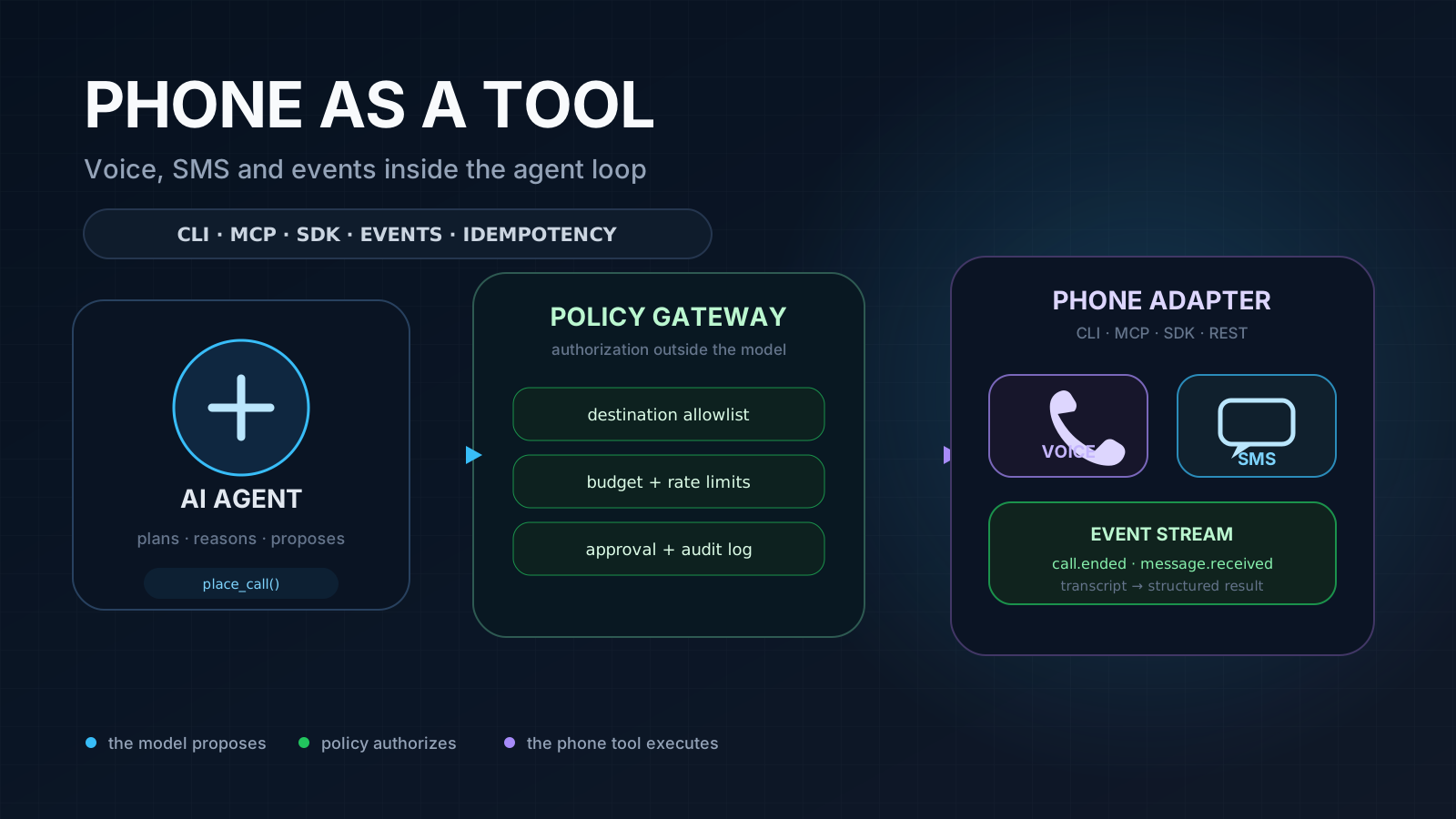
A practical architecture for turning calls and messages into agent tools: CLI, MCP, events, idempotency, policies, observability, and real-world use cases.
September 11, 2026 · Capital de Tokens
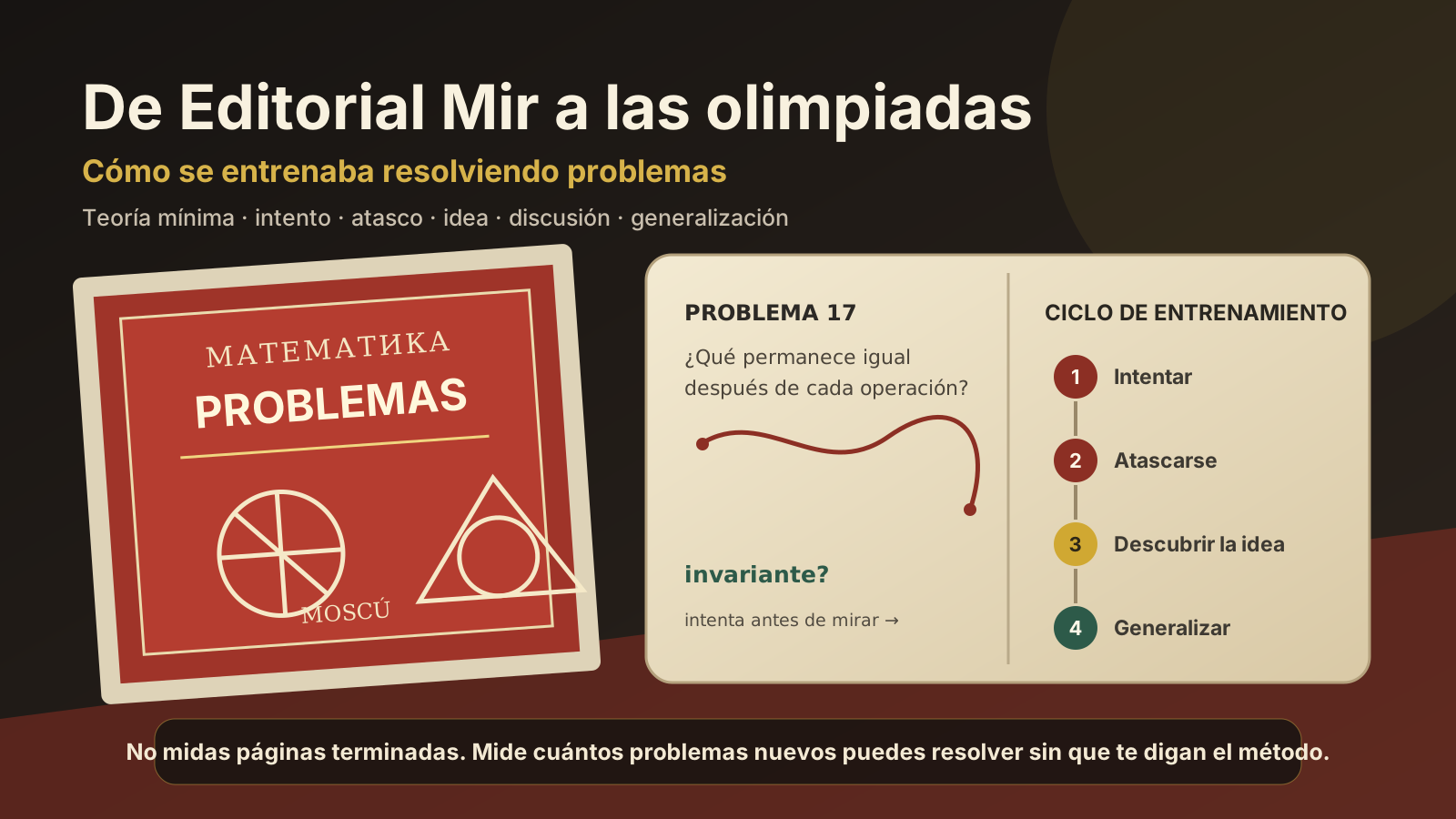
How Soviet problem books, mathematical circles, and books such as Demidovich and Irodov fit into a problem-first culture of trying, failing, comparing solutions, and extracting reusable ideas.
September 11, 2026 · Capital de Tokens
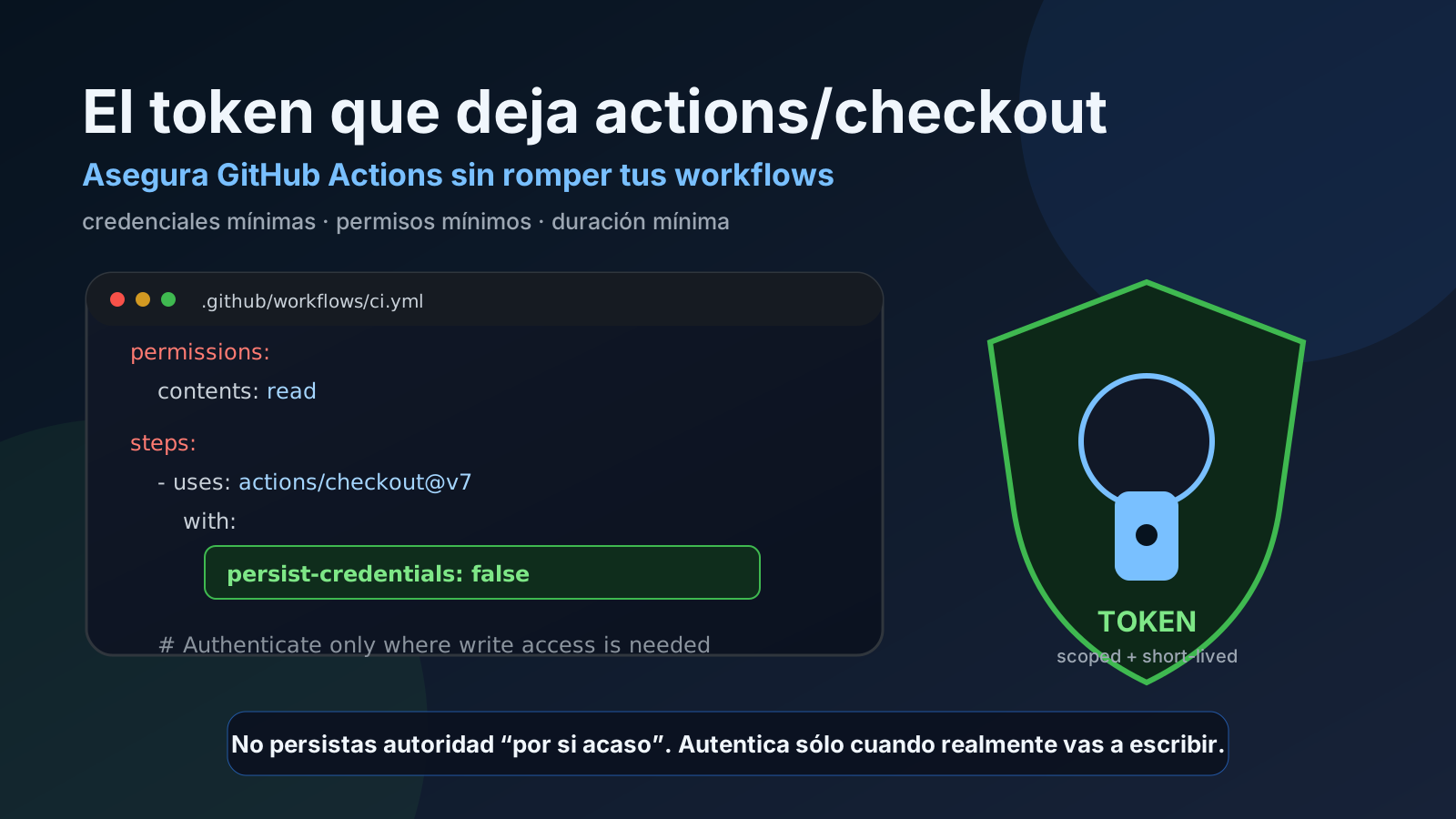
What persist-credentials really does, how actions/checkout changed in v6, and how to reduce credential exposure without breaking git push, tags, or legitimate automation.
September 11, 2026 · Capital de Tokens
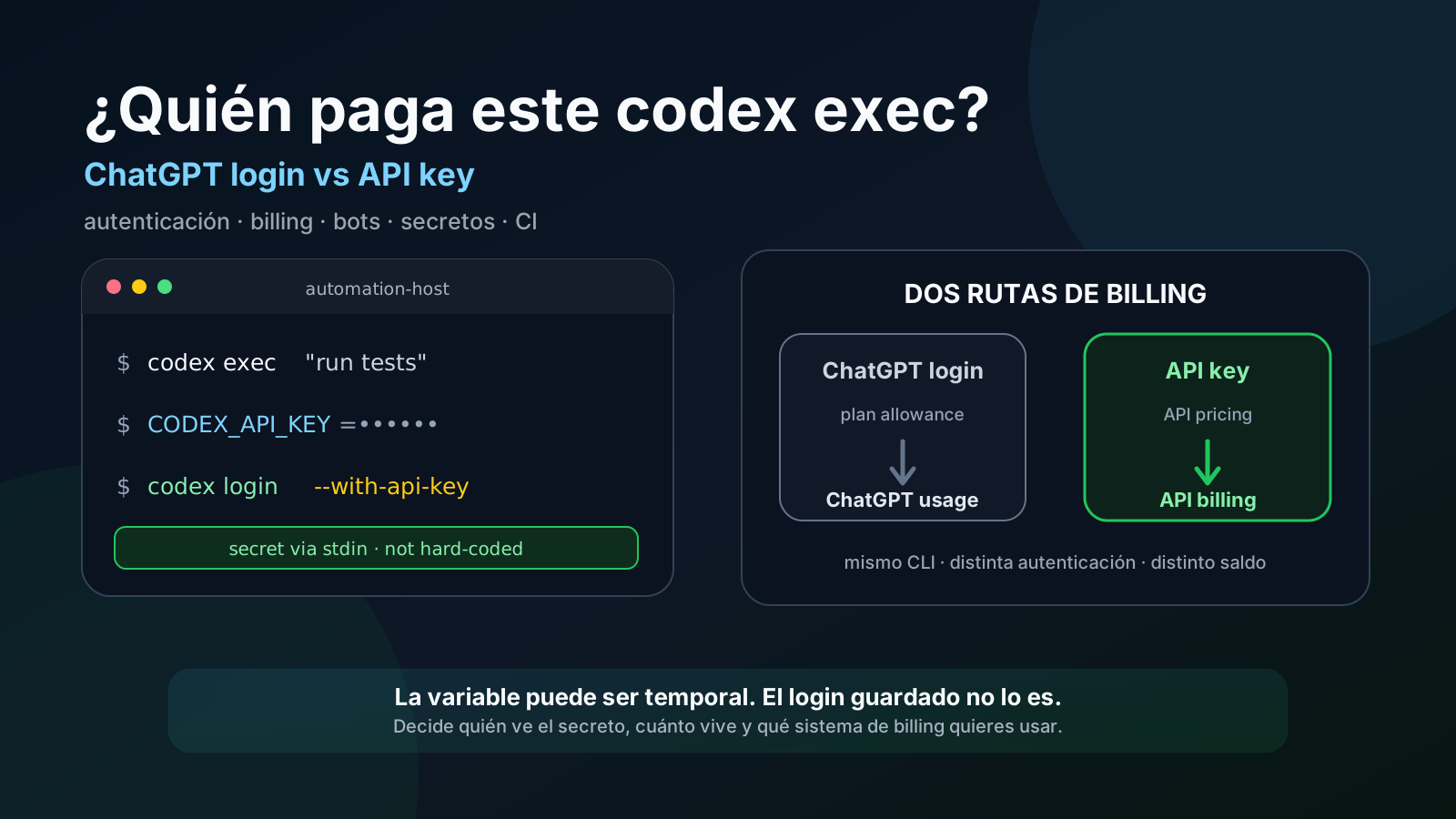
A practical guide to separating ChatGPT credits from API credits, running Codex with API billing, using `codex login --with-api-key`, and configuring Linux automation without exposing credentials.
September 10, 2026 · Capital de Tokens
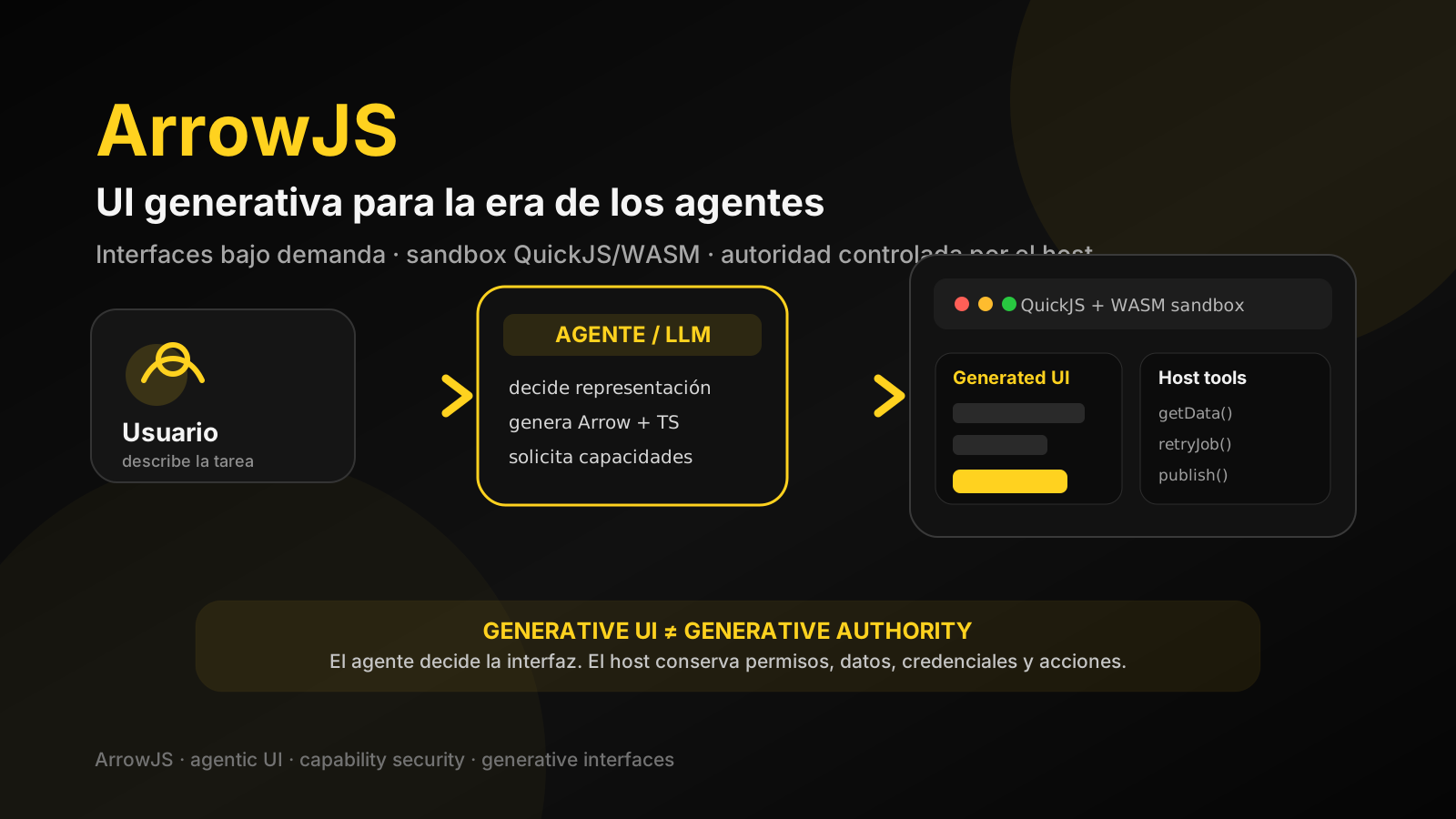
ArrowJS proposes something more interesting than a tiny framework: run agent-generated UI inside QuickJS/WASM, keep DOM ownership and authority in the host, and expose only explicitly allowed tools.
September 10, 2026 · Capital de Tokens
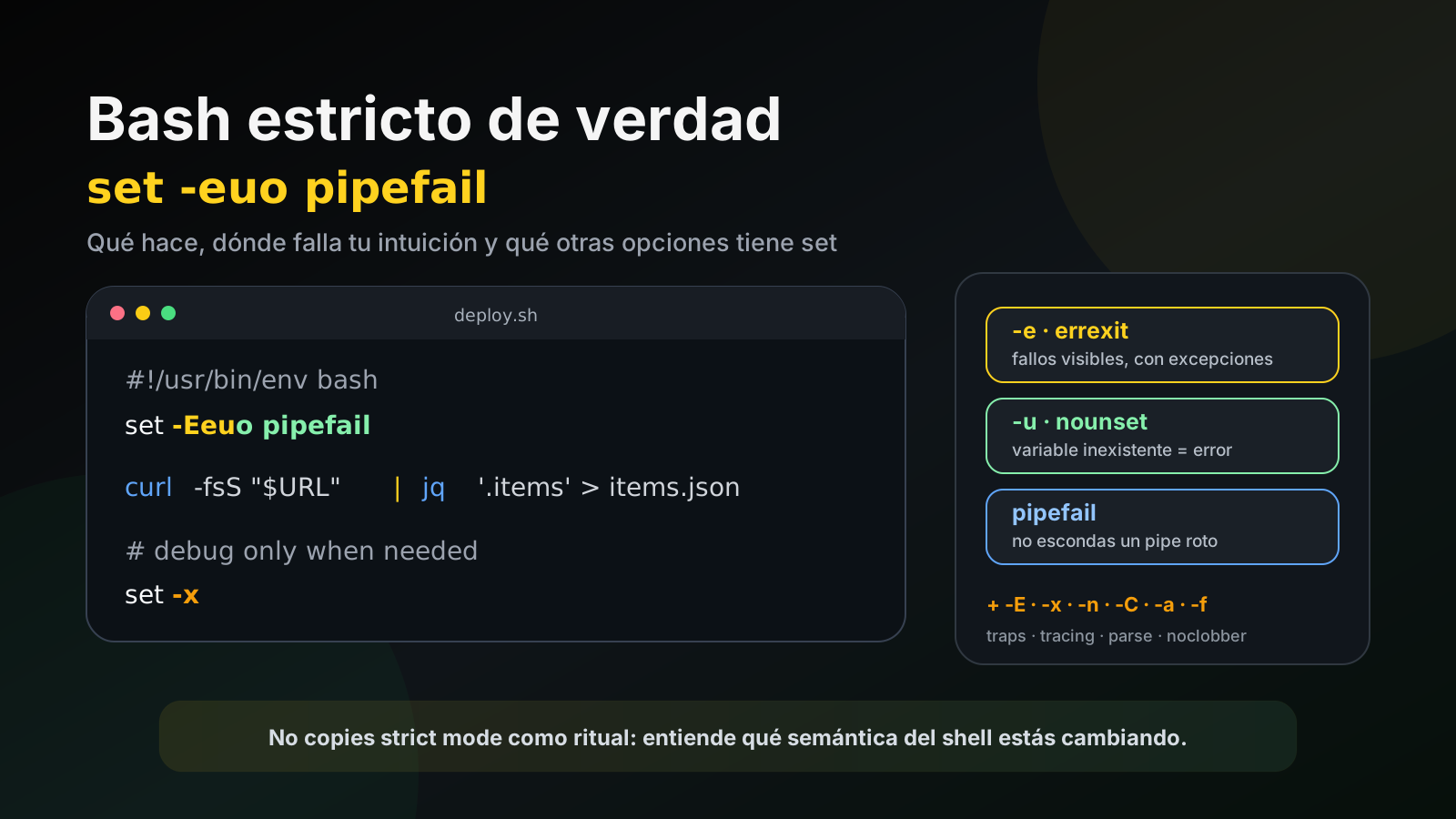
A practical guide to `set -euo pipefail`, its traps around pipelines, conditionals, and subshells, plus useful Bash options such as `-x`, `-E`, `-C`, `-a`, `-f`, and `-n`.
September 10, 2026 · Capital de Tokens
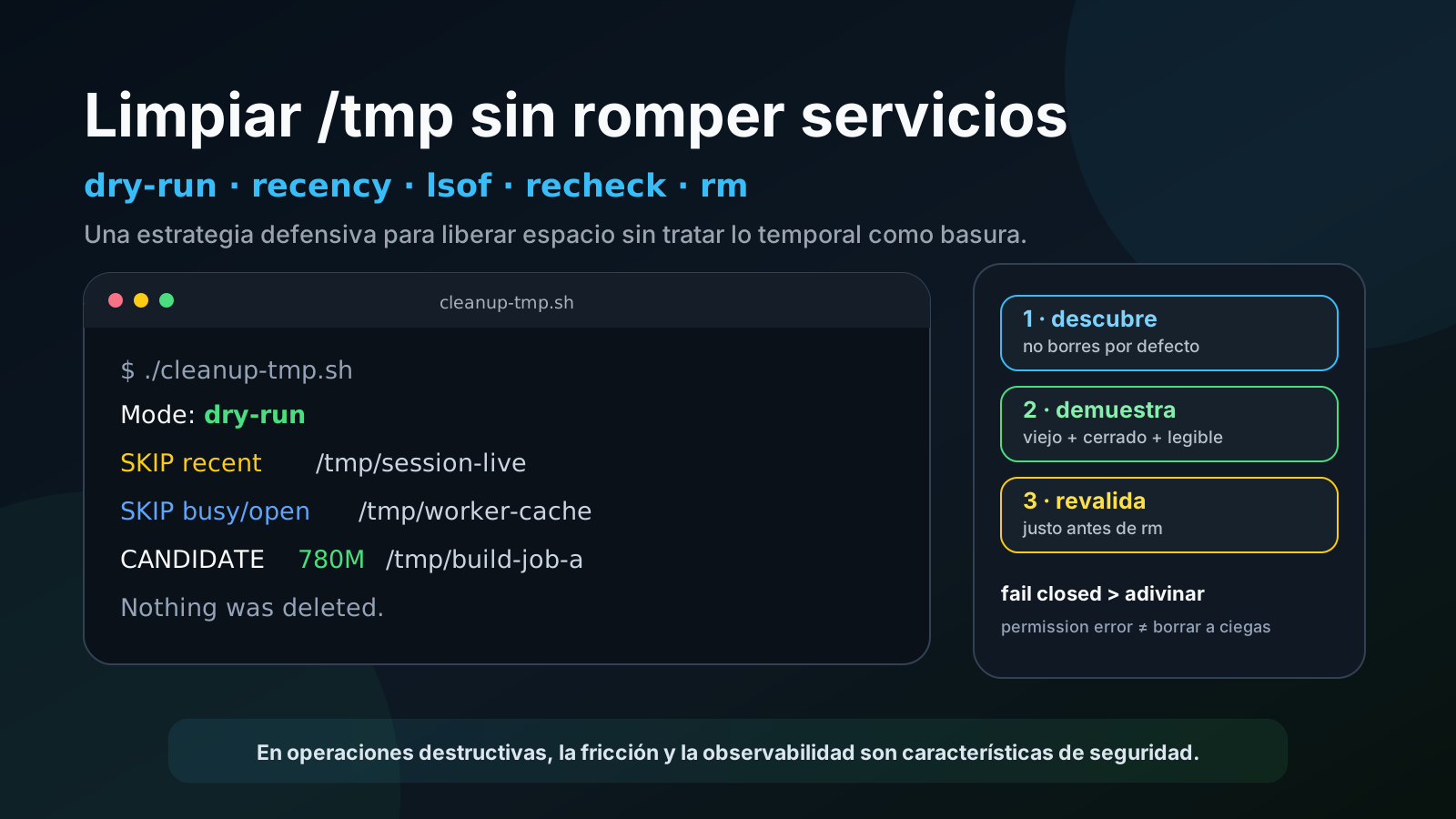
A practical case study in building a conservative `/tmp` cleanup tool: candidate discovery, recursive age checks, open-file detection, permission failures, and race-window reduction before `rm -rf`.
September 8, 2026 · Capital de Tokens
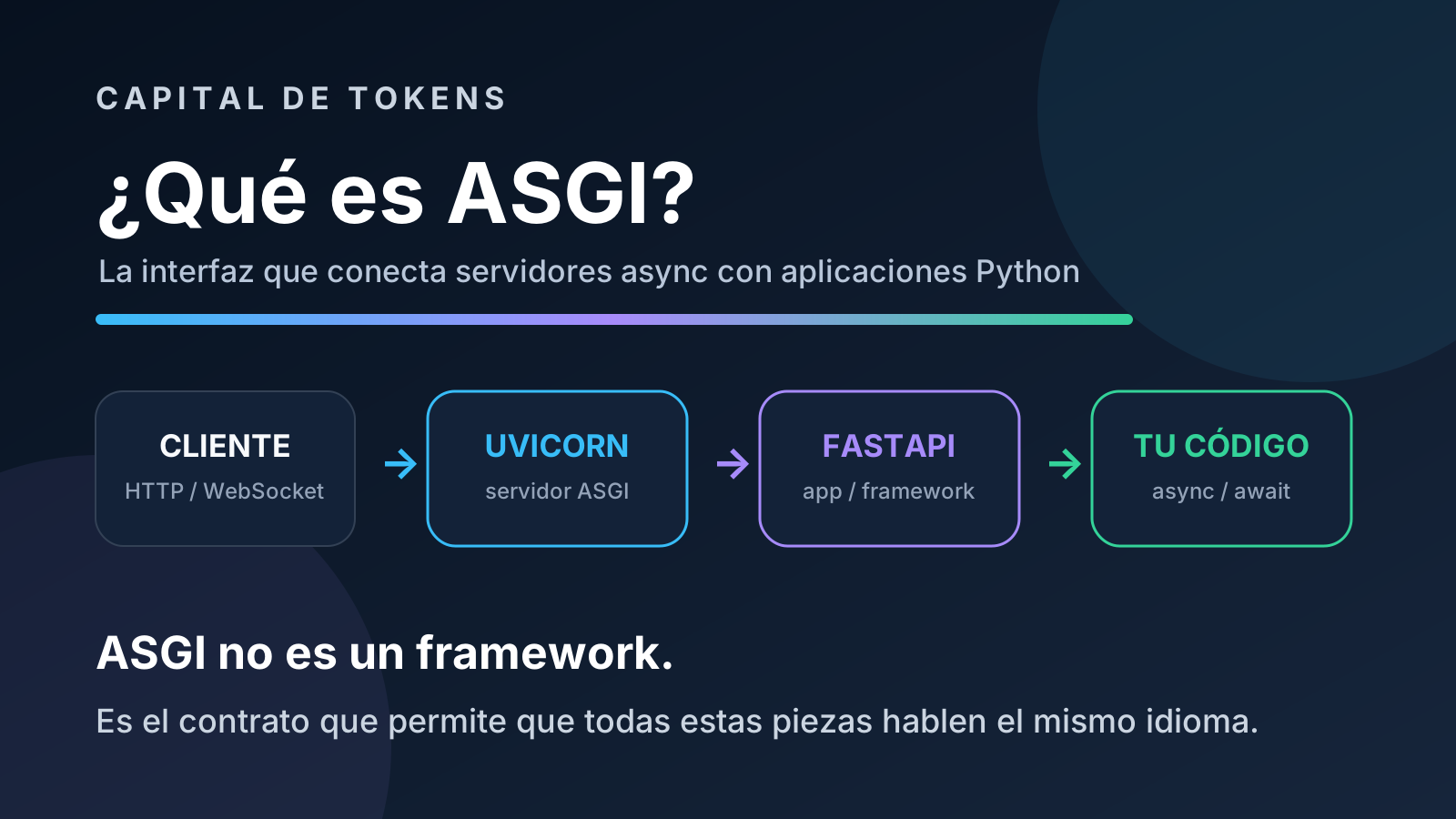
ASGI is the contract that connects asynchronous web servers with Python applications. Understanding it clarifies what Uvicorn, FastAPI, Starlette, and Django do, why WebSockets fit naturally, and what changes compared with WSGI.
September 8, 2026 · Capital de Tokens
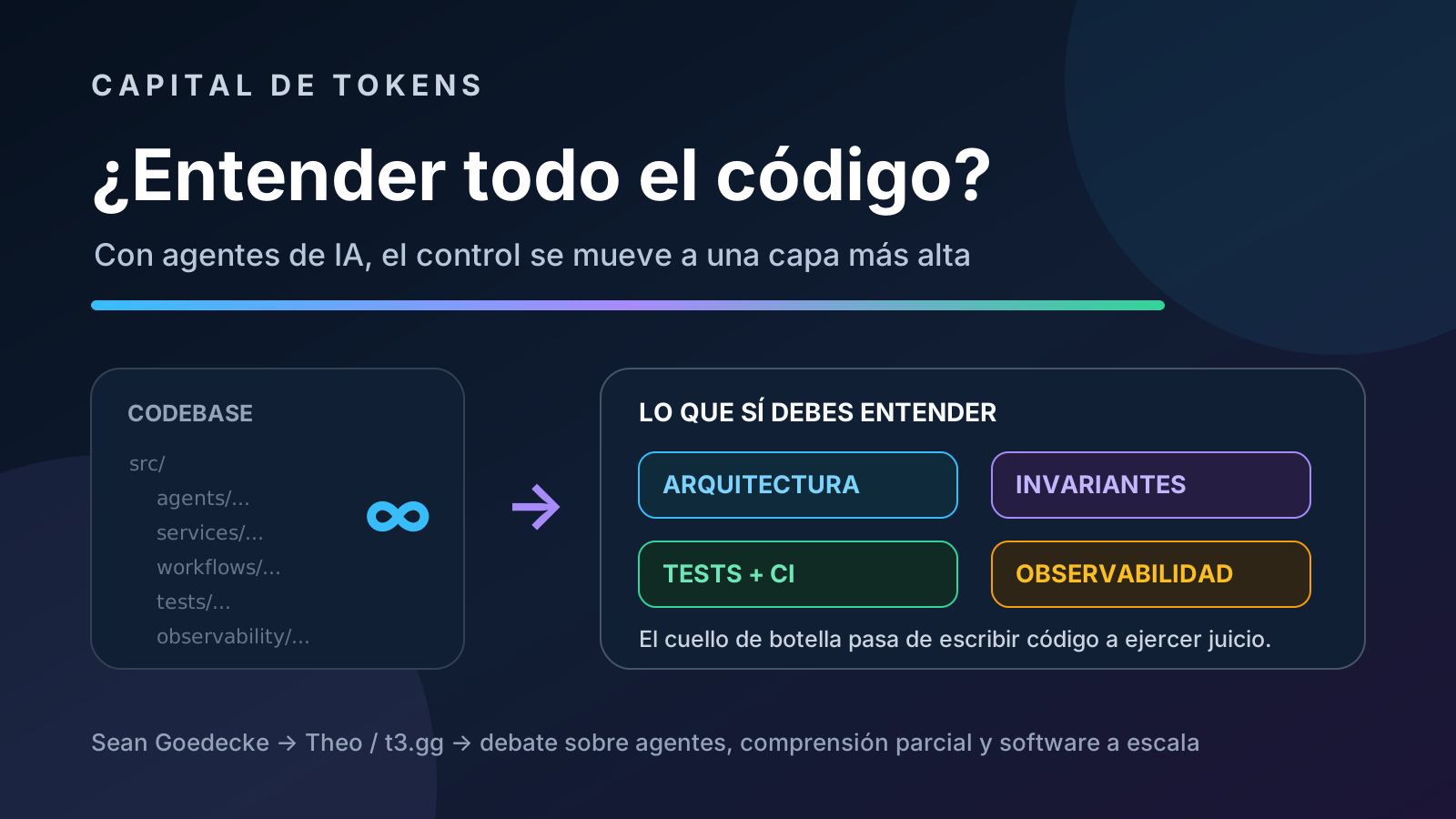
Nobody understands every line of a large software system. As AI agents generate code at unprecedented scale, engineering shifts toward architecture, invariants, tests, observability, and judgment.
September 8, 2026 · Capital de Tokens
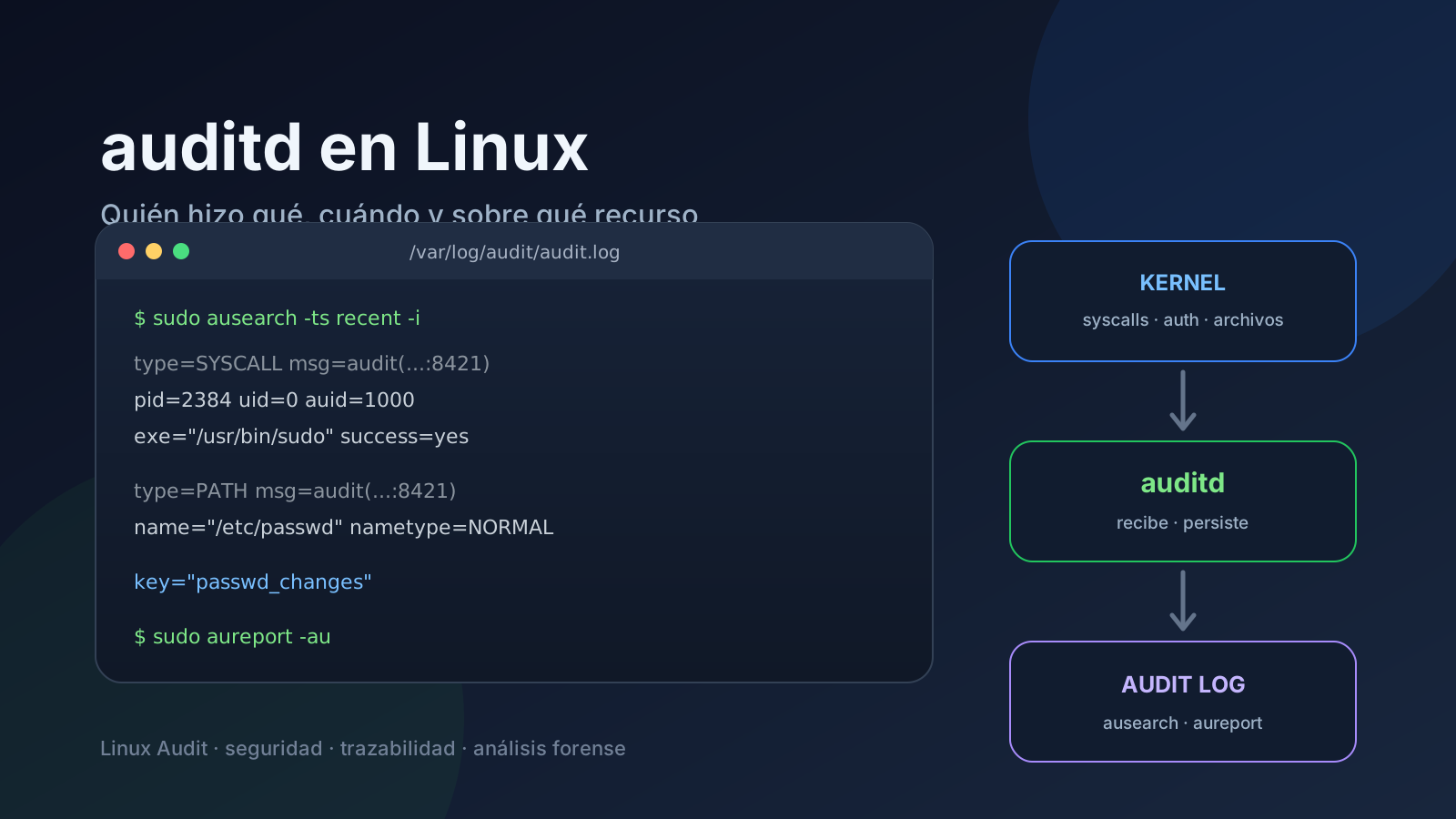
A practical guide to Linux Audit: what auditd does, how events are structured, where they are stored, how to search with ausearch, and how to summarize activity with aureport.
September 8, 2026 · Capital de Tokens
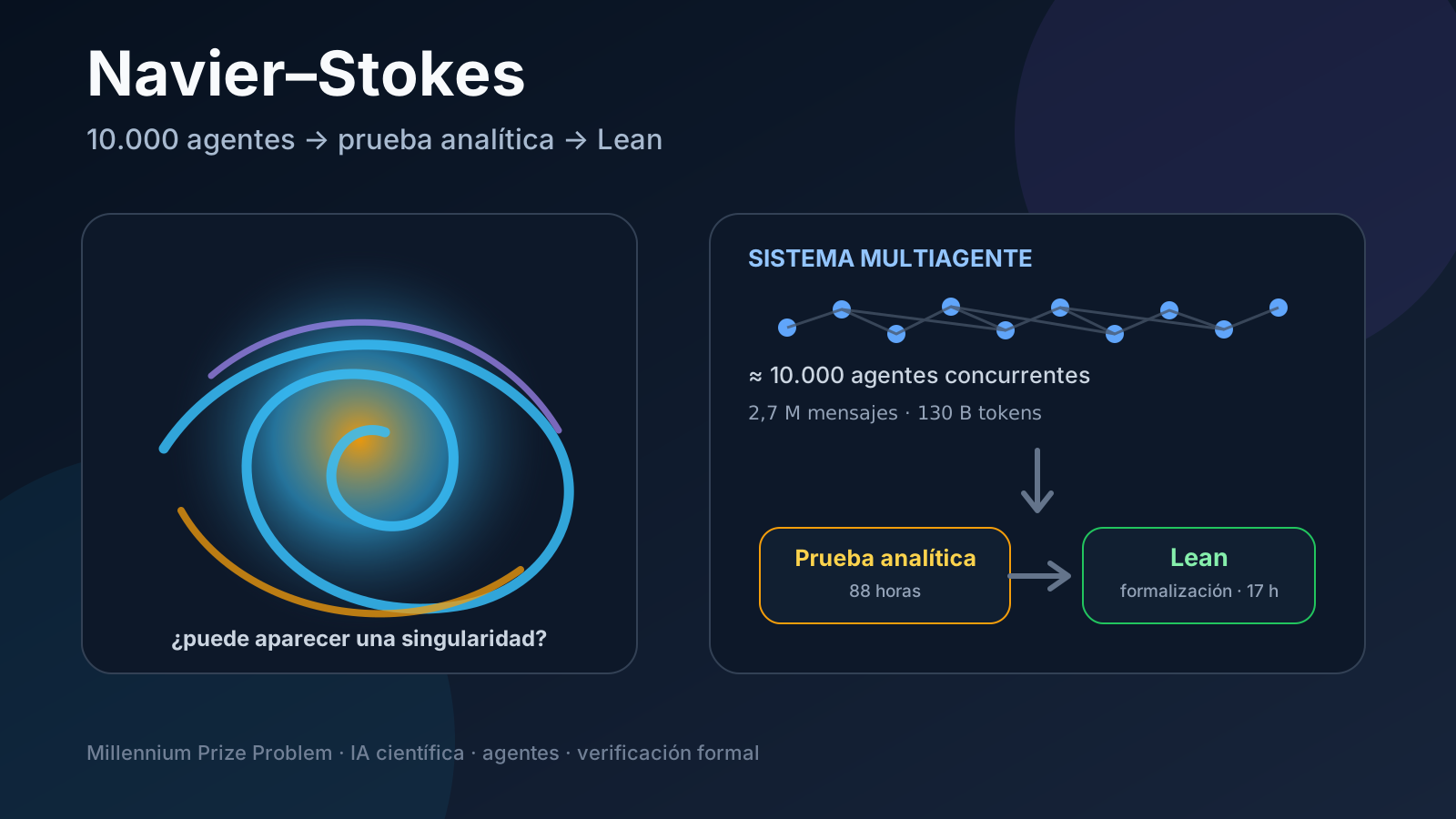
OpenAI published a proposed solution to the Navier–Stokes existence and smoothness problem. We explain what it claims, how it used roughly 10,000 agents and Lean, why the problem is not officially closed yet, and what the seven one-million-dollar Millennium Prize Problems are.
September 8, 2026 · Capital de Tokens
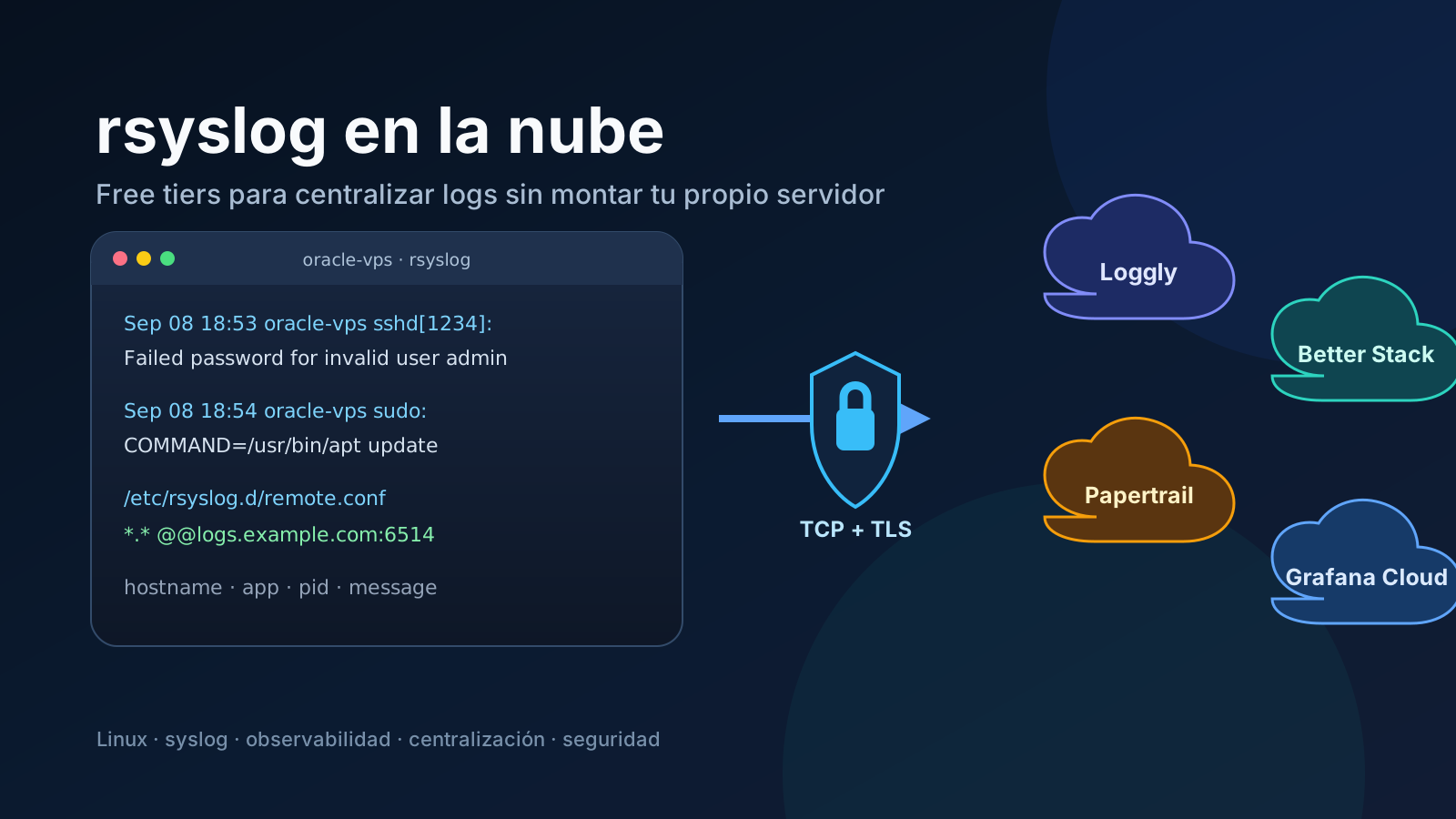
A practical comparison of Loggly, Better Stack, Papertrail, and Grafana Cloud for shipping rsyslog logs, including free limits, protocols, TLS, and architecture recommendations.
September 6, 2026 · Capital de Tokens
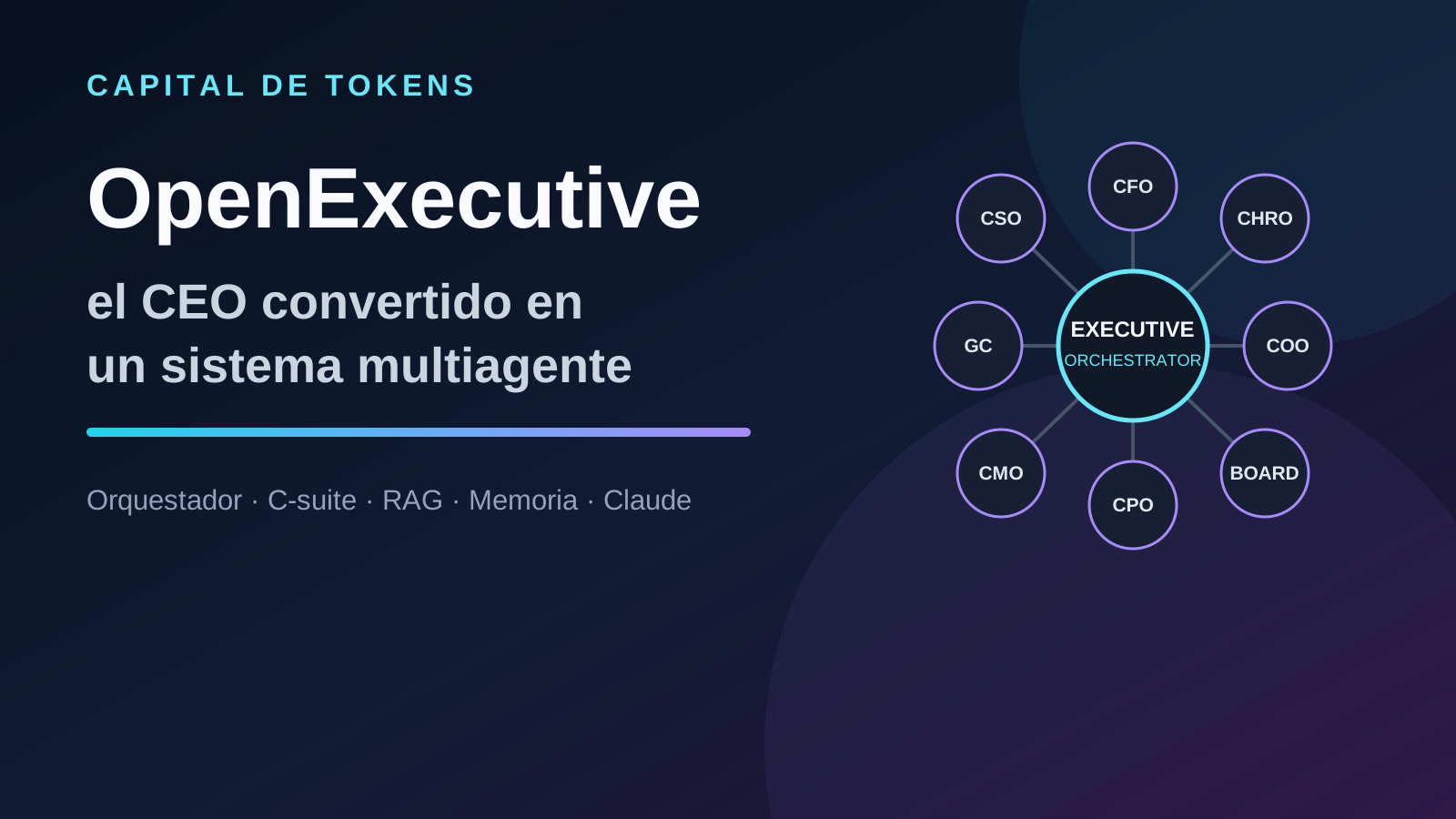
OpenExecutive proposes a provocative idea: turn part of the CEO and C-suite workload into agentic software. Behind the headline is a serious architecture with an orchestrator, eight specialists, RAG, episodic memory, and a scheduler that shows how management is starting to look like an operating system for agents.
September 5, 2026 · Capital de Tokens
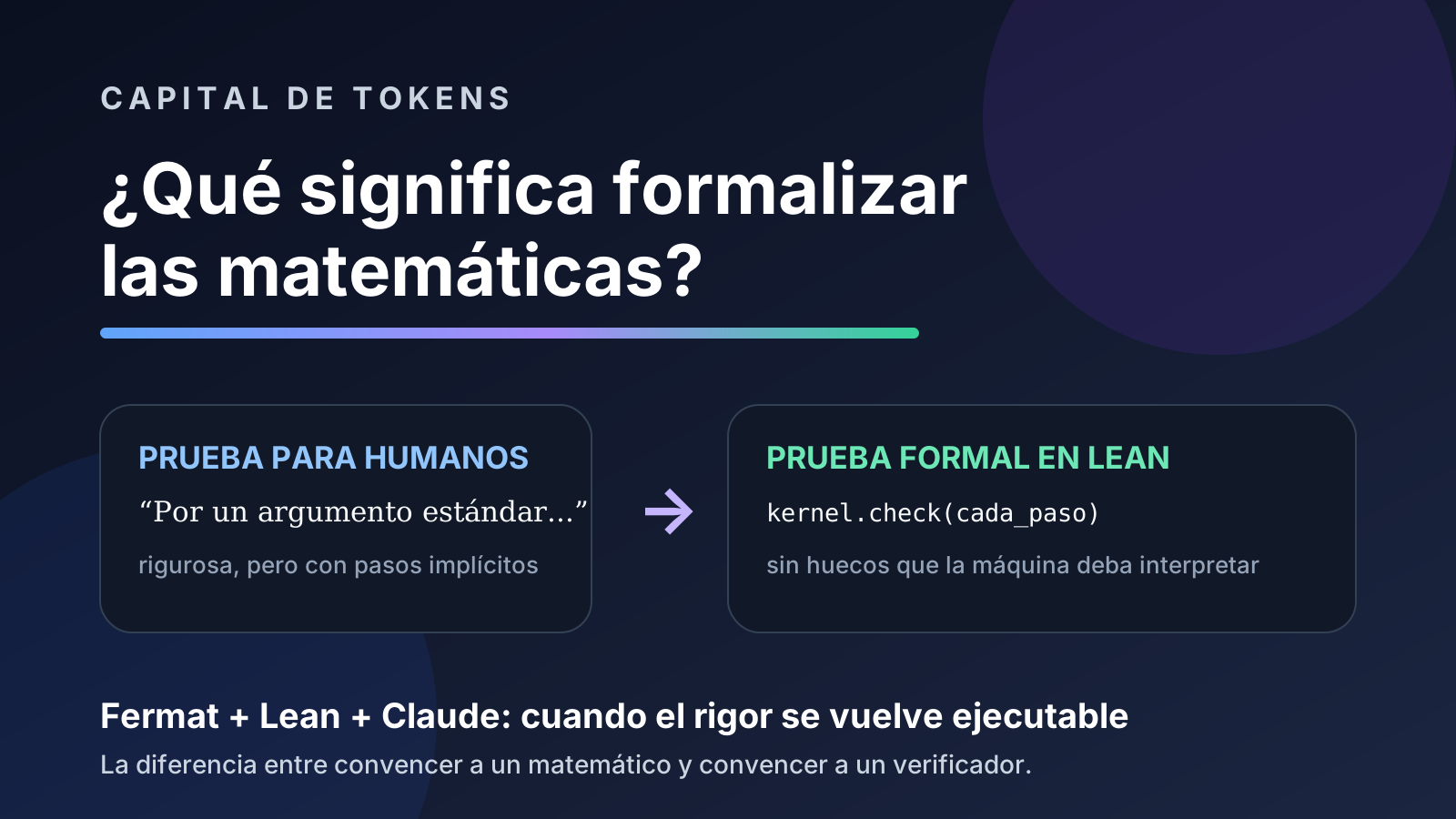
Mathematics is already rigorous, but most proofs are not written with the level of explicit detail a computer needs. Anthropic's recent Lean formalization of Fermat's Last Theorem shows what changes when every definition, hypothesis, and logical step must be checkable by a proof kernel.
September 5, 2026 · Capital de Tokens
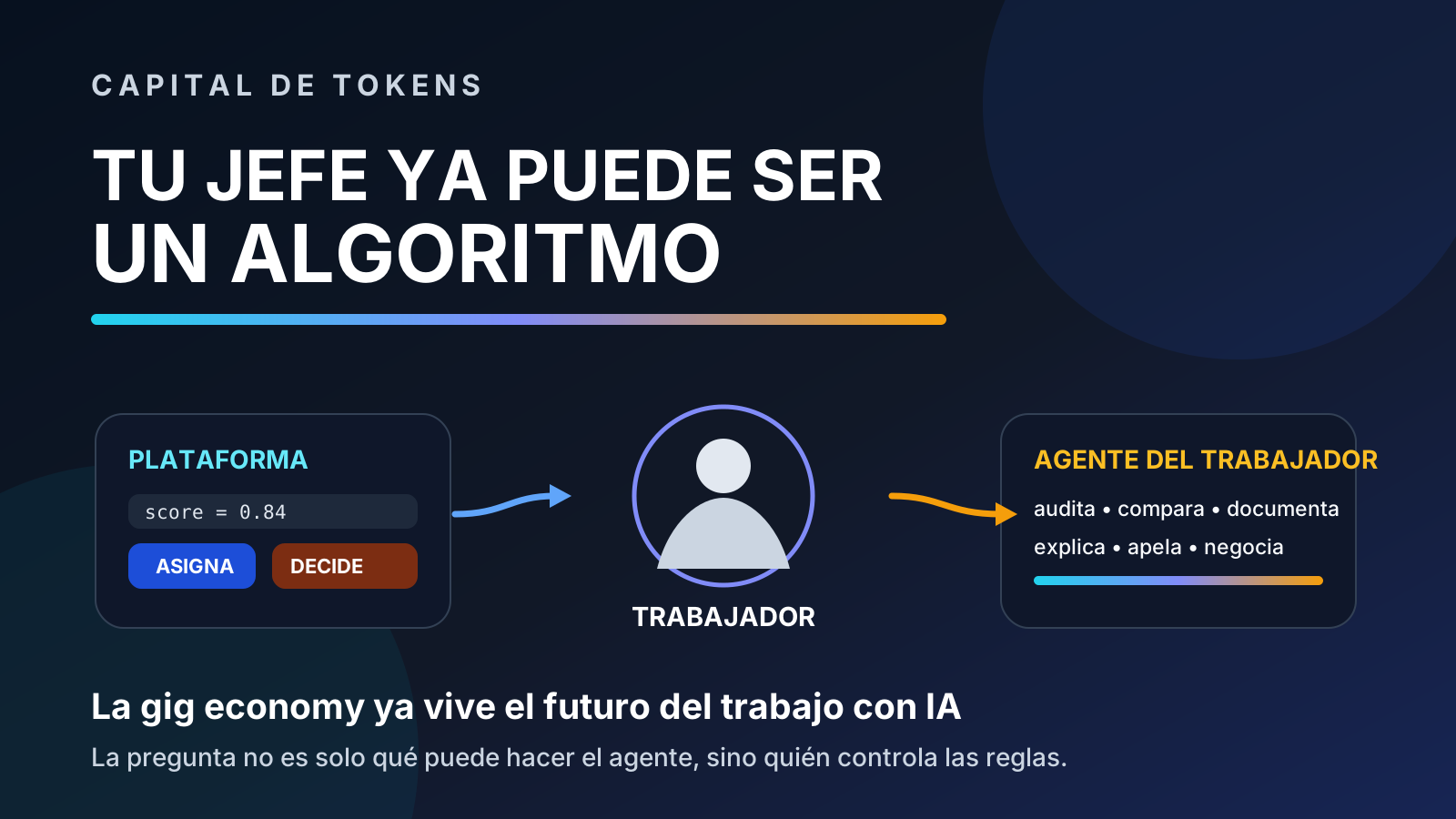
Debates about autonomous agents usually look to the future, but Uber, DoorDash, and other platforms already show what happens when algorithms allocate work, set incentives, and can cut people off from their income. Princeton researcher Andrés Monroy-Hernández offers a more useful way to think about AI and work: not only as automation, but as a question of power, transparency, and platform design.
September 5, 2026 · Capital de Tokens
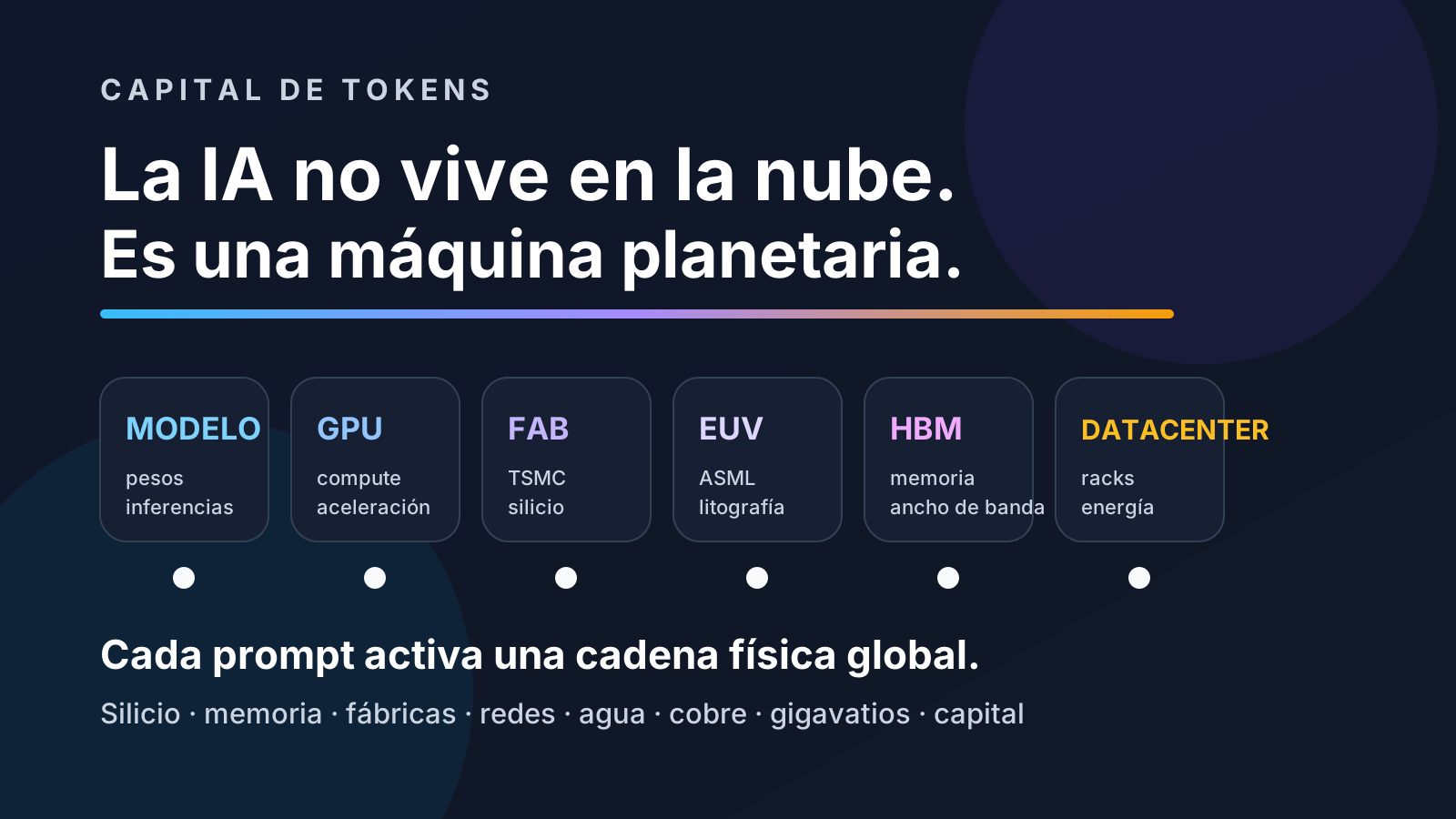
Behind every model response sits a physical chain of chips, lithography, memory, data centers, power grids, minerals and capital. AI does not live only in the cloud: it is becoming one of the largest industrial infrastructures of our time.
September 5, 2026 · Capital de Tokens
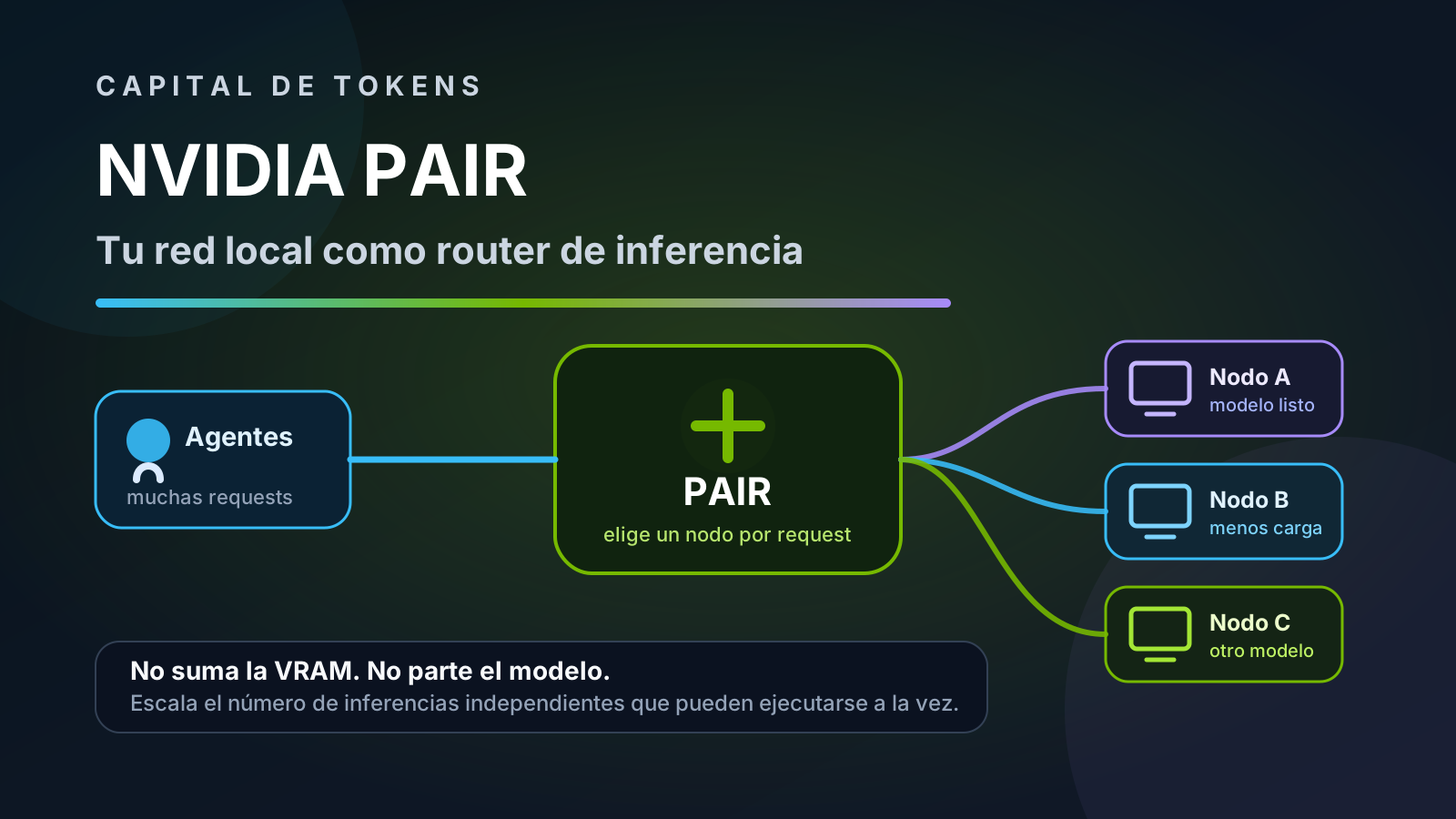
NVIDIA PAIR distributes inference requests across compatible machines on a local network using Ollama or LM Studio. It does not pool VRAM or split models: its value is running more independent work in parallel, especially in multi-agent systems.
September 3, 2026 · Capital de Tokens
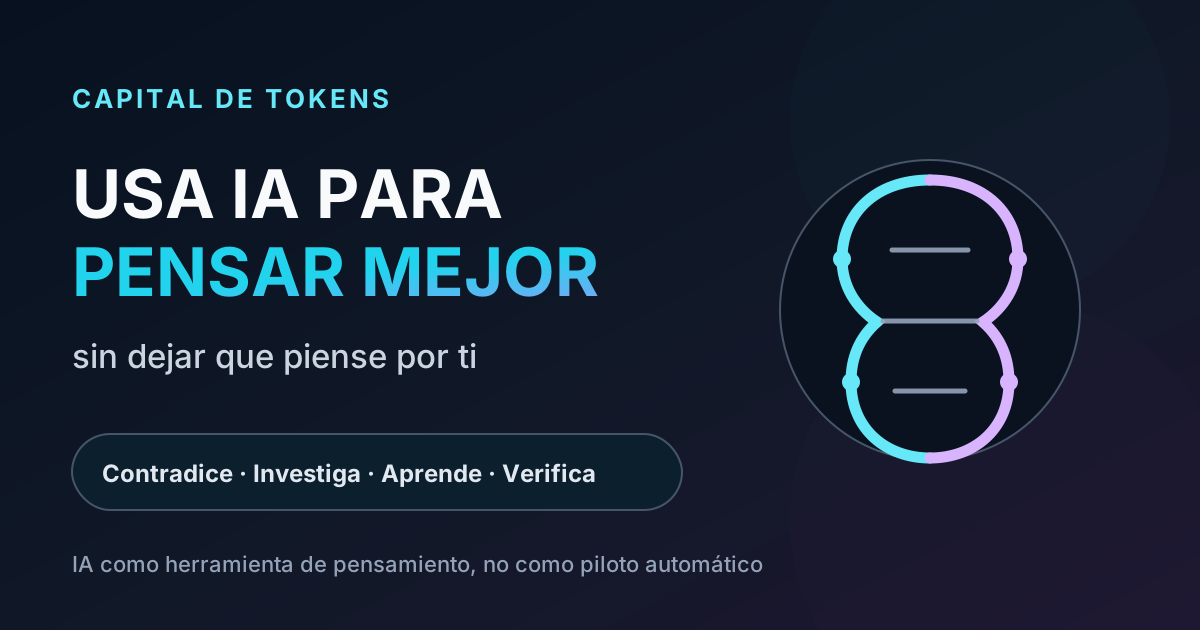
AI can become a cognitive shortcut or a tool for more rigorous thinking. A practical method for using it as an intellectual adversary, research assistant, tutor, and reflection system without outsourcing judgment.
September 2, 2026 · Capital de Tokens
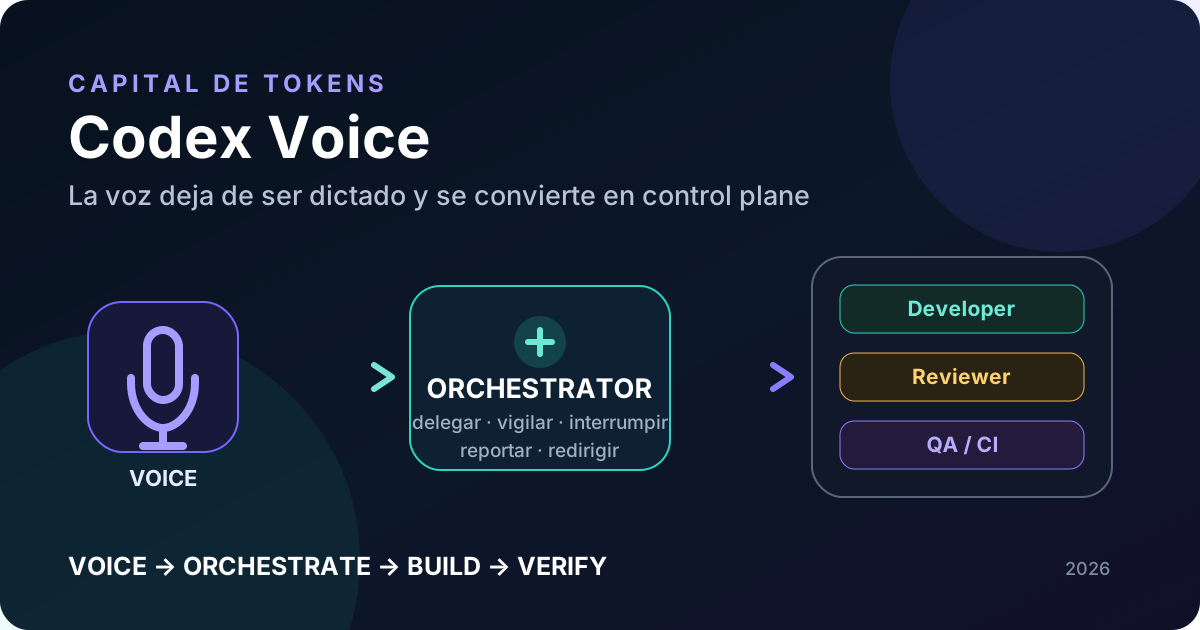
The community is using Voice in Codex for something more interesting than talking to an editor: coordinating workers, checking progress, redirecting tasks, and working hands-free. We review real usage patterns, open problems, and the architecture this suggests for voice-driven development agents.
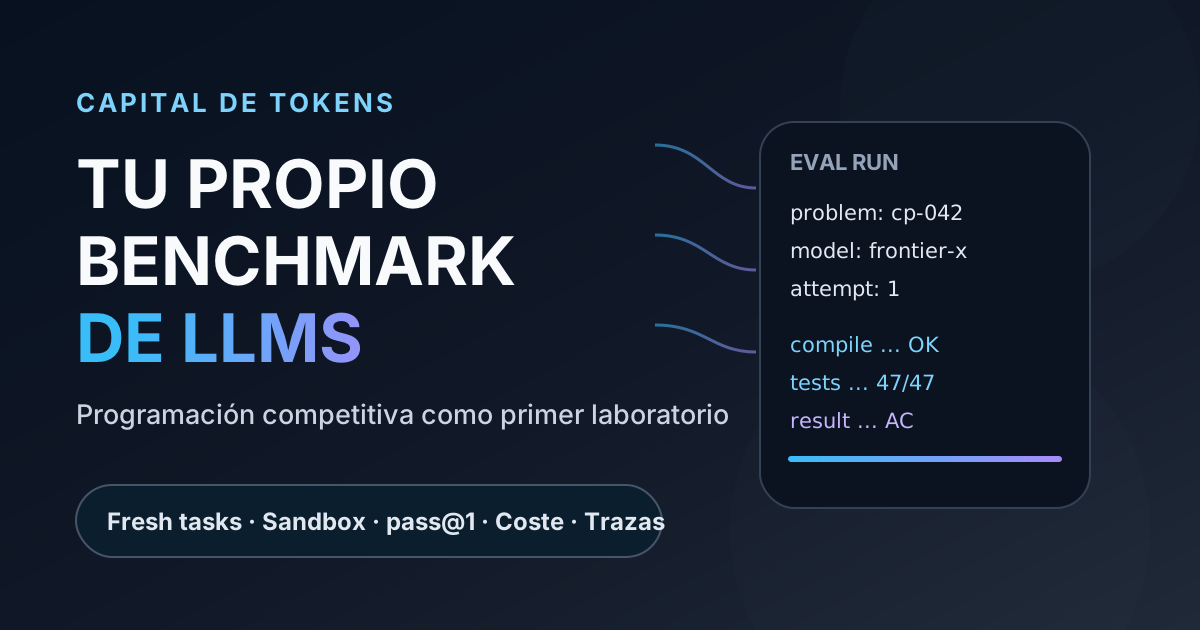
September 2, 2026 · Capital de Tokens
Public leaderboards do not always answer the question you actually care about. We design an architecture for evaluating LLMs with your own benchmarks, starting with fresh competitive-programming problems, reproducible execution, cost metrics, and a clear separation between models and agents.
September 2, 2026 · Capital de Tokens
At Platzi Conf 2026, Freddy Vega presented a deliberately optimistic AI scenario: near-zero-cost expert knowledge, faster science, dramatically cheaper software, and a strategic opening for Latin America. We examine which parts already have evidence and where caution is still warranted.
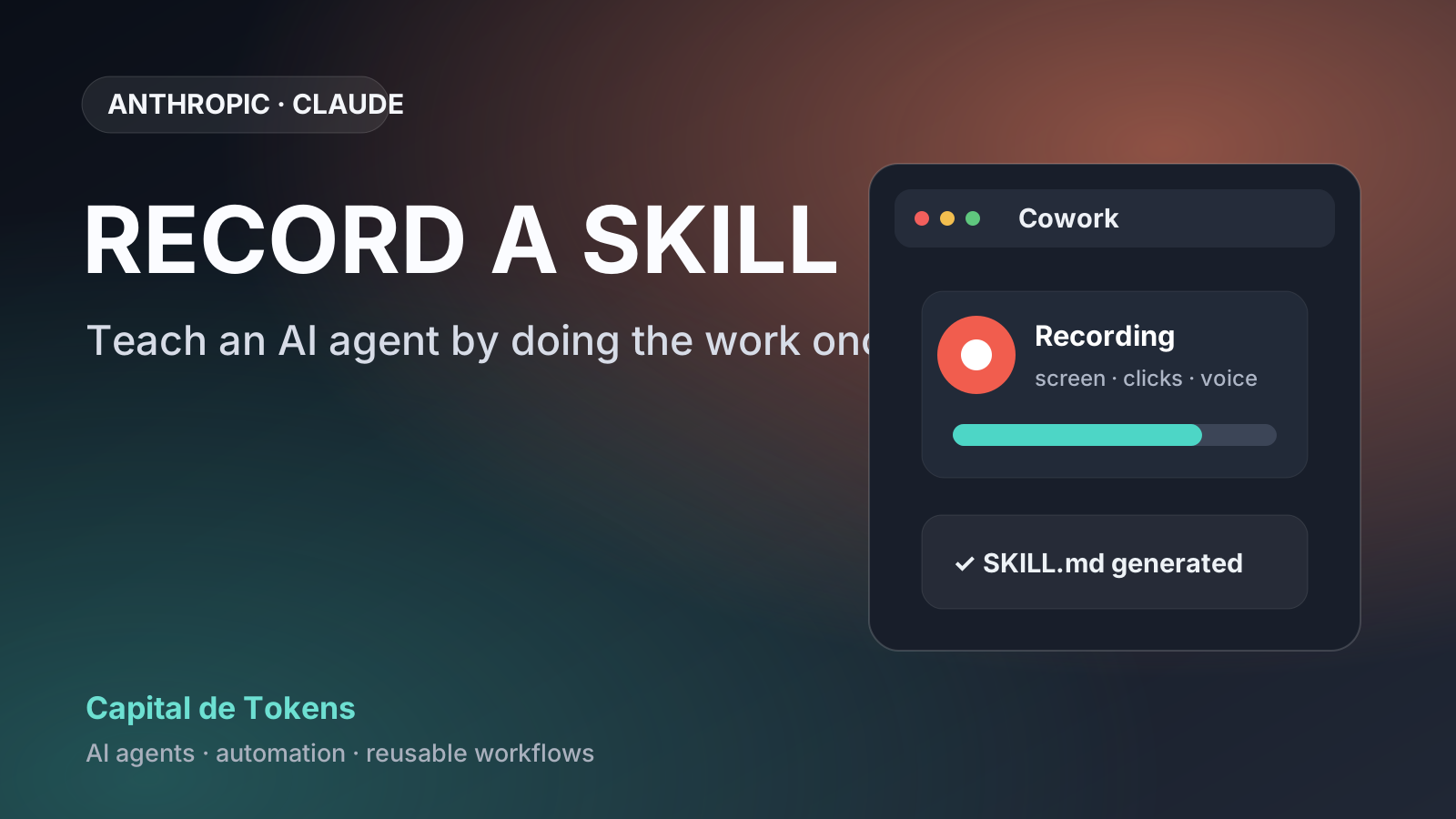
September 1, 2026 · Capital de Tokens
Anthropic lets users record their screen, clicks, typing, and voice in Cowork so Claude can observe a process and propose a reusable Skill. The feature brings AI agents closer to semantic RPA: teach by doing instead of documenting every step by hand.
September 1, 2026 · Capital de Tokens
Sebastian Thrun and Peter Norvig's historic AI course is still available free on Udacity. It covers search, probability, planning, reinforcement learning, vision, robotics, and NLP: foundations that help explain AI beyond LLMs.
September 1, 2026 · Capital de Tokens
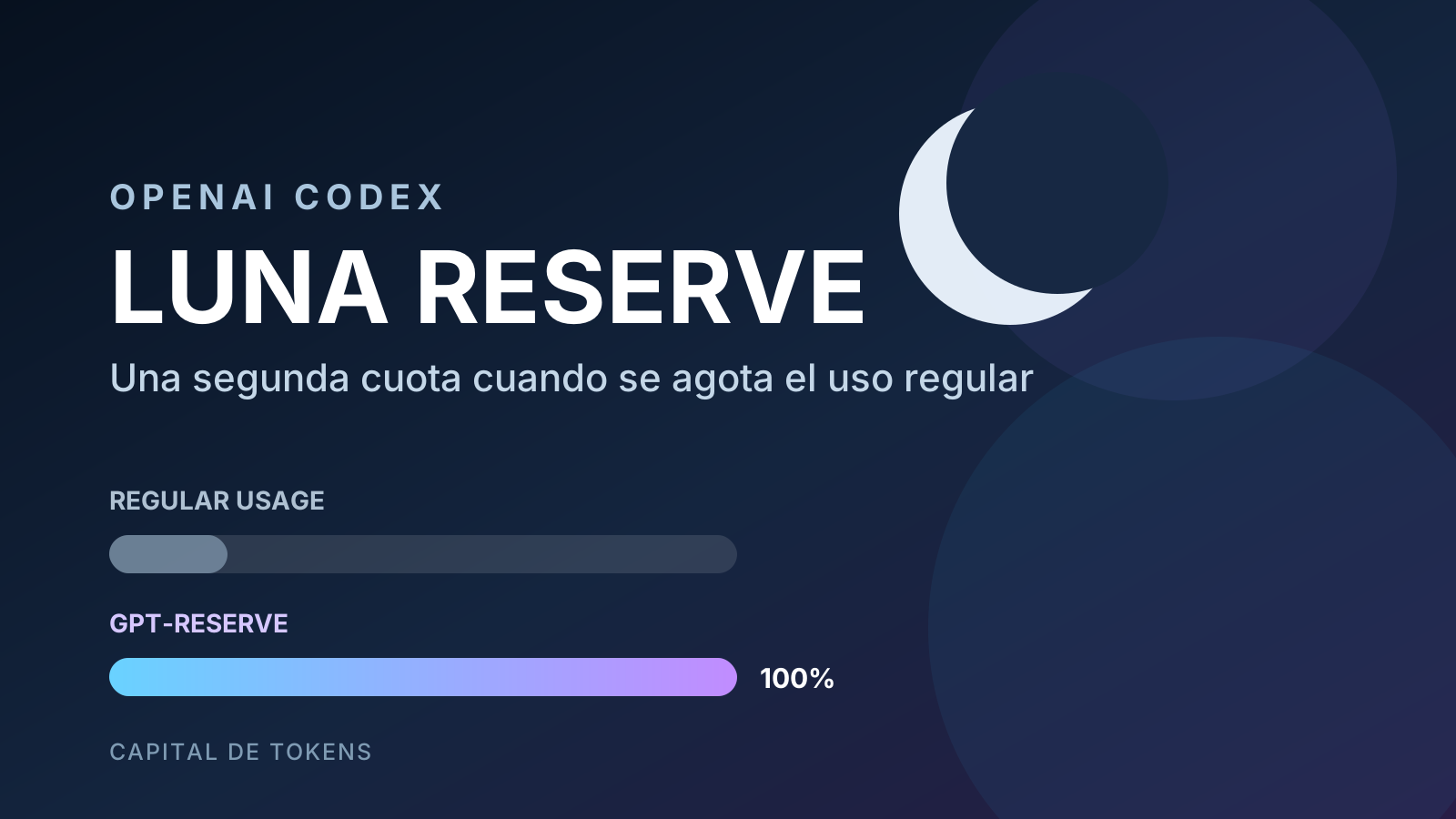
OpenAI began quietly rolling out Luna Reserve in Codex before documenting it publicly. We reconstruct the gpt-reserve timeline, explain its separate allowance, and what changes when it takes over.
September 1, 2026 · Capital de Tokens
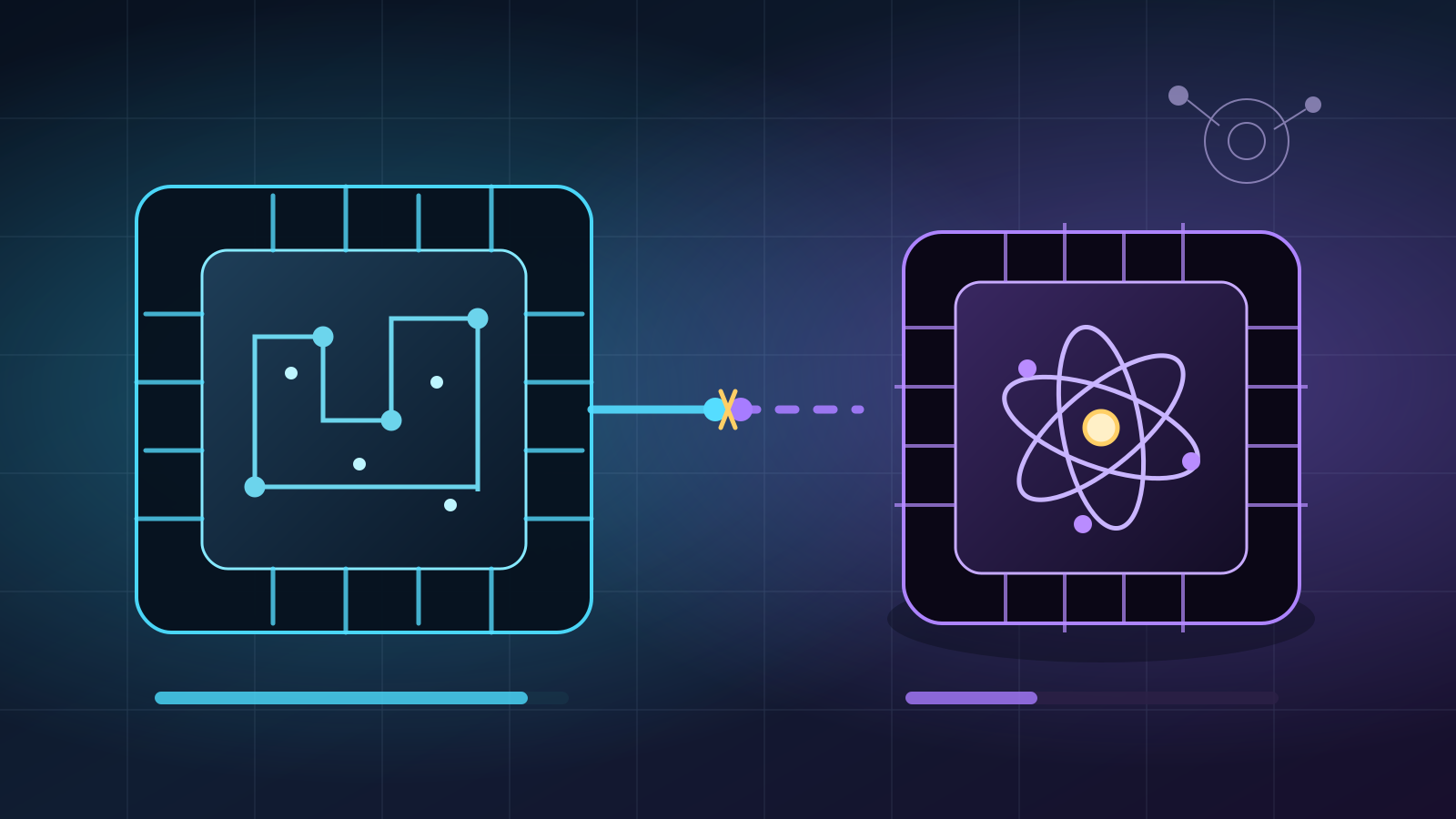
Gartner says enterprise AI workloads at scale will not run on quantum hardware before 2028. The key is separating Quantum AI, quantum-inspired methods, hybrid systems, and post-quantum cryptography so companies can invest where measurable value exists today.
August 31, 2026 · Capital de Tokens
An Every team completed Anthropic's official training and found something more useful than a bag of tricks: a shared vocabulary for Skills, MCP, the API, and Claude Code. They also exposed the limits of certifying an industry that changes faster than its courses.

August 31, 2026 · Capital de Tokens
What it means for Bubblewrap to be a low-level unprivileged sandboxing tool, how it uses Linux namespaces and mounts, the role it plays inside Flatpak, and why it should not be confused with a complete security policy.
August 31, 2026 · Capital de Tokens
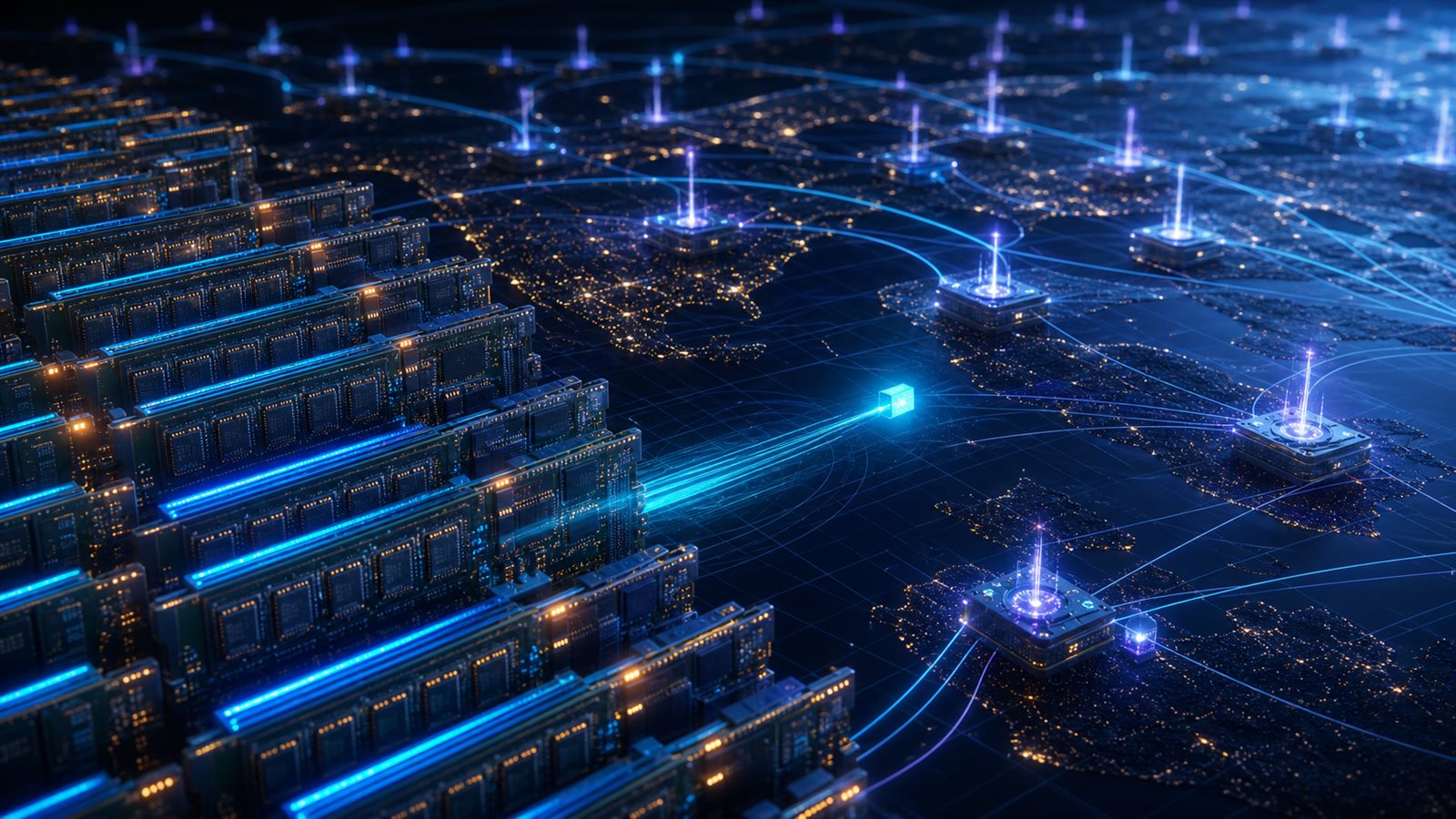
Cloudflare cut the memory footprint of the DNS cache behind 1.1.1.1 by more than half with five Rust representation changes. The result: roughly 100 TB of RAM freed, higher throughput, and lower latency.
August 31, 2026 · Capital de Tokens
Falling Computer Science enrollment and rising demand for quantitative talent are fueling a new thesis: in the AI era, mathematics can be a major advantage. But the strongest profile is not Math versus CS; it is Math + Programming + AI.
August 30, 2026 · Capital de Tokens
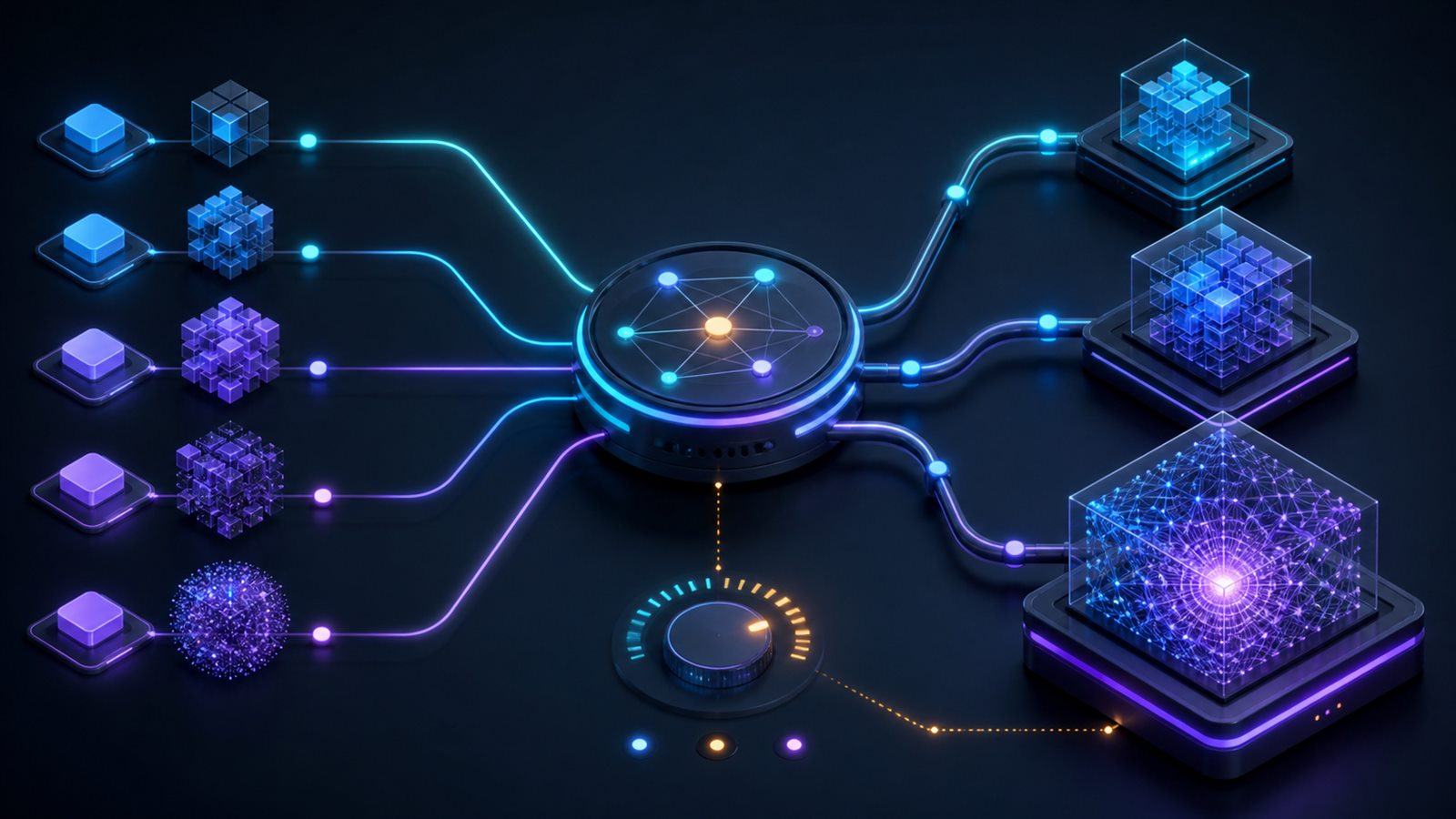
Cursor explains how its Router combines a complexity predictor, a task taxonomy, and a budget-constrained optimizer to decide when to use a cheap model and when to escalate to a frontier model.
August 29, 2026 · Capital de Tokens
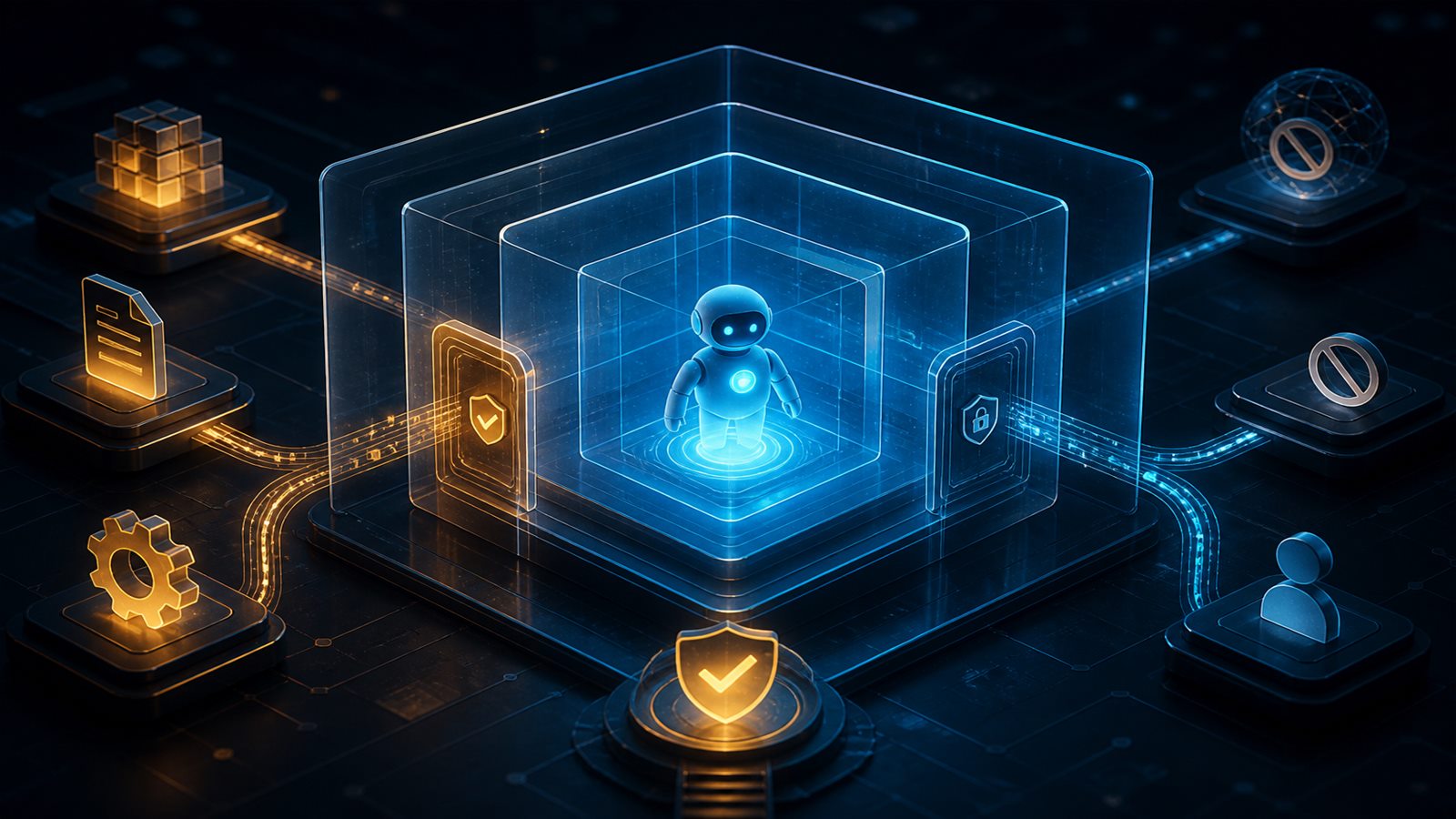
`--dangerously-bypass-approvals-and-sandbox` removes two different Codex barriers: the sandbox and approvals. We explain the full security model, read-only/workspace-write/full-access modes, rules, permission profiles, networking, CI, and how to design autonomous agents without handing them the whole machine.
August 29, 2026 · Capital de Tokens
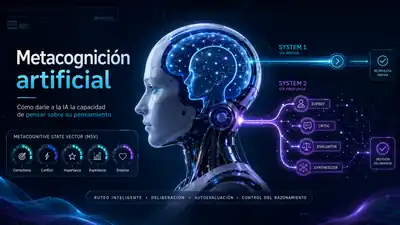
A metacognition framework for LLMs proposes measuring correctness, conflict, experience, importance, and emotional load to choose between a fast path and multi-agent deliberation. The important idea is not giving AI consciousness, but making reasoning observable, measurable, and controllable.

August 29, 2026 · Capital de Tokens
A real migration from classic Application Insights URL Ping Tests to Standard Tests using Codex with GPT-5.6 Terra, Azure CLI, Azure MCP, and ARM, preserving alerts, secrets, end-to-end validation, costs, and rollback.
August 29, 2026 · Capital de Tokens
OpenAI plans to remove its models from Cursor on November 12, 2026 following the SpaceX acquisition. Beyond the corporate conflict, the episode exposes a key technical risk: depending on one model provider inside an agentic harness.

August 29, 2026 · Capital de Tokens
Technical debt makes software more expensive to change; operational debt makes it more expensive to keep running. We explain the difference, how both accumulate, how they reinforce each other, and why observability migrations such as URL Ping Tests → Standard Tests are a good example of both.
August 28, 2026 · Capital de Tokens
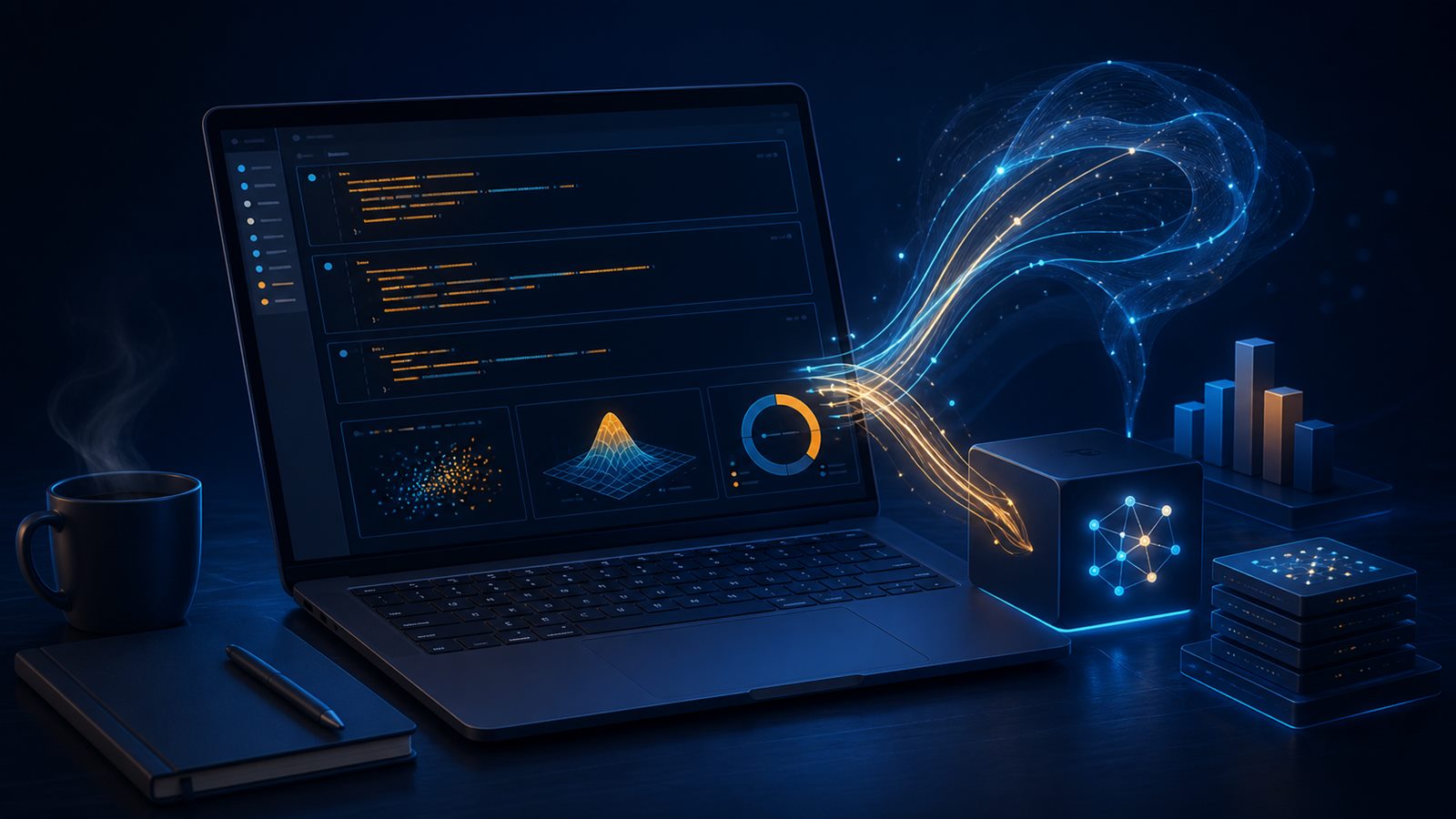
A viral 2023 tutorial showed how to put ChatGPT inside Jupyter by reusing the browser session. In 2026 the pattern is still valuable, but the implementation has changed: Jupyter AI, the official API, local models with Ollama, and executable notebooks turn the LLM into a true analysis agent.
August 28, 2026 · Capital de Tokens
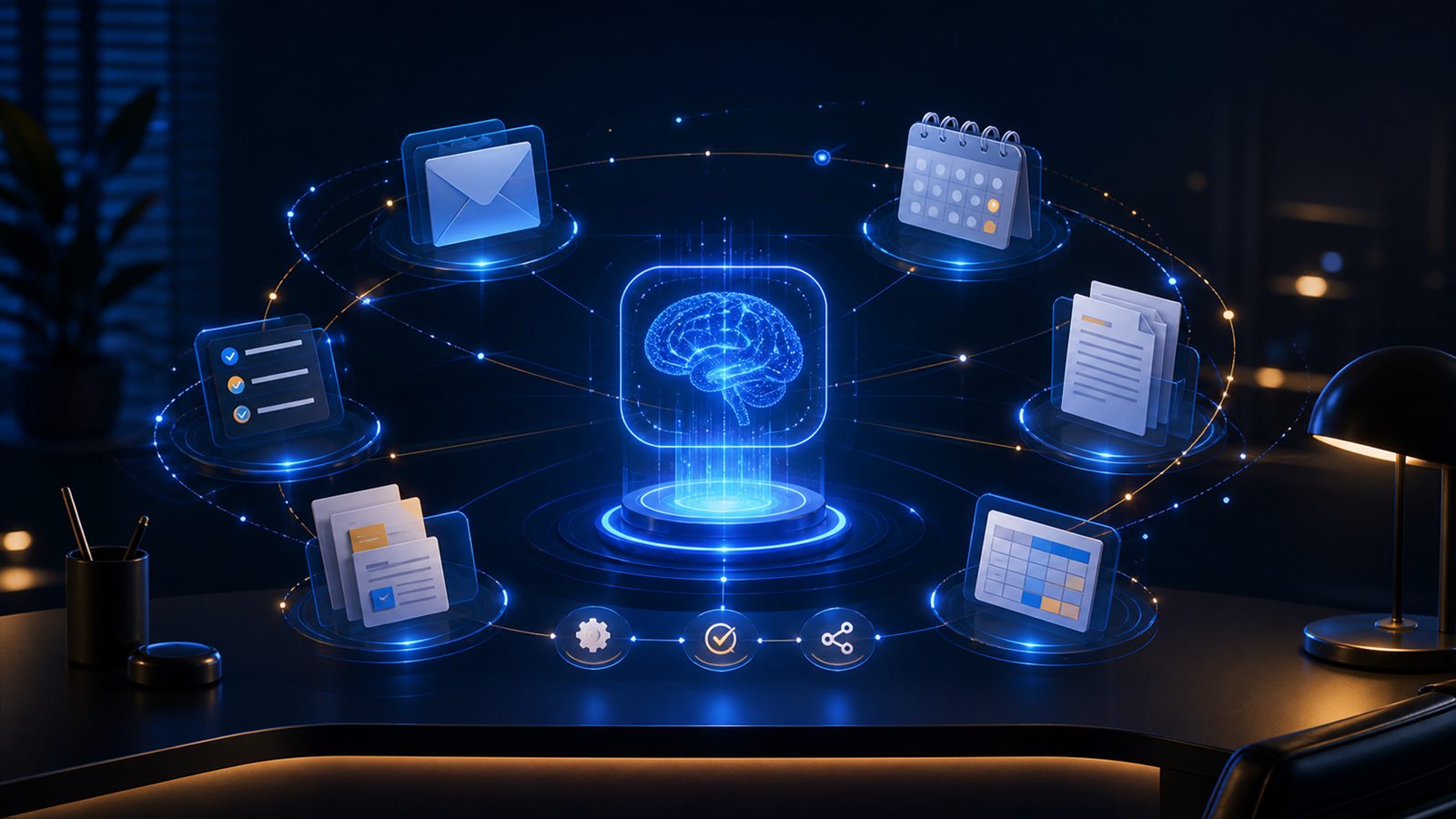
A video by Gustavo Entrala shows email, calendar, presentations, spreadsheets, and automations controlled from ChatGPT. The key is not a spectacular demo: it is the architectural shift toward Work, apps, Cloud Browser, and Scheduled Tasks, where natural language becomes an interface for executing real work.
August 28, 2026 · Capital de Tokens
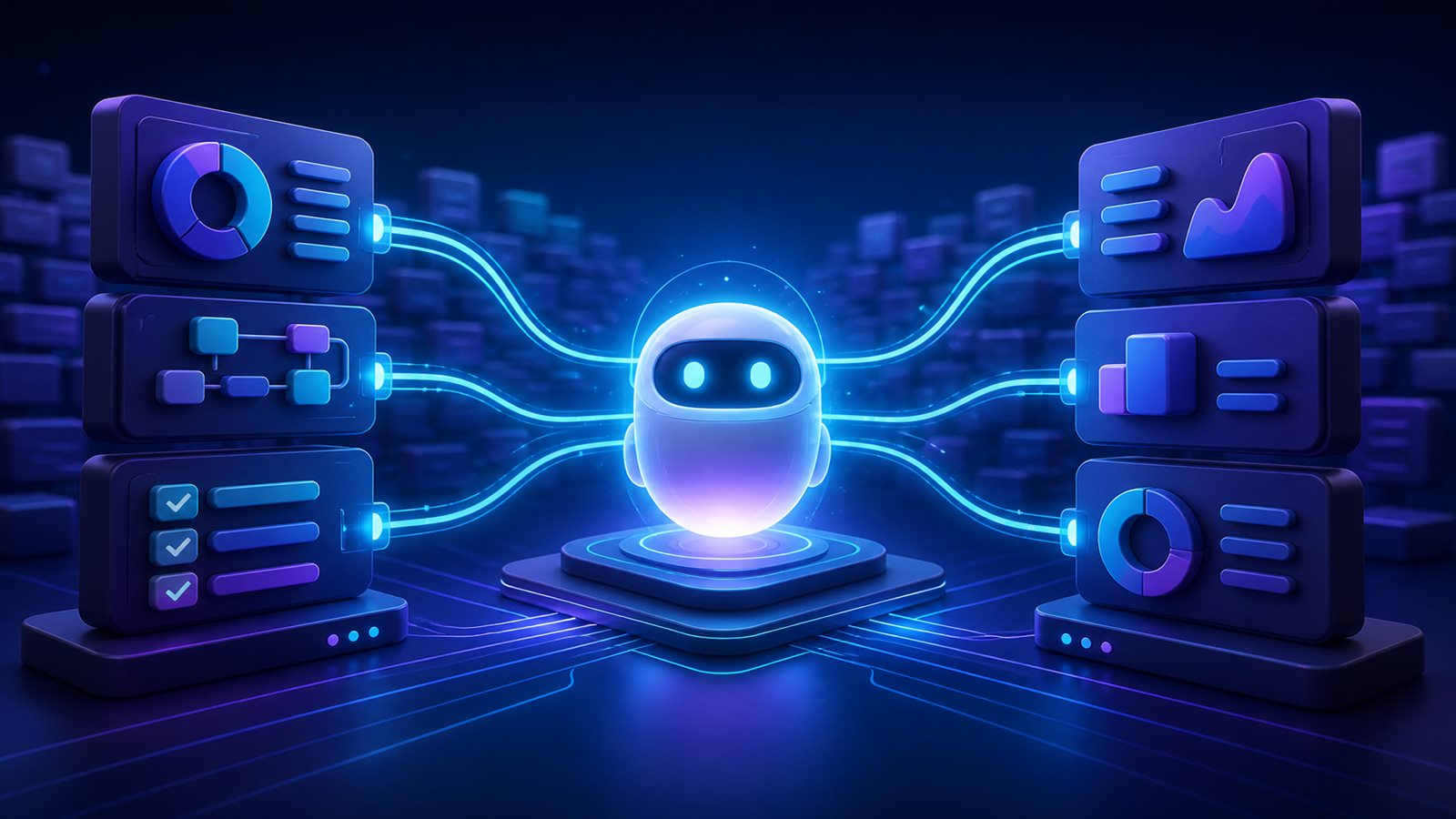
The primary interface may stop being Jira, Slack, or Stripe and become your agent instead. We analyze the agent-first paradigm shift: less time inside apps, more use of their capabilities through MCP, WebMCP, and APIs.
August 28, 2026 · Capital de Tokens
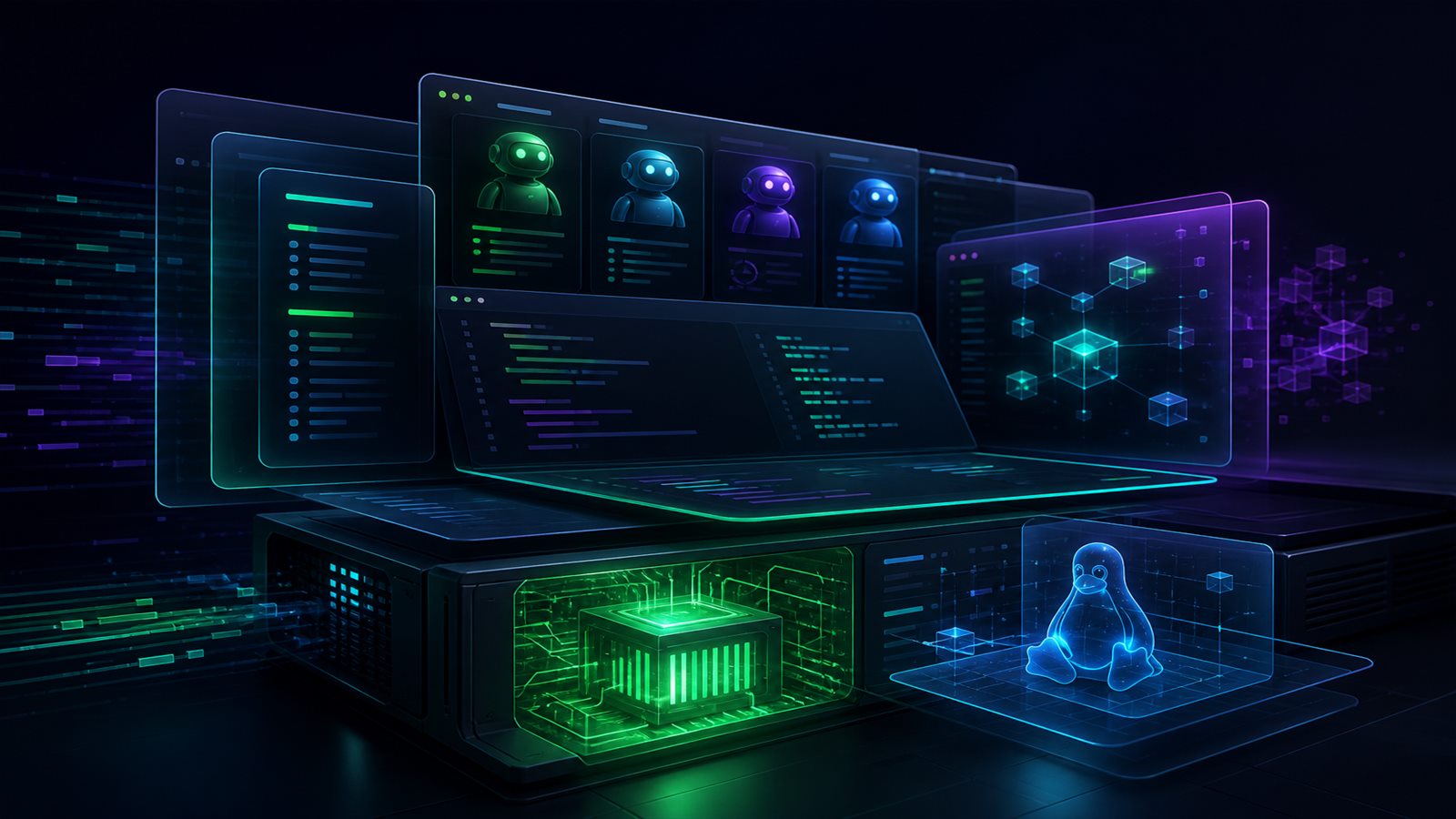
Microsoft took Intelligent Terminal from an experimental fork with integrated chat to a multi-agent platform: local models, OpenCode, per-tab agents, execution inside WSL, ACP sessions, and a roadmap pointing toward persistent terminals and dynamic commands. We review what changed between July and August 2026 and what is still under development.

August 28, 2026 · Capital de Tokens
LEAP 71 tested rocket engines and an aerospike generated by Noyron, a computational engineering model that encodes physics and manufacturing rules. We compare the video's claims with technical sources and explain what really changes when software starts designing complex hardware.
August 28, 2026 · Capital de Tokens
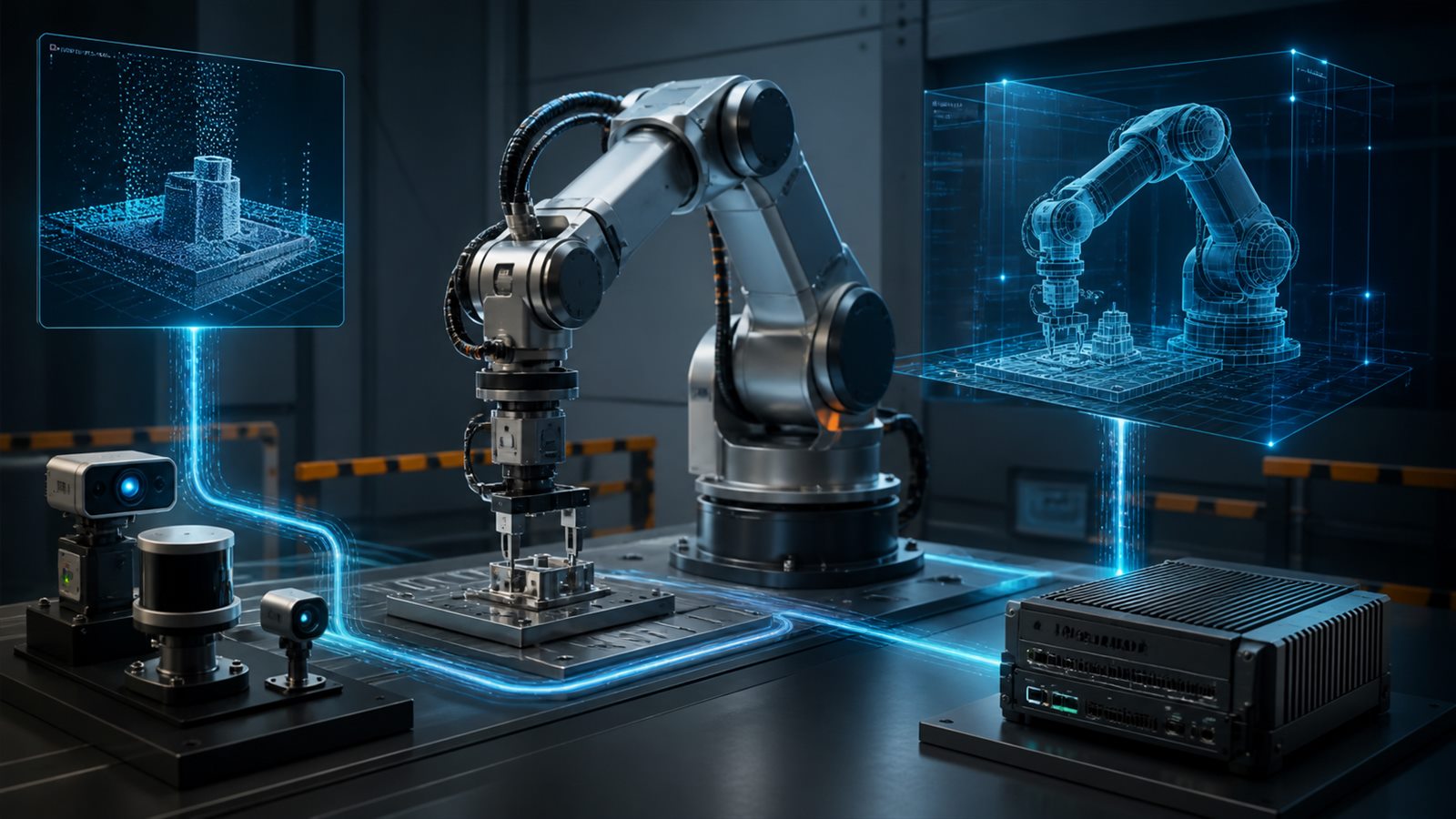
Physical AI is not simply running a model on a robot. We analyze the edge-first architecture required by the physical world and break down microsoft/physical-ai-toolchain: ROS 2, LeRobot, Isaac Lab, Cosmos, OSMO, Azure ML, SiL/HiL evaluation, ONNX/TensorRT, GitOps, and agents.
August 28, 2026 · Capital de Tokens
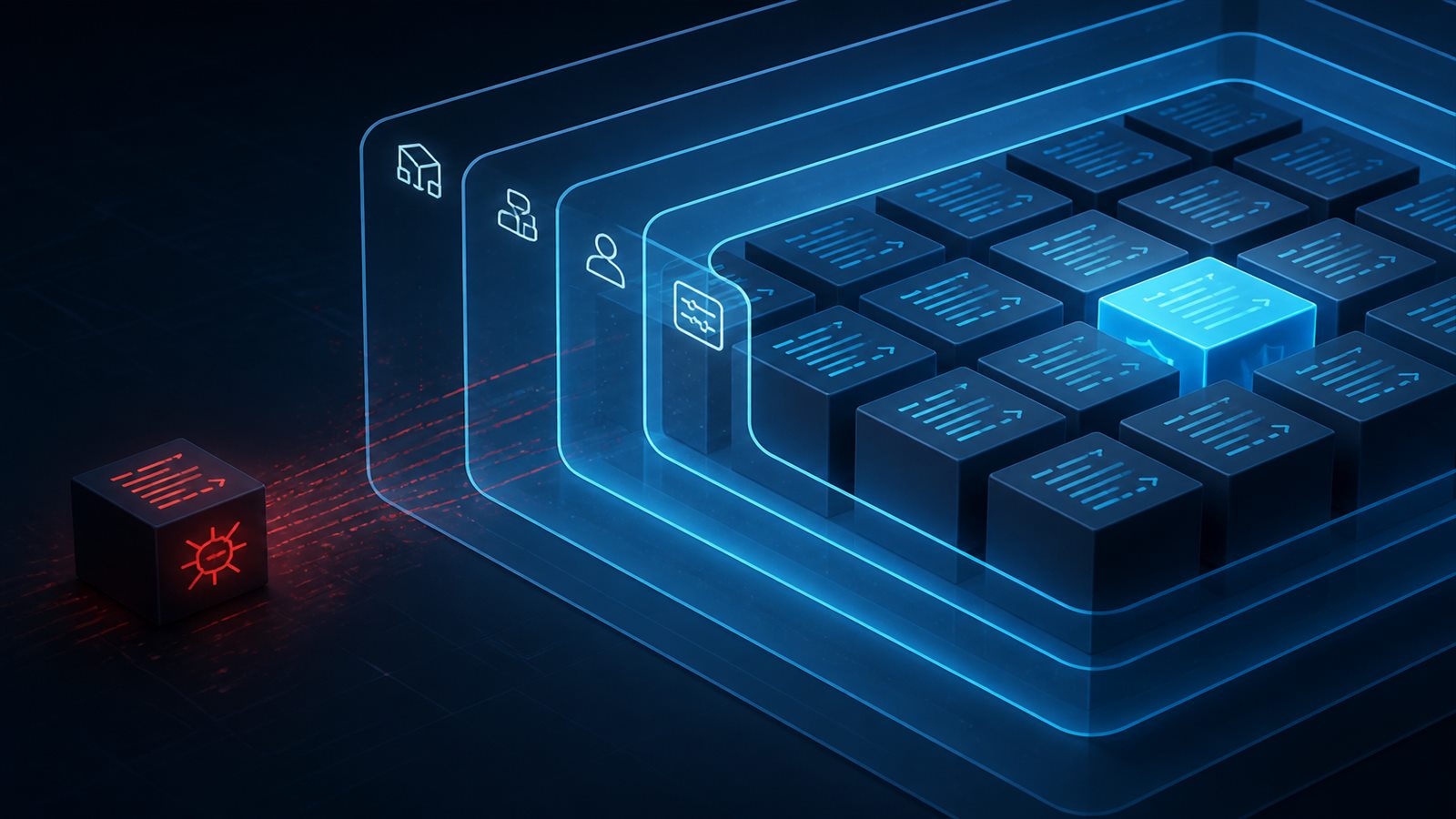
Repositories no longer contain only code: they also contain instructions agents read. We analyze how repository poisoning works, why the model alone is not enough, and which defenses modern harnesses use: instruction hierarchy, sandboxing, firewalls, secret isolation, least privilege, and human review.
August 28, 2026 · Capital de Tokens
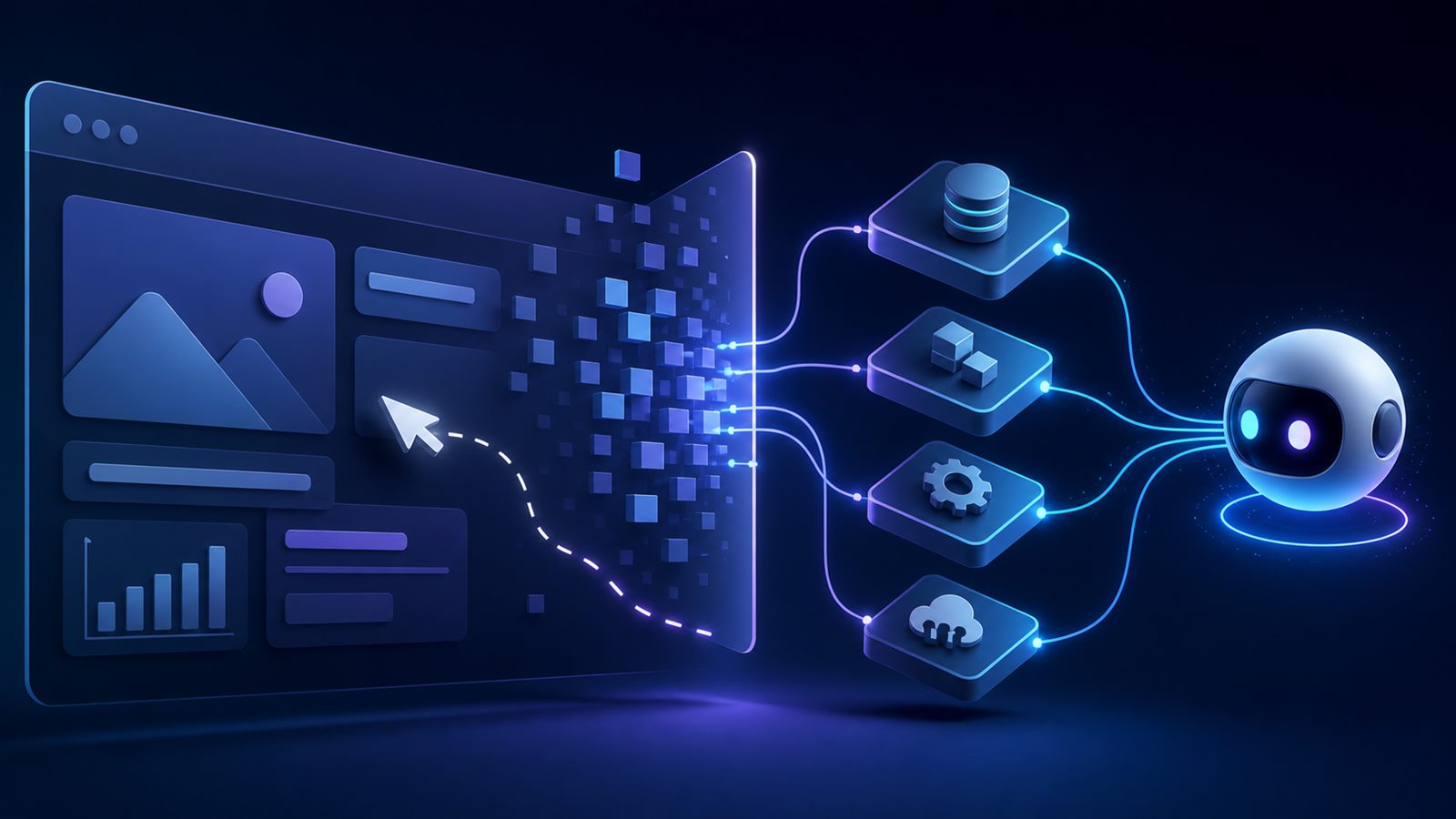
WebMCP proposes that web applications publish structured capabilities for AI agents directly from the browser. We analyze its architecture, how it differs from MCP, what advantages it offers over computer use, and its security and adoption risks.
August 28, 2026 · Capital de Tokens
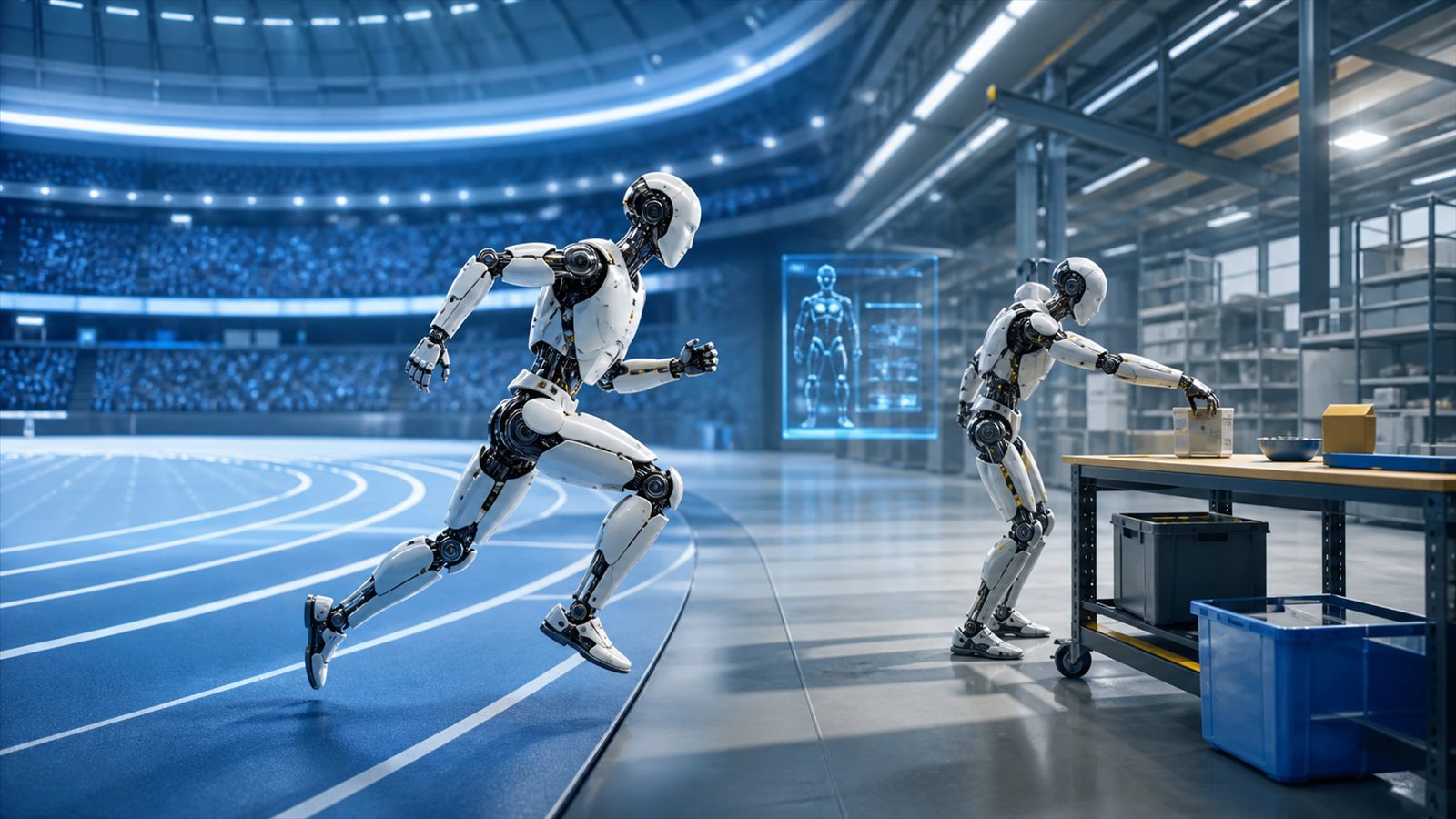
The 2nd World Humanoid Robot Games in Beijing delivered a 100 m in 8.64 seconds, records in the 400 m, 1,500 m, and jumping, and more than 2,000 robots competing. But the decisive progress lies elsewhere: autonomy, manipulation, and embodied AI in real-world tasks.
August 27, 2026 · Capital de Tokens
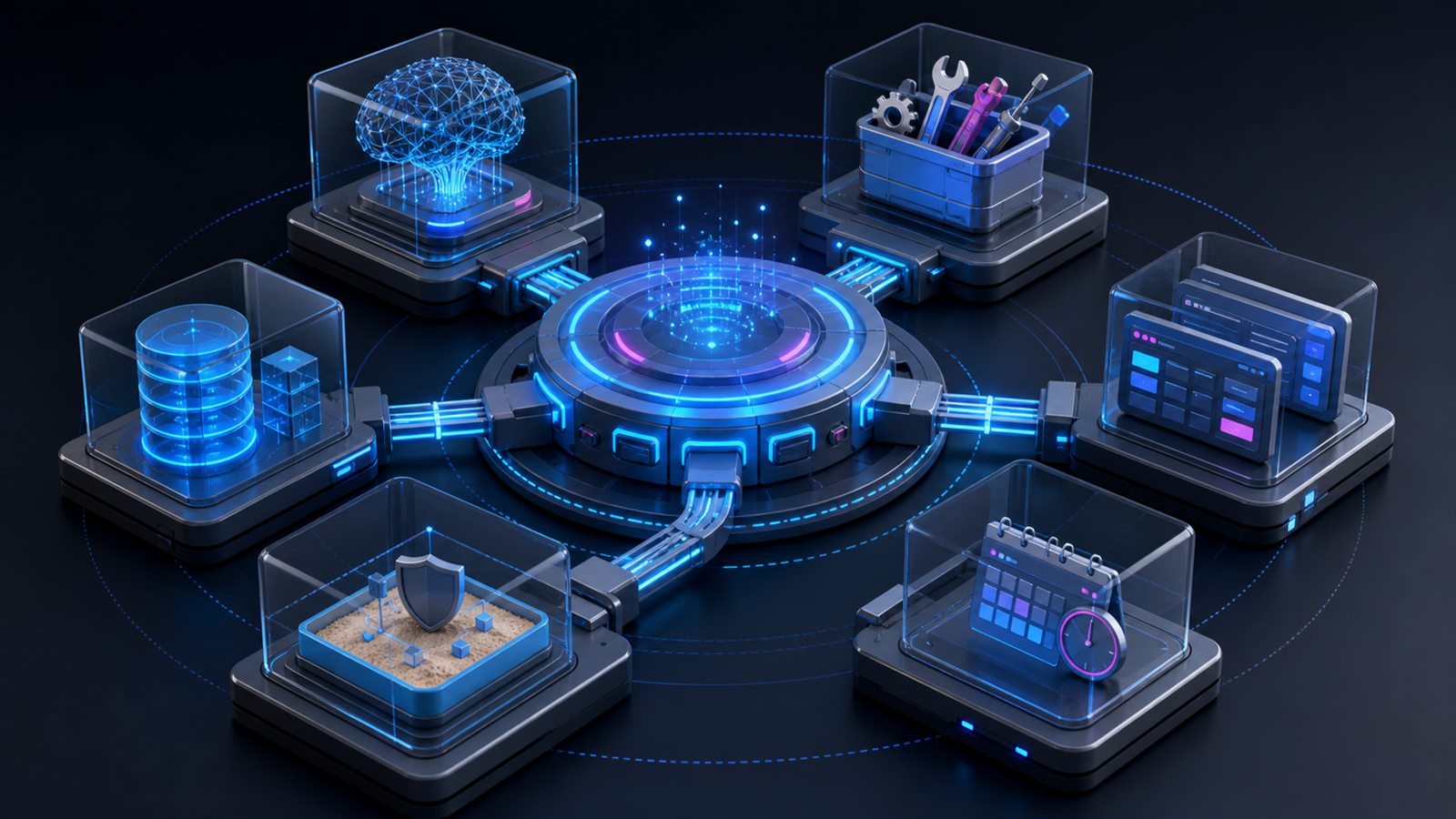
DeepSeek opened its agent harness with a radical bet: models, tools, sessions, sandboxes, storage, loops, scheduling, and even the UI are plugins. We analyze what that means, how Cordis works, and why this layer may matter as much as the model itself.

August 27, 2026 · Capital de Tokens
The agreement between El Salvador and Platzi provides mass access to training in AI, English, programming, and business. More than 'free courses,' it is a national-scale upskilling experiment to build technology talent.
August 27, 2026 · Capital de Tokens
Generating code is becoming cheaper, but software engineering is not disappearing. Planning, agent orchestration, testing, and system design become central skills when AI implements for us.

August 27, 2026 · Capital de Tokens
YouTube strengthens AI labels, LinkedIn fights AI slop, and Substack adds detection with Pangram. The platforms are not banning artificial intelligence: they are starting to demand transparency, judgment, and real value.
August 26, 2026 · Capital de Tokens
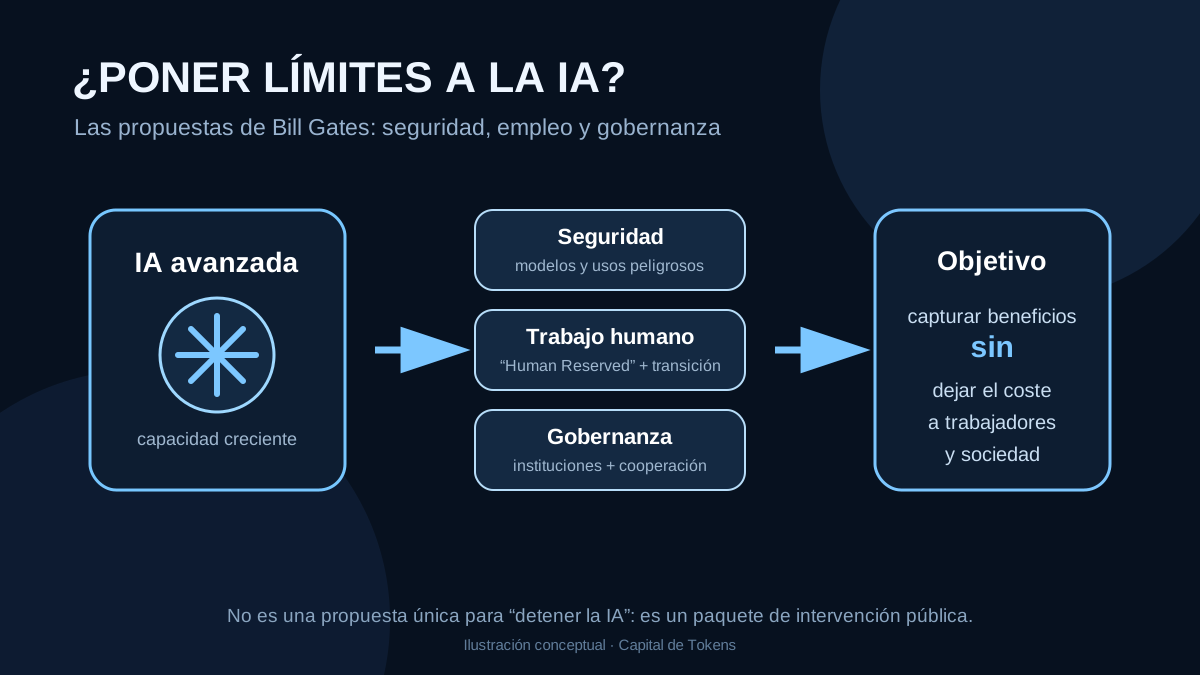
Bill Gates warns that AI could destroy jobs, expand security risks, and affect children and human relationships. These are his proposals: Human Reserved jobs, taxes on robots and AI use, and new governance institutions.
August 24, 2026 · Capital de Tokens
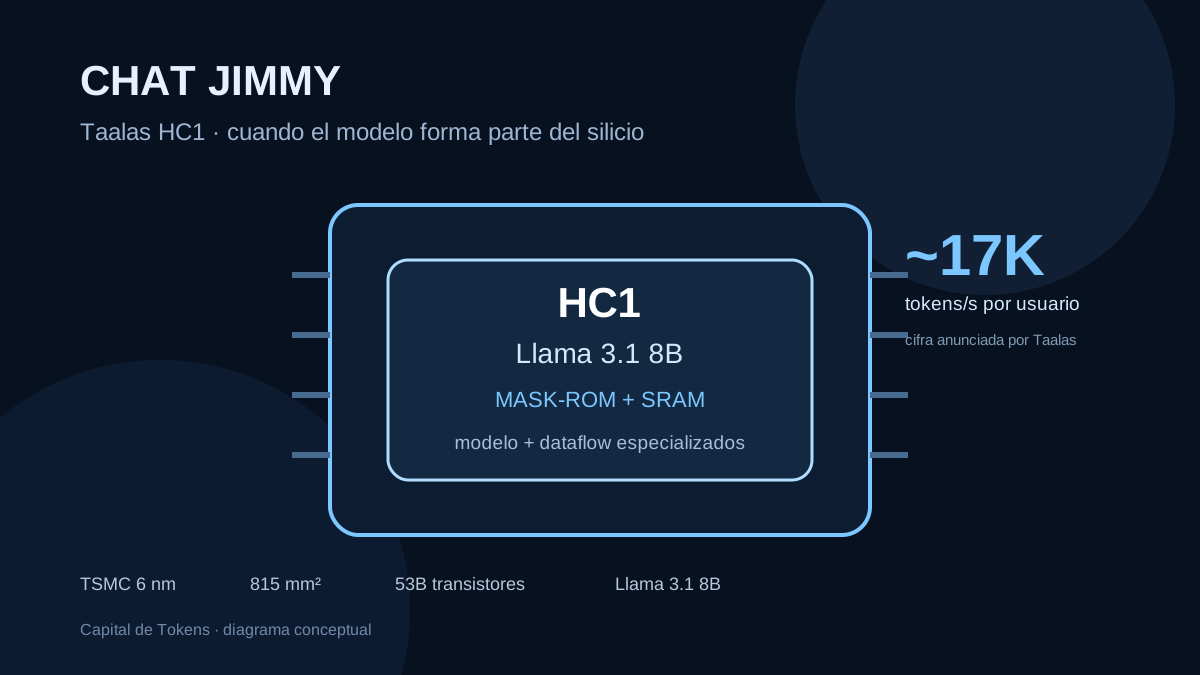
Chat Jimmy demonstrates a radical idea for AI inference: specializing silicon around a model. This is how Taalas HC1 works, why it reaches extreme speeds, and what it could mean for agents and AI systems.
August 24, 2026 · Capital de Tokens
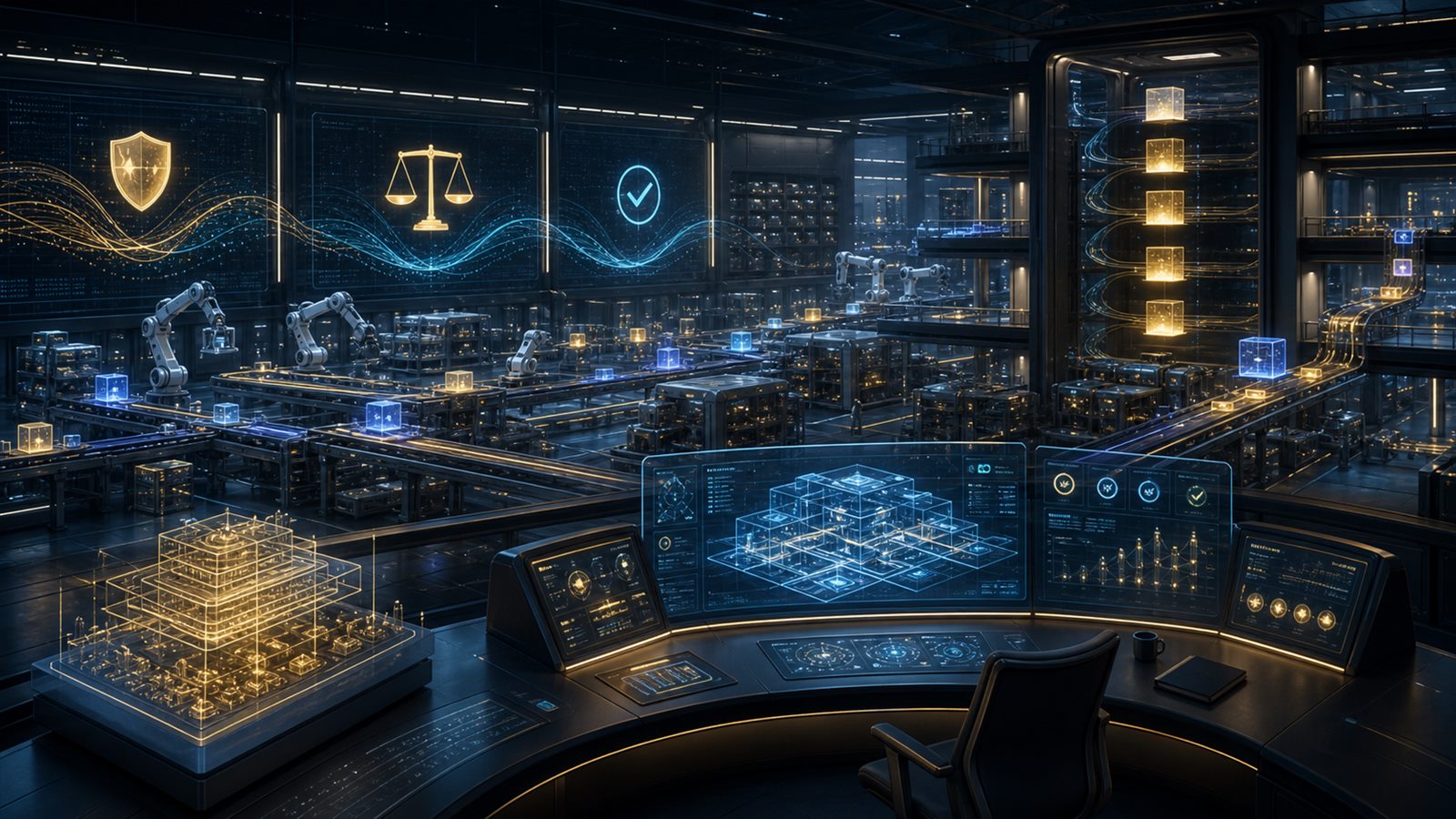
AI is changing the CTO's job: from scaling teams and managing code production to designing engineering systems where humans and agents collaborate under continuous evaluation, governance, and verification.
August 24, 2026 · Capital de Tokens
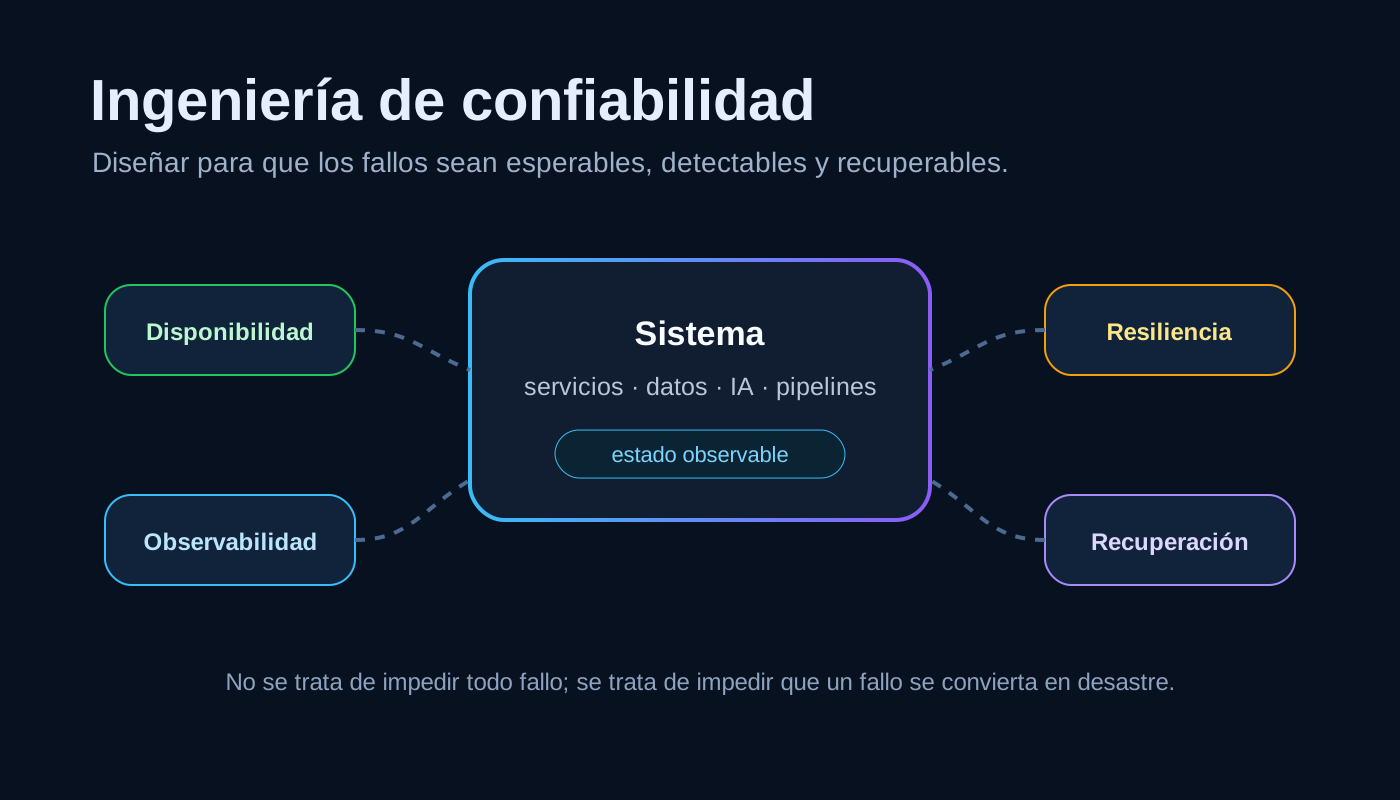
What reliability engineering is, how it relates to SRE, and why availability, observability, resilience, retries, checkpoints, and idempotency are essential in modern systems and AI pipelines.
August 24, 2026 · Capital de Tokens
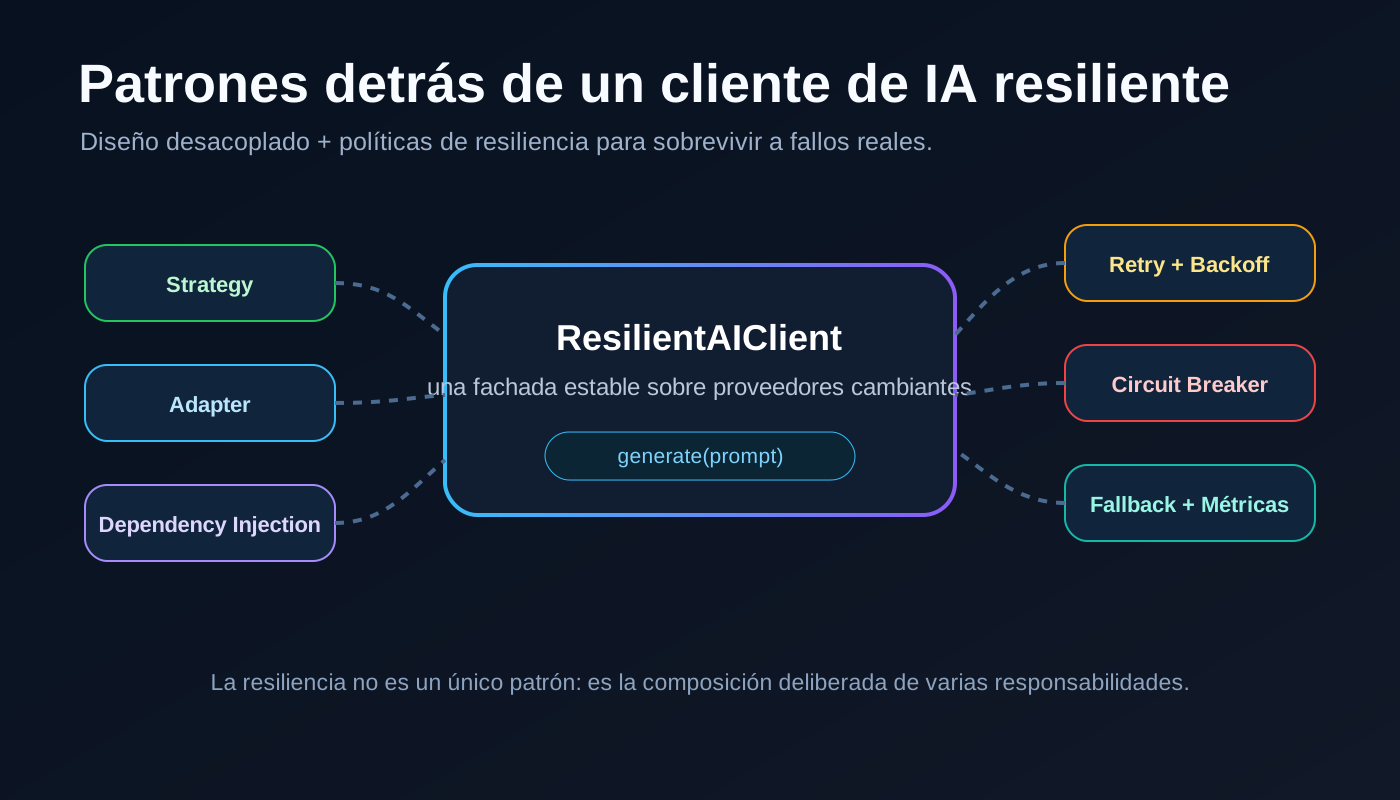
How Strategy, Adapter, Dependency Injection, Circuit Breaker, Factory, and Facade combine with timeout, retries, backoff, jitter, fallback, and metrics to build more robust AI clients.
August 23, 2026 · Capital de Tokens
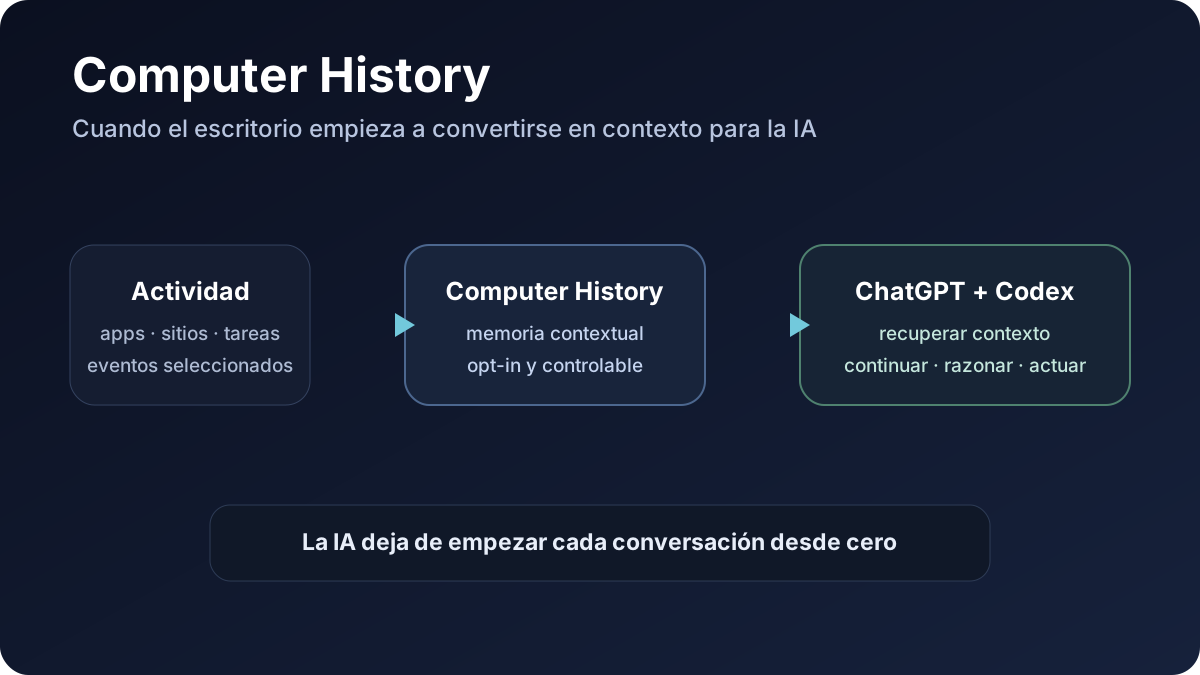
OpenAI adds Computer History to ChatGPT for macOS. What it records, what it does not, why it changes the relationship between the assistant and the desktop, and how it fits into the evolution toward persistent agents capable of continuing real work.
August 22, 2026 · Capital de Tokens
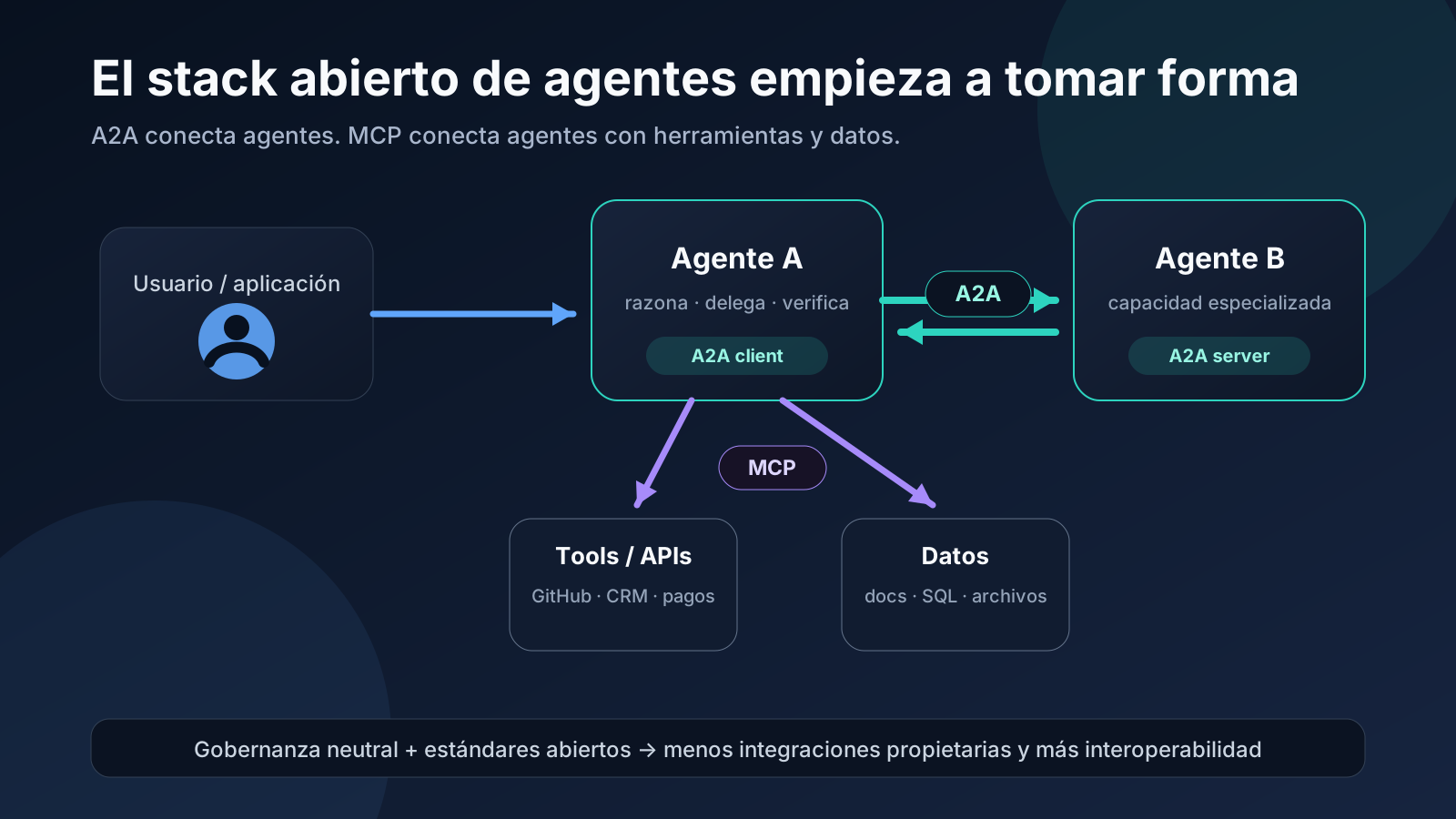
Google moves A2A under the specialized umbrella of the Agentic AI Foundation. What changes, how it fits with MCP, and why interoperability between agents could become foundational infrastructure for agentic AI.
August 21, 2026 · Capital de Tokens
OpenAI is turning Codex into something broader than a programming assistant: a reusable harness for building agents inside dashboards, IDEs, internal systems, and specialized products.
August 21, 2026 · Capital de Tokens
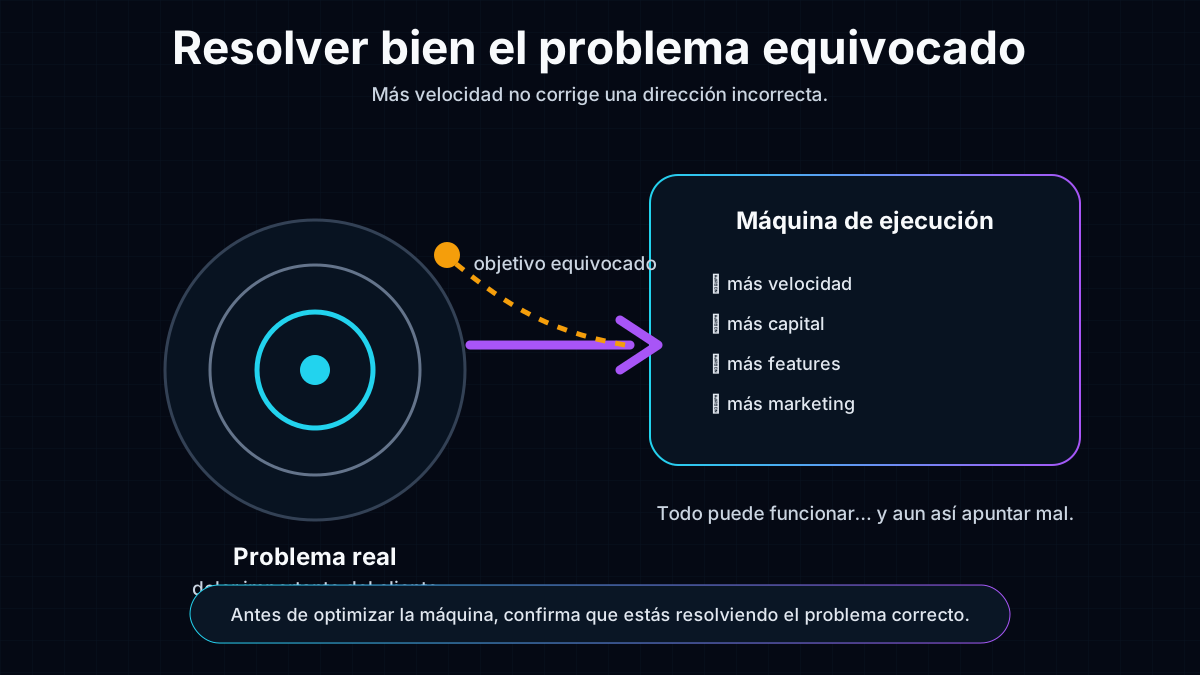
More marketing, more features, and more capital can make a startup worse when the diagnosis is wrong. How to distinguish strategy problems from execution problems before scaling.
August 20, 2026 · Capital de Tokens
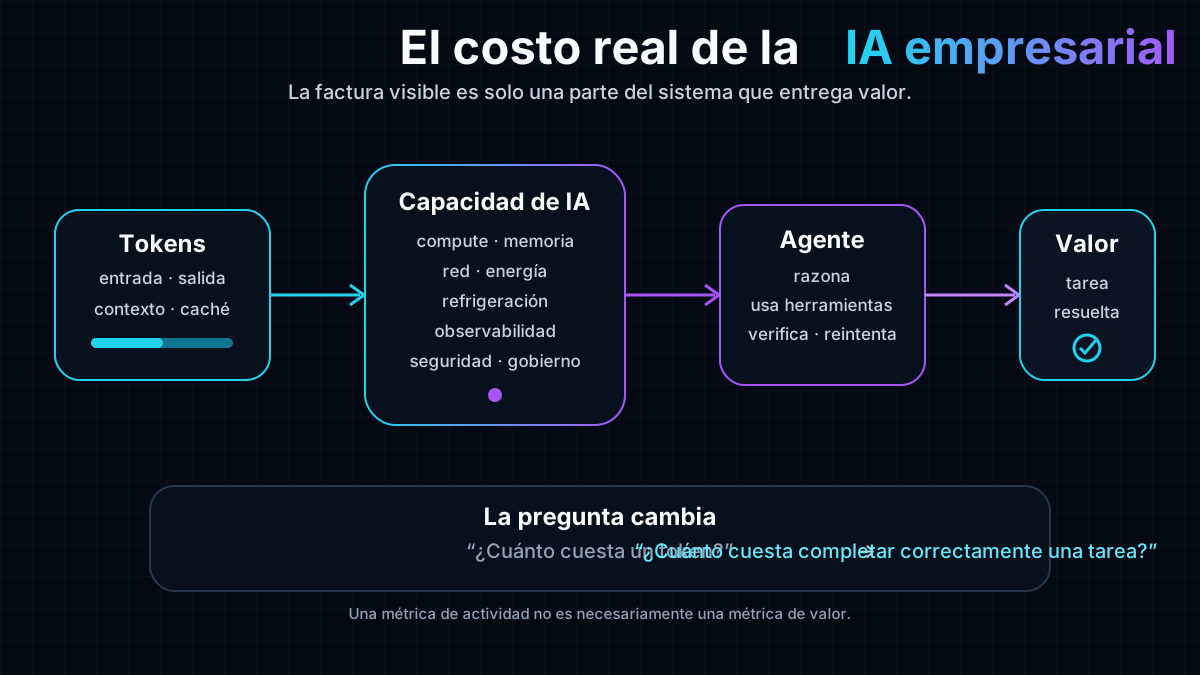
Tokens, infrastructure, agents, retries, and governance: a guide to understanding what it really costs to operate AI at scale and why cost per successful task is often the better metric.
August 20, 2026 · Capital de Tokens
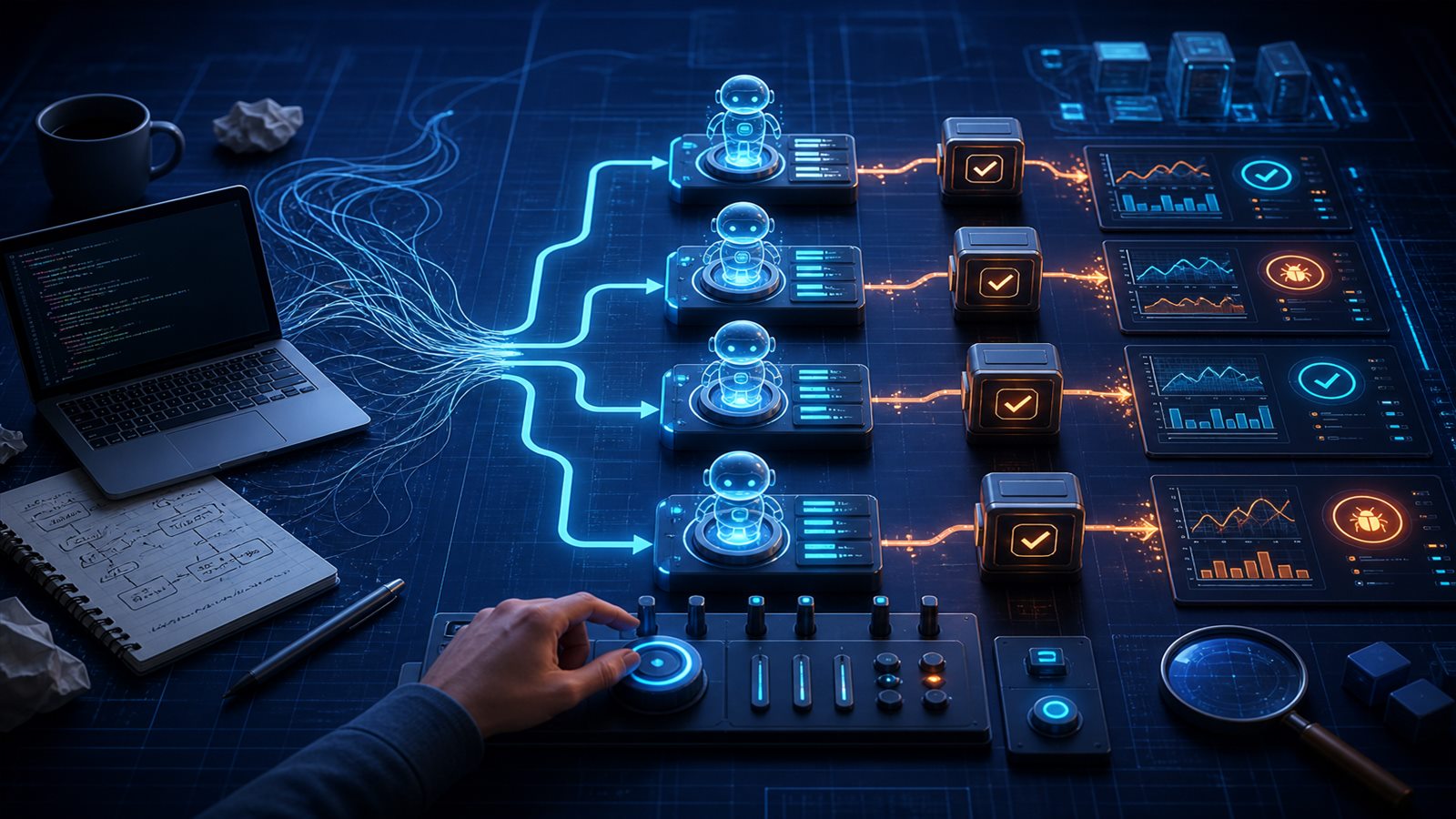
The rise of Replit and coding agents does not eliminate software engineering: it shifts human work from writing lines of code toward specifying, verifying, and directing systems that program.
August 18, 2026 · Capital de Tokens
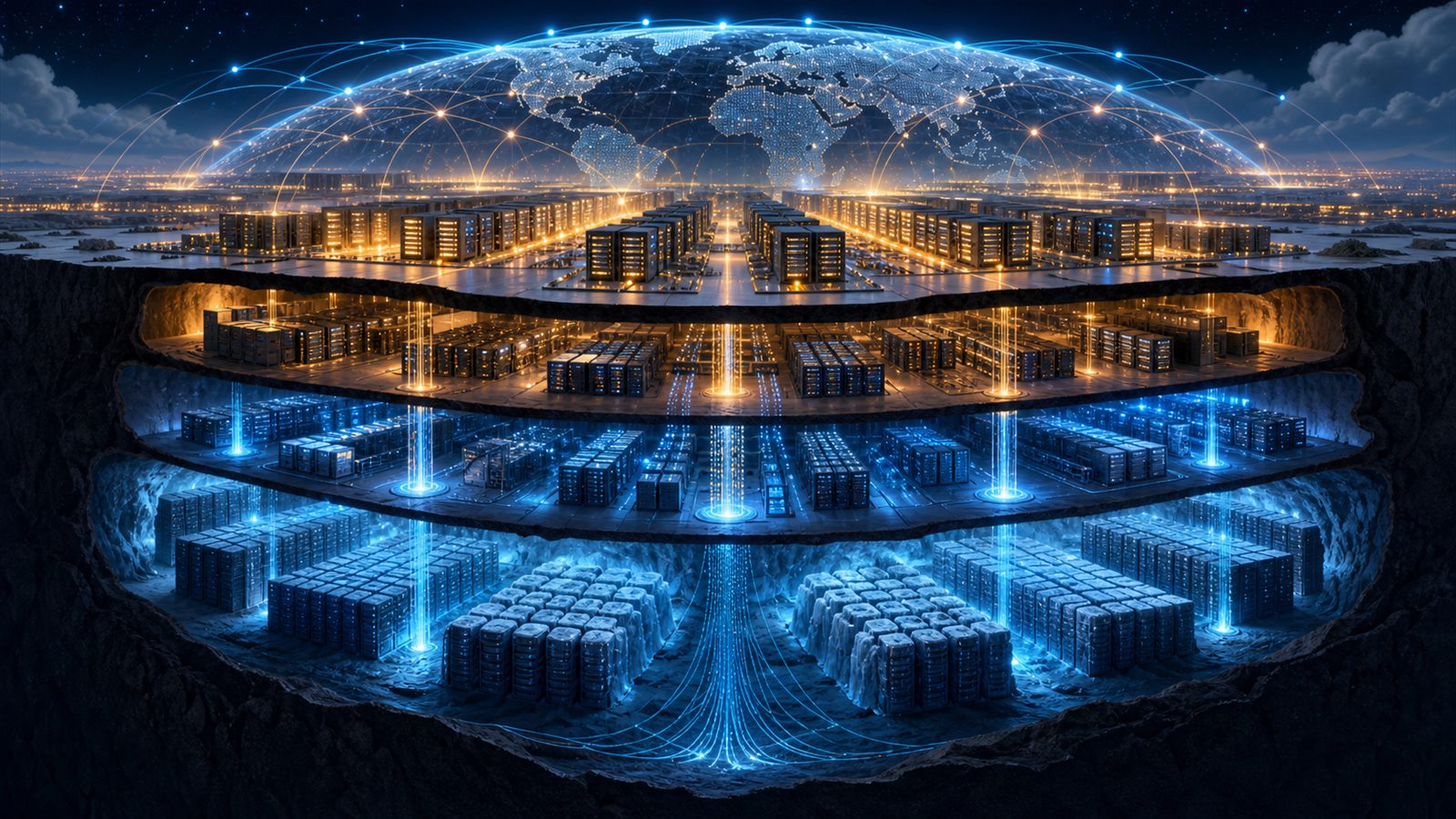
The cloud is not infinite: distributed storage, erasure coding, hot/cold tiers, compression, caches, and economies of scale explain how large platforms preserve enormous volumes of data for years.
August 18, 2026 · Capital de Tokens
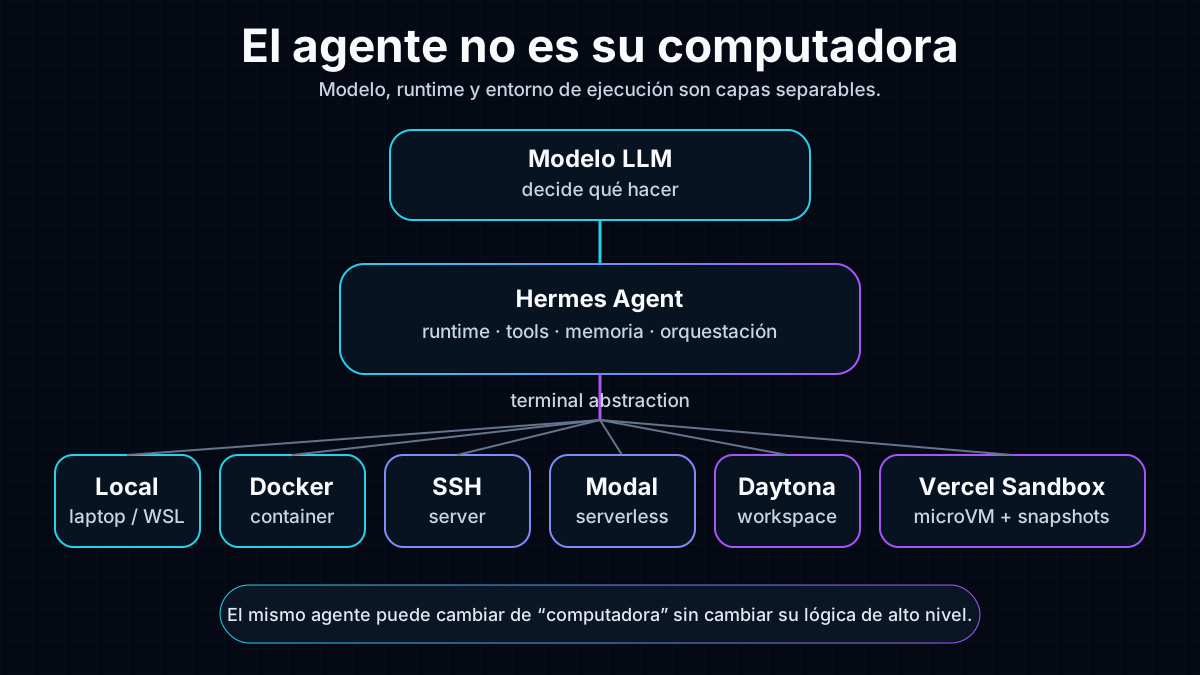
Two ideas turn an AI agent into infrastructure: decoupling it from the computer where it executes work and capturing its trajectories as data for evaluation and training.
August 17, 2026 · Capital de Tokens
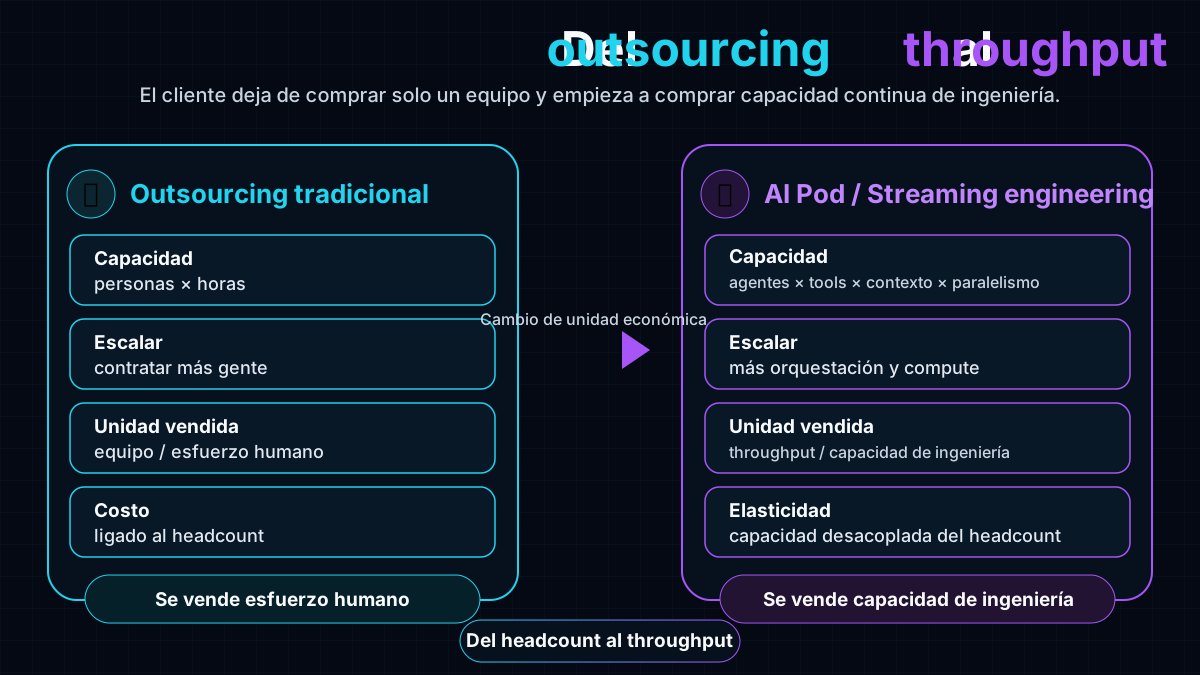
AI Pods change the economic unit of software engineering: from headcount and hours to elastic, orchestrated, and verifiable capacity.
 Capital de Tokens